By Tracy Cabrera
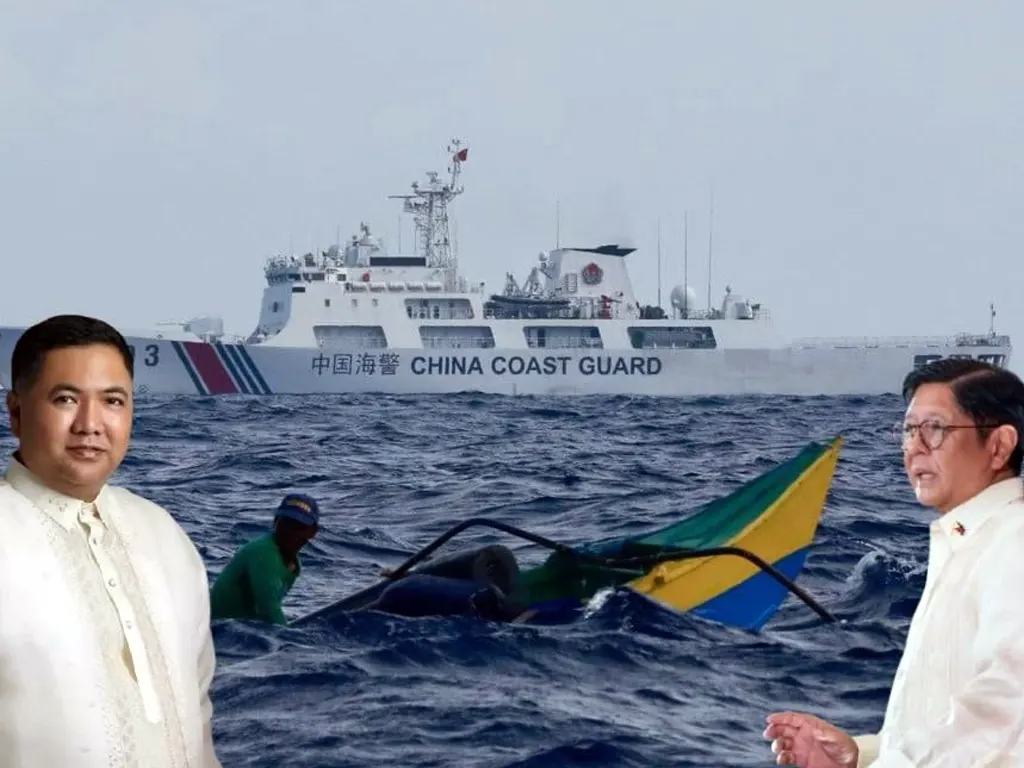
A DAY after Christmas, China’s embassy in Manila publicized an incident involving a People’s Liberation Army Navy (PLAN) warship that allegedly provided food and water to a Filipino fisherman, claiming coordination with Philippine authorities.
The incident was framed as humanitarian assistance but in truth, the narrative was clearly intended to portray China as a benign presence in Philippine territorial waters despite having no legal standing to be in the area.
In reaction to the fraudulent act, civic leader Dr. Jose Antonio Goitia, chairman emeritus of the Alyansa ng Bantay sa Kapayapaan at Demokrasya (ABKD), People’s Alliance for Democracy and Reforms (PADER), Liga Independencia Pilipinas (LIPI) and the Filipinos Do Not Yield (FDNY) Movement, tagged the said rescue as mere propaganda.
“This was never just about aid. It was about narrative control—using a single act to dilute a long pattern of harassment, coercion and intrusion,” Goitia enthused even as the Philippine Coast Guard, through Commodore Jay Tarriela, set the record straight that there was no prior notice from the Chinese Navy regarding the fisherman’s location or condition.
Contrary to claims that (the fisherman) had been adrift for three days, (the victim) was safely moored to a payao (native boat) and recovered in under 24 hours.
Most critically, though, the rescue incident occurred within the Philippines’ Exclusive Economic Zone off Zambales, where the Chinese ship has no legitimate basis to operate.
“These facts matter. Without jurisdiction, presence becomes intrusion, no matter how it is packaged,” Goitia opined as he spelled out that the Philippine government does not reject humanitarian acts and what it actually opposes is the attempt to convert compassion into consent for unlawful presence.
Under the United Nations Convention on the Law of the Sea and the 2016 Arbitral Award, the country’s rights in the West Philippine Sea (WPS) had been settled but acknowledging assistance does not legitimize unauthorized operations by other countries nor does it erase a documented pattern of coercive behavior in the disputed region.
“We can recognize humanity without surrendering legality. Kindness does not cancel sovereignty,” Goitia clarified.
Under President Ferdinand ‘Bongbong’ Marcos Jr., response to China’s incursions has been deliberate and consistent and rather than trading propaganda, Philippine authorities have answered with facts, timelines, coordinates and more importantly, the law.
“This approach reflects leadership that understands sovereignty is defended not through theatrics but through discipline, restraint and fidelity to international law. (Moreover), strength is shown not by volume, but by clarity,” the civic leader stressed.
In ending, Goitia asserted that in the West Philippine Sea, th(ere) is no longer merely a contest of vessels (but) a contest between truth and manipulation.
“On that ground, the Philippines must remain clear-eyed, united and firm. Under President Ferdinand Marcos Jr., that line has been drawn clearly. The country has chosen to defend its rights with calm resolve, anchored in law, evidence and national dignity. Our waters are not props—they are part of (our) Republic and they will be defended as such,” he concluded.
metrosundaily