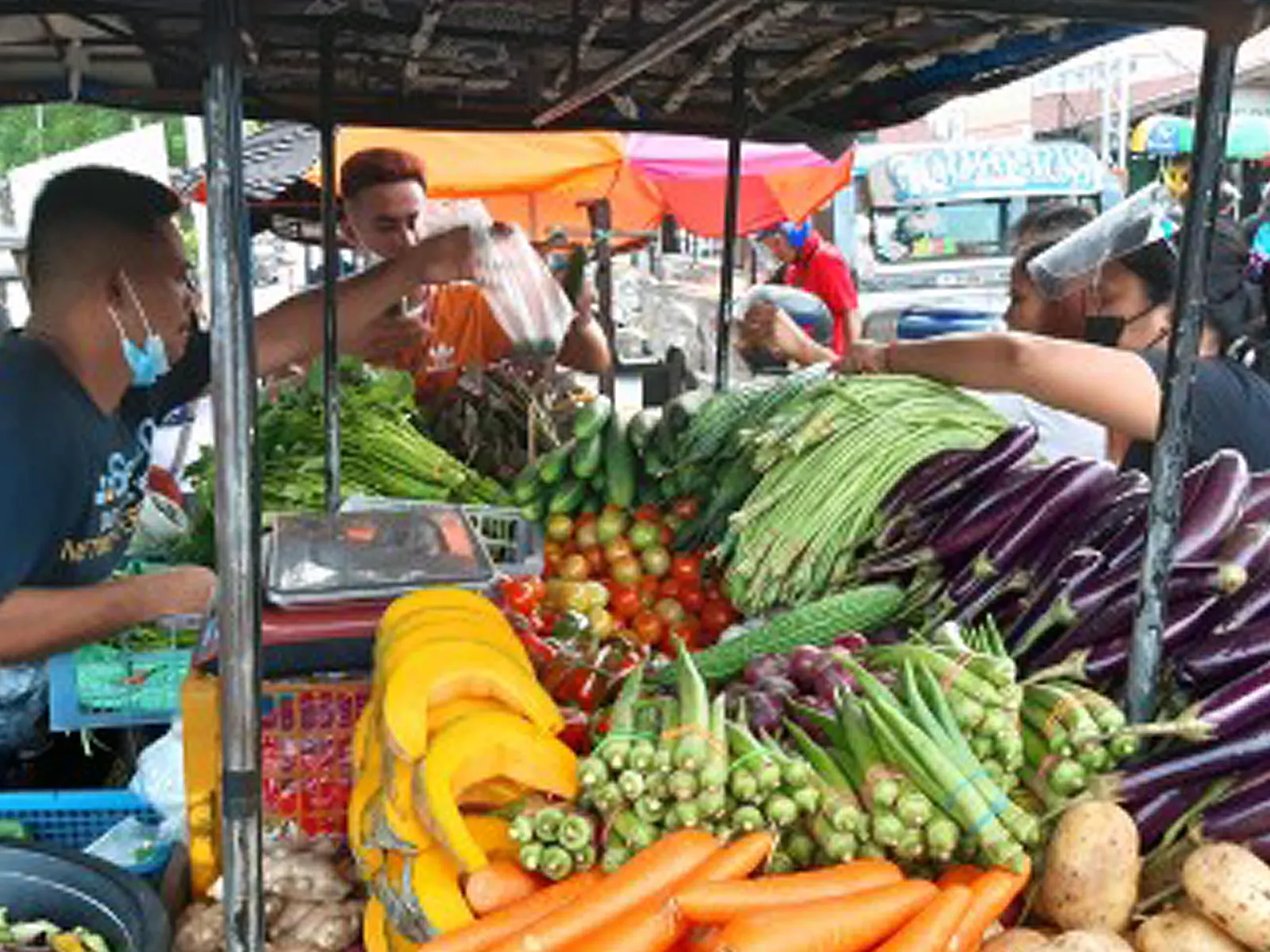
THE proposed P5.768-trillion 2024 national budget aims to improve the production of agricultural products like rice and corn and bring down transportation costs, among other goals, Speaker Ferdinand Martin G. Romualdez said Wednesday.
“The national budget will provide increased allocations for the Department of Agriculture’s banner programs to boost the production of prime commodities such as rice, corn and high-value crops, and fisheries among others. Higher investments will also be provided for the construction of more fish ports and farm-to-market roads all over the country,” Speaker Romualdez, head of the 312-member House of Representatives, said.
To reduce transportation and logistics costs, the Speaker said the government is determined to maintain high investments in infrastructure through the administration’s Build Better More Program.
“As such, the bulk of the infrastructure budget will be allocated for physical infrastructure aimed at improving connectivity throughout the country through the construction of accessible road networks and railways. Significant funding support will also be provided for the construction of social infrastructure such as school buildings and health centers,” he said.
Speaker Romualdez said the proposed budget also includes increased funding for local government programs on agriculture, fisheries, digitalization, and infrastructure development.
The theme of President Marcos’ proposed spending plan for next year is, “Agenda for Prosperity: Securing a Future-Proof and Sustainable Economy.”
The House leader said the budget “has been designed to spur the country’s high-growth trajectory, with the Philippines targeting to attain upper-middle-income status by 2025 while maintaining strong financial footing.”
“The primary expenditure direction will continue to be anchored on the 8-Point Socioeconomic Agenda in the near term and the Philippine Development Plan 2023-2028,” he said.
He said education “remains our top top priority as mandated by the Philippine Constitution, sharing 16 percent of the proposed national budget, or an increase of 3.3 percent owing to higher provisions for Basic Education Facilities Program, School-Based Feeding Program, instructional materials, and other learning resources.”
“The health sector will have ample budget support for programs that provide accessible and inclusive public health services. Specifically, a higher allocation will be provided for the National Health Insurance Program, which aims to subsidize the health premiums of the vulnerable sector pursuant to the Universal Health Care Law,” he stressed.
The House leader pointed out that the 2024 budget proposal also includes bigger allocations for social protection like the Pantawid Pamilyang Pilipino Program, pension for indigent senior citizens and supplementary feeding that provides hot meals to two million poor children.
He added that through the budget, the government likewise aims to fund renewable energy projects to achieve a 35-percent share in the power mix by 2030, as well as to energize all barangays by 2028.
The administration’s new banner programs such as the Pambansang Pabahay Para sa Pilipino Program and Philippine Food Strategic Transfer and Alternative Measures Program would be provided with sufficient budgetary support, along with climate change and bureaucratic efficiency and fiscal management improvement projects, the Speaker said. He said sufficient funding would be given to the Bangsamoro Autonomous Region in Muslim Mindanao and to the Marawi Siege Victims Compensation Program to assist displaced persons and victims who lost private properties during the Marawi siege in 2017.
metrosundaily