
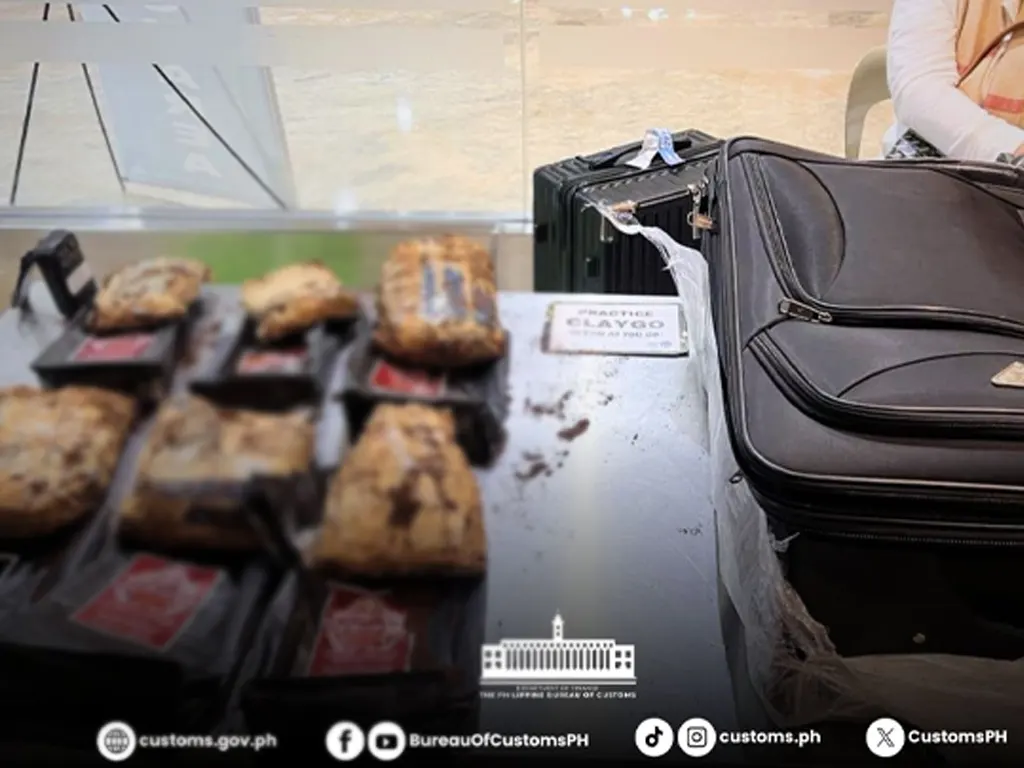
TWO Filipinas arriving from Cambodia were arrested at Ninoy Aquino International Airport (NAIA) for attempting to smuggle around eight kilograms of methamphetamine hydrochloride, or shabu, valued at roughly ₱56 million. According to the Bureau of Immigration (BI), the illegal cargo was cleverly concealed inside packets mixed with coffee grounds to avoid detection.
The operation was set in motion after the United States Drug Enforcement Administration (US DEA) relayed information about the planned drug transport.
Originally, authorities were alerted that the suspects would arrive on May 1 via Philippine Airlines flight PR2622, but they did not appear on board. A second alert was issued early on May 6; at 2:30 AM, monitoring teams confirmed the women were finally on board the same flight coming from Cambodia. BI personnel tracked and identified them after they cleared immigration, while the actual interception and arrest were carried out by the Bureau of Customs and members of the inter‑agency Drug Interdiction Task Group — composed of the Philippine Drug Enforcement Agency, Philippine National Police, and other law enforcement units.
During inspection, authorities found packages containing white crystalline substances hidden under layers of coffee. Laboratory tests later confirmed the material was shabu, weighing over eight kilos in total. The suspects, identified only as “Lona”, 43, and “May”, 59, were taken into custody immediately following the discovery.
BI Commissioner Joel Anthony Viado emphasized that the success of the operation highlights the critical role of intelligence and cross‑border cooperation. “Many people think immigration work begins and ends at the counter. But modern border protection is driven by intelligence gathering, data analysis, and coordination with both local and international partners. Cases like this show how information‑sharing saves lives,” he said. He also noted the key role of the Advanced Passenger Information System (APIS), which allows authorities to access and analyze passenger data before flights land. Today, nearly 90% of incoming international commercial flights are covered by APIS, enabling officials to spot risks, flag suspicious travel patterns, and prevent transnational crimes before they enter the country.
metrosundaily