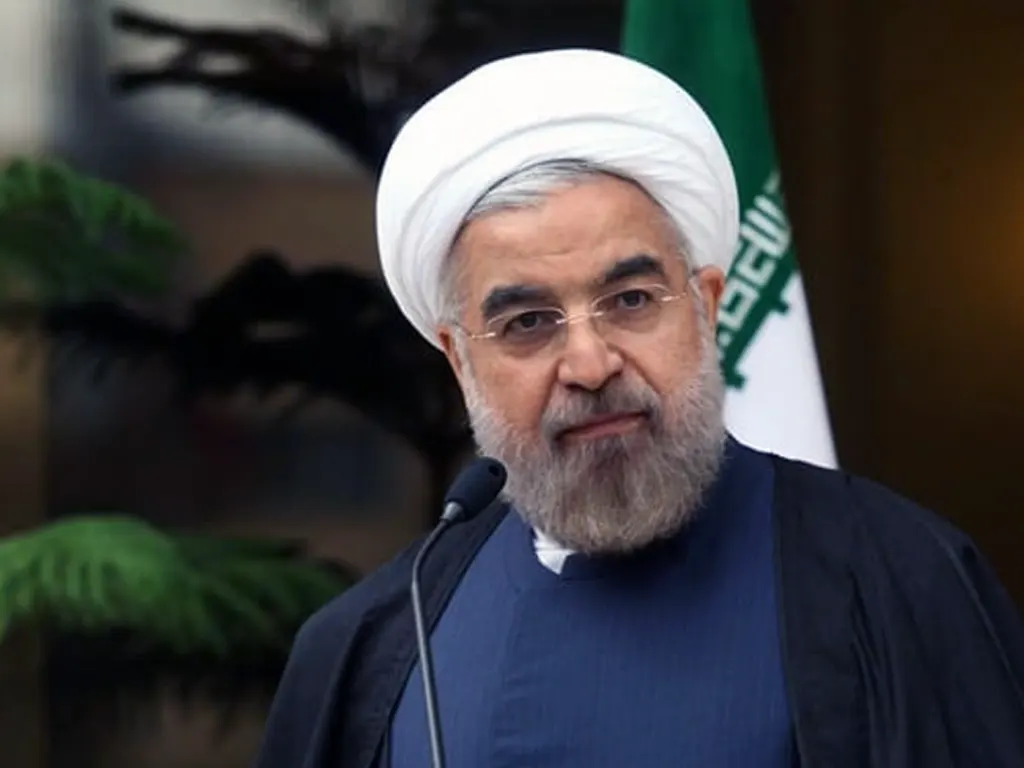
Iranian President Hassan Rouhani
THE world held its breath.
Tensions in the Middle East skyrocketed after Iran issued a stark warning: retaliatory strikes against US military bases across the region were imminent.
The announcement, broadcast on state television late Sunday night, followed a series of devastating attacks on Iranian nuclear facilities, which Tehran blamed squarely on the United States.
The Iranian Revolutionary Guard Corps (IRGC) released a statement, laced with fiery rhetoric, vowing a “crushing response” to what it called an act of “unprovoked aggression.”
The statement, while lacking specifics on targets and timelines, sent shockwaves through global capitals.
Satellite imagery confirmed significant damage to the Natanz and Fordow nuclear enrichment sites, raising fears of a potential escalation into full-blown conflict.
The US State Department, acting swiftly, issued a worldwide travel advisory, urging all American citizens to exercise extreme caution and, where possible, to leave the Middle East immediately.
The advisory warned of potential terrorist attacks and heightened security risks in the region. Embassies across the Middle East were placed on high alert, reinforcing security measures and preparing for potential evacuations. International condemnation poured in from various world leaders, urging both sides to de-escalate and engage in diplomatic solutions.
However, the atmosphere remained tense, with analysts warning of the potential for a catastrophic military confrontation.
The possibility of regional allies being drawn into the conflict further fueled anxieties. The situation remains fluid and volatile. The world watches with bated breath, hoping for a peaceful resolution before the threats issued by Iran translate into devastating reality.
The coming days will be crucial in determining whether diplomacy can prevail or whether the region will be plunged into a new era of conflict.
metrosundaily