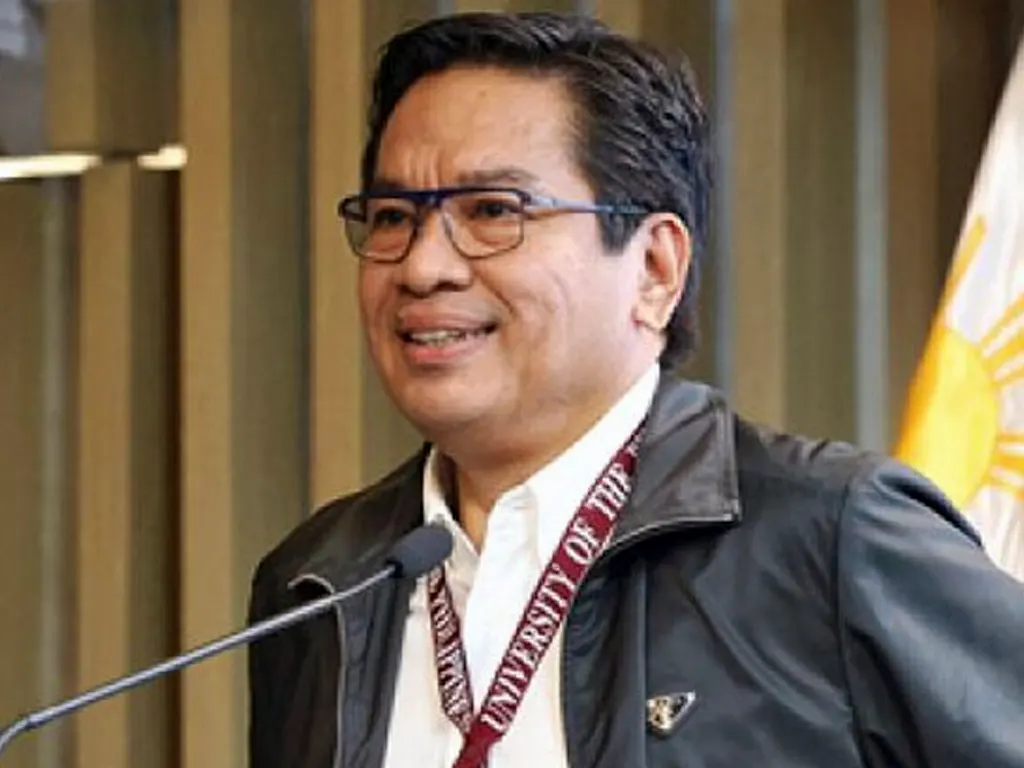
FOLLOWING the support of Metro Manila mayors for his anti-littering proposals, Las Piñas Lone District Rep. Mark Anthony Santos is urging local government units (LGUs) to adopt Japan’s concept of Dōtoku, or moral education, as part of a broader clean schools, clean communities’ program.
Santos said enforcement alone cannot solve Metro Manila’s worsening garbage problem, stressing that lasting change must begin by teaching children and young people the values of discipline, responsibility, cleanliness and respect for their communities and the environment.
“Laws, fines and enforcement alone are not enough. We need to change the mindset and behavior of our young people. This is where the concept of Dōtoku, or moral education, comes in—teaching discipline, responsibility and respect for others and our environment,” Santos said.
President Ferdinand R. Marcos Jr. has also acknowledged the country’s growing waste crisis, particularly in Metro Manila, after inspecting a “sea of garbage” at a reclaimed area of Manila Bay near Baclaran Church in Parañaque City.
Marcos said imposing fines for improper waste disposal would not be enough if communities lack trash bins and proper facilities where people can dispose of their garbage.
“The problem sometimes is ‘walang basurahan, walang paglalagyan ng basura’ (there are no trash bins or proper places to dispose of garbage). Look at a country like Japan. They don’t just throw their garbage anywhere; they keep it in their pocket and throw it away at home because there is a very good system for picking up their garbage,” Marcos said.
Santos stressed that the proposed Dōtoku-inspired approach should complement, rather than replace, proper waste collection, disposal facilities and consistent enforcement.
“We need both enforcement and education. We can have the Garbage Police, but our ultimate goal is to build a generation that understands that keeping our communities clean is a shared responsibility,” Santos said.
Santos said the proposed clean schools, clean communities program could be implemented in public and private schools in partnership with LGUs, the Department of Education (DepEd), barangays and community organizations.
Under the proposed program, students could participate in regular classroom discussions, school cleanliness activities, waste segregation initiatives, recycling projects and community environmental activities as part of values formation and civic responsibility.
“We want to teach our children that cleanliness is not simply the job of janitors, barangays or city governments. It is everyone’s responsibility. If our young people learn this discipline at an early age, they will bring it home and into their communities,” Santos said.
He said the initiative would complement his proposal to establish dedicated “Garbage Police” units in Metro Manila’s 17 LGUs, as well as his call for common minimum standards and coordinated policies against littering and illegal dumping.
“We need Garbage Police to enforce the law, but we also need ‘Garbage Discipline’ in every home, school and community. Enforcement and education must go hand in hand,” Santos said.
He emphasized that the proposed program should not simply become another clean-up campaign conducted after garbage has already accumulated.
“We do not want our children to simply become garbage collectors. More importantly, we want them to understand why littering is wrong and how to take responsibility for their waste—from proper segregation to final disposal,” he said.
Santos said schools could serve as important starting points for developing a culture of cleanliness because children can influence their families and communities.
“When a child learns proper waste segregation in school, that practice can be brought home. When a child learns not to litter, he or she can remind family members and friends. From the school, that discipline can spread throughout the community,” he said.
He also proposed that participating schools be encouraged to develop their own Clean School Action Plans covering waste segregation, recycling, reducing single-use plastics, proper waste disposal and regular environmental activities.
Santos said the program could eventually expand into a Clean Schools, Clean Barangays and Clean Communities movement throughout Metro Manila.
“Our goal is to build a culture of cleanliness, not simply launch another campaign. If we start in schools and teach our young people the right values, we have a greater chance of building more disciplined and responsible communities,” he said.
The lawmaker said the initiative should be developed in consultation with the Metro Manila Council (MMC), Metropolitan Manila Development Authority (MMDA), DepEd, the 17 LGUs, barangays and other stakeholders.
metrosundaily