
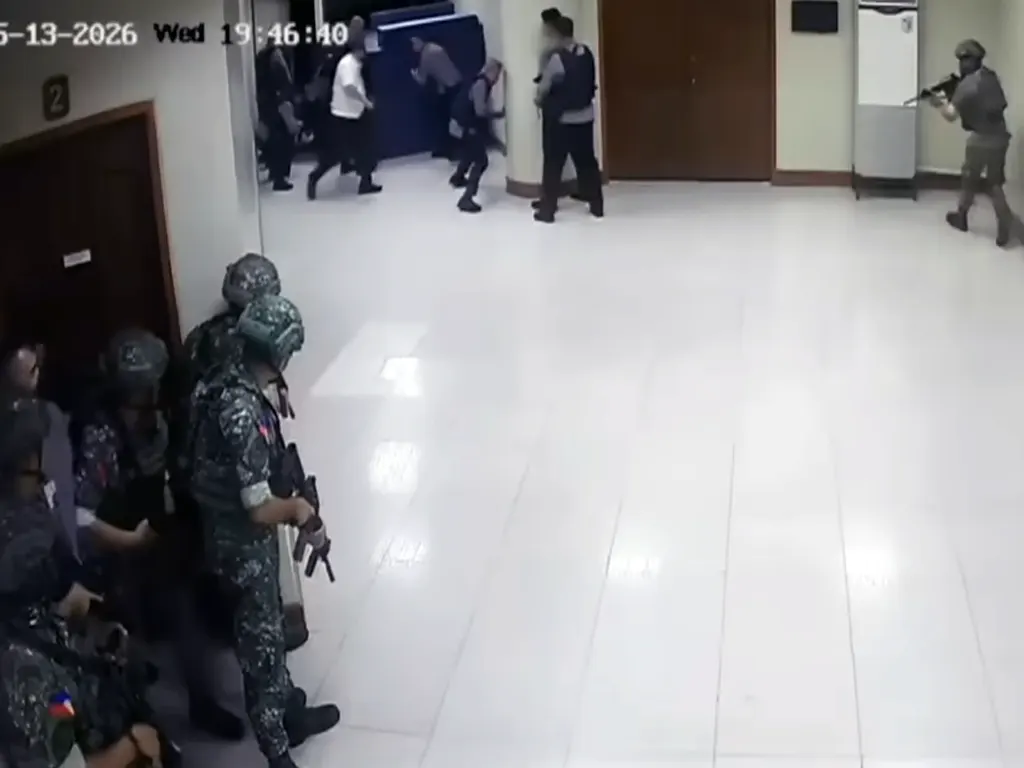
THE Criminal Investigation and Detection Group (CIDG) has recommended the filing of criminal charges against acting Senate Sergeant‑at‑Arms Mao Aplasca and at least two of his personnel in connection with the gunfire incident inside the Senate building last May 13.
CIDG Director Maj. Gen. Robert AA Morico II explained that their actions violated the rules under Republic Act No. 11917 or the Private Security Services Act, specifically its implementing rules which strictly prohibit the use of warning shots. He emphasized that while even regular police officers are barred from firing warning shots, non‑law enforcement units such as the Office of the Sergeant‑at‑Arms (OSAA) are bound by even stricter standards, making the discharge of firearms against legitimate NBI agents a clear violation of established protocols.
Investigation findings further revealed that there was no actual threat or attack taking place at the time the shots were fired.
According to Morico, standard procedure requires observing six progressive stages before lethal force can be authorized — none of which were followed in this incident. “It is very clear in our investigation that there was no attack in the Senate, there was no intent,” Morico stated, adding that the decision to abandon the area immediately after firing also contradicts the claim that they were defending the premises from danger. The actions taken by the OSAA personnel ran contrary to basic security principles and common sense, confirming that the use of firearms was unjustified under the law.
While holding them liable, the CIDG also noted that Aplasca’s judgment may have been compromised due to incorrect information he received prior to the confrontation.
A retired police major general and former head of the PNP Directorate for Operations, Aplasca was reportedly told that NBI agents were about to storm the Senate to serve a warrant against his former colleague, Senator Ronald “Bato” dela Rosa. Morico said authorities are now tracing the source of this misleading report, as it directly influenced Aplasca’s decision to order his men to “lock and load” and conduct a sweep of the premises. The probe also recommends administrative sanctions against whoever was responsible for relaying the false information.
In terms of evidence gathering, Morico confirmed that although Aplasca did not personally appear before investigators, he submitted his firearm for examination.
Recovered from the scene were 44 spent cartridges, traced to four different firearms — three belonging to OSAA personnel and one from a retreating NBI agent.
Three of the four weapons have already been surrendered, while ballistics tests are ongoing to verify if the remaining 23 shells were fired from Aplasca’s Scorpion CZ 9mm pistol carbine. The complete report and recommendations have already been turned over to the Department of Justice, which will review the findings and determine the final charges to be filed in court.
metrosundaily