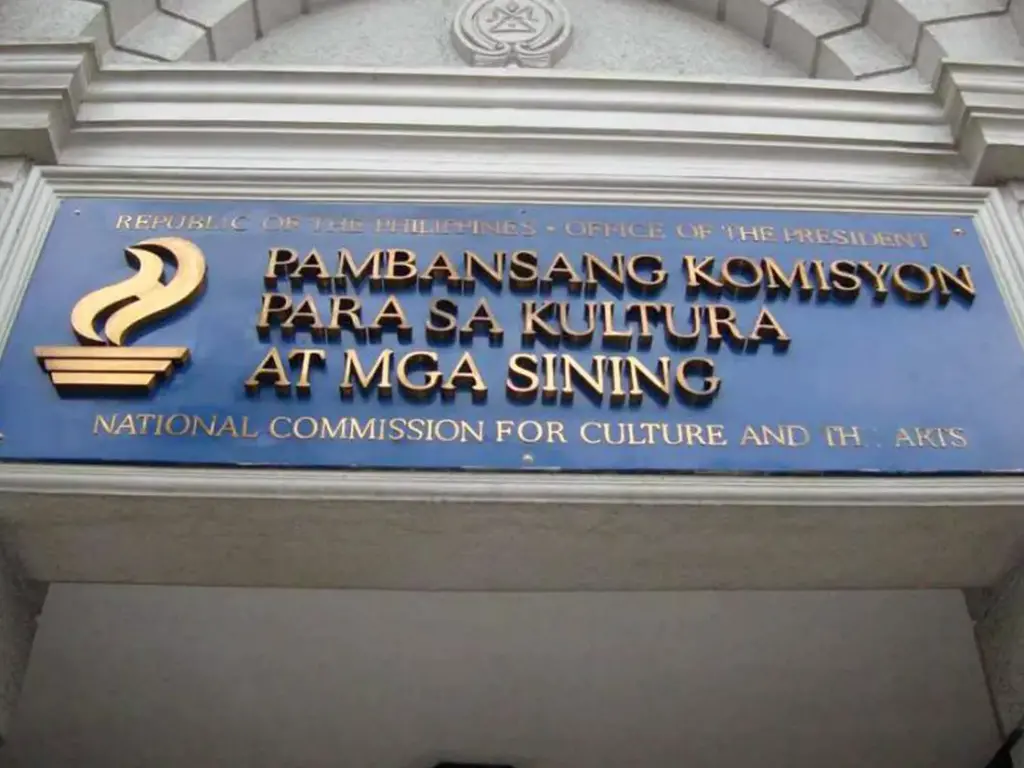
AS National Arts Month is celebrated this February, the chair of the House Committee on Creative Industry and Performing Arts Rep. Christopher de Venecia has lamented the “late release of National Commission for Culture and the Arts (NCCA) grants.”
The congressman said the NCCA grants release and process “needs to be speedier so that private partners can be empowered to put up more platforms for artists to showcase their work across the archipelago.”
“Due to the late release of grants from the NCCA to our artists for their participation in art fairs, our artists resort to advancing payments, relying on reimbursements and subjecting themselves to the tedious requirements needed in order to claim these,” De Venecia explained.
To incentivize our LGUs to convene the Local Culture and Arts Councils LCACs, De Venecia has called upon the DILG “to recalibrate the criteria for awarding the Seal of Good Local Governance by increasing the weight ascribed to the development of arts and culture in the locality.
This is in recognition of the actual economic benefits investing in arts, culture, and creativity can actually bring.”
“We are also optimistic that in the final findings of the Department of Education’s K-12 curricula review, there would be major shifts towards increasing art education and art appreciation for our young learners,” the congressman also said.
The congressman also asked the NCCA and the soon-to-be-convened Philippine Creative Industries Development Council to develop a database on all the galleries in the Philippines for the information of the general public, provide an avenue for collaboration and co-production among them and foster arts residency programs for appropriate funding “at the right time.”
De Venecia shared that in his legislative district, the Anakbanwa Creative Residency Program “will be tying up with Bacolod’s Orange Project for the upcoming Galila Arts Festival – a historical collaboration between Negrense and Dagupeño artists.”
“We also hope to forge more collaborations between the visual arts sector and the design sector — such as fashion, architecture, textile, interior design – to develop functional creations to foster an intellectual property ecology,” he said.
“There are other issues in this field such as art forgery (better addressed through strengthening the Art Forgery Act), lack of participation in intellectual property remuneration by our artists (which can be strengthened by revisiting the Intellectual Property Code), and the lack of opportunities such as art residencies (which we shall pursue through a bill that has been referred to our committee),” De Venecia also said.
The congressman recalled that “one of our initial legislative investigations in the 18th Congress was on the state of Visual Arts.
In 2012, the Visual Arts sector was found to have contributed P2.8 billion to the country’s Gross Domestic Product according to a study conducted by the World Intellectual Property Office published in 2014.”
“Due to COVID-19, our country’s museums and galleries closed down, whether temporarily or permanently, and laid off employees due to a drastic decrease in revenues of such establishments. Our Visual artists had limited to no access to art materials that they otherwise need to sustain their trade. And even now as the economy reopened, they remain costly. The sector had also been facing major pain points,” he said further.
De Venecia said: “Opportunities in visual arts, together with lack of infrastructure and that its patrons were heavily concentrated in Metro Manila and Metro Cebu. There is a general lack of permanent galleries in the countryside, which leads to the lack of diversity of regional material and opportunities to cultivate patronage. What exists are majority civic-sector led efforts to put up galleries.”
He also said, the “general lack of government mechanisms to provide benefits for our artists, whom we traced to the fact that there was no proper registration system for our artists for social services, and if there was, it came with all the red tape or the lack of general awareness of these processes.” The congressman added that “there was a lack of institutional support for art education in our schools. There were issues such as the lack of resources or equipment to educate students, or the mode of teaching was English, which may not have been the best for our learners who might be able to grasp these concepts better in the vernacular, or even the general lack of prioritization of art education vis-a-vis STEM subjects.
metrosundaily