
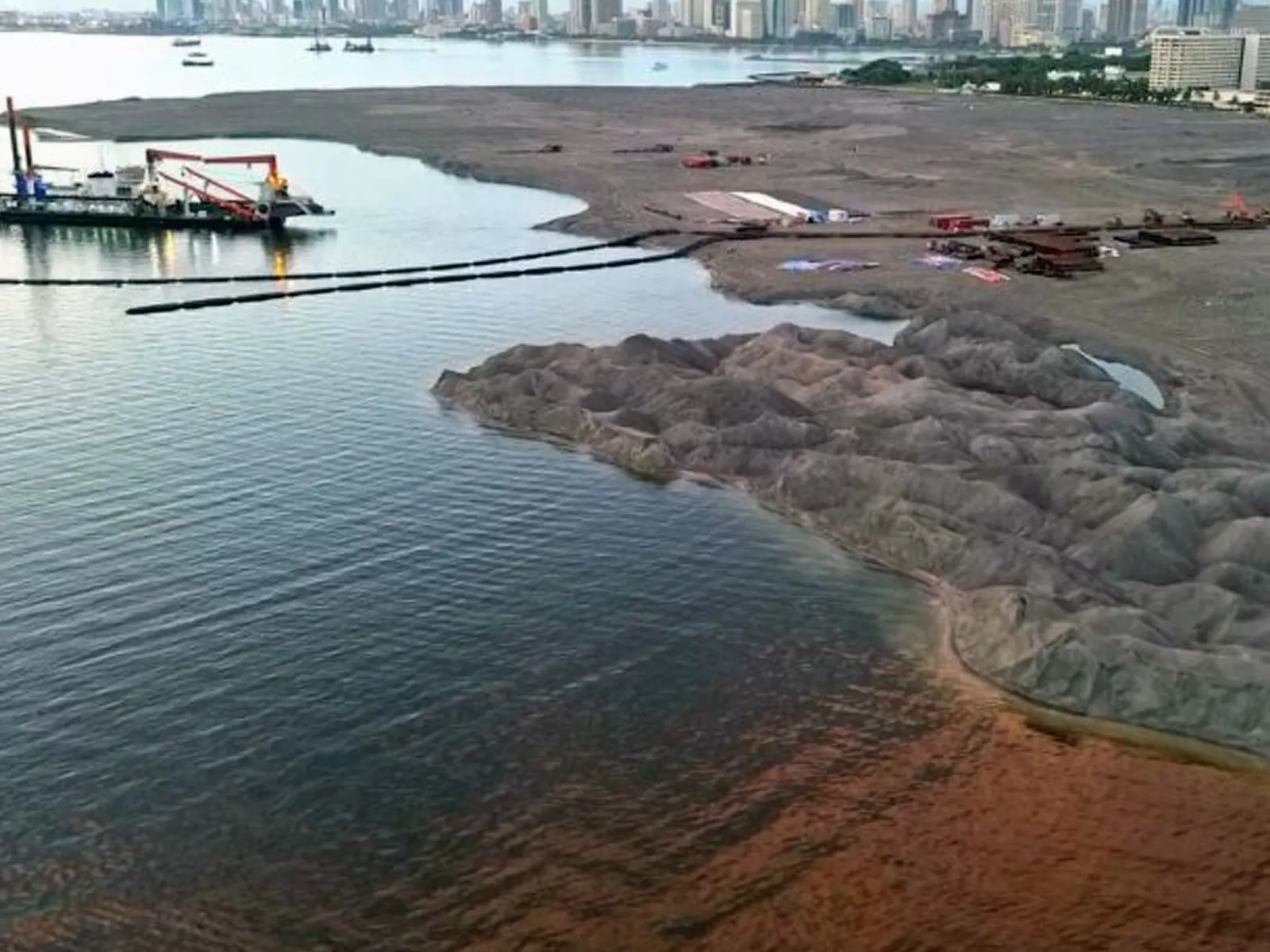
Courtesy: Dredging Today
By Jun Burgos
NOT a few observers say that apprehensions and criticisms on reclamation projects seem to be anchored mostly on environmental concerns. Such apprehensions and criticisms may actually be valid.
However, there are a whole lot more about reclamation projects than just the environment. Let’s take a more open look at the economic benefits of these reclamation projects. Countries like Singapore and Netherlands have 25% reclaimed land areas.
Even the US reclaimed part of New York. Bahrain, Qatar, UAE and other Middle East countries did some of the biggest reclamation projects in history.
There and also here in the Philippines, the strategic locations of would-be-made available lands because of reclamation are of prime importance to business and commerce.
Let’s take a look at this information from Wikipedia and published articles:
‘The early reclamation within the City of Manila began in the late 19th century during the Spanish colonial period involving the Manila South Port and the Manila North Port. In 1977, then First Lady Imelda Marcos commenced the construction of Bay City in line with her City of Man project… in which 3,000 hectares (30 km2) of land were planned to be reclaimed in Manila Bay. Only about 660 hectares (6.6 km2) were built encompassing the cities of Pasay, Parañaque and a small portion that lies within Manila.
Among the major developments in Bay City include the Cultural Center of the Philippines Complex, an 88-hectare (220-acre) reclaimed property owned by the Cultural Center of the Philippines (CCP) designed for mixed-use cultural and tourism hub overlooking Manila Bay in south-central Manila; SM Mall of Asia (MOA), which has a land area of 67 hectares (170 acres), a gross floor area of approximately 589,891 m2 (6,349,530 sq ft), and offers 46,647 m2 (502,100 sq ft) of floor area space for conventions and social functions, making it the largest shopping mall in the Philippines and the fifth in the world. There’s also the Aseana City, and Entertainment City.’
The US Embassy itself sits on reclaimed land. Such importance of locations was the key for the emergence in our country of these very notable establishments.
The Manila Bay shore before was only stretching up to the Taft Avenue and the Cuneta Astrodome (formerly Manila Polo Club) but the additional created land made the area bigger to be able to accommodate more establishments which have thus been the center of major economic activities that bring huge revenues to the government and incomes to businesses and workers.
Progress and development had been in full swing, especially with the anticipation of more lands to be created through reclamation. Alas! Work on the reclamation projects were suspended upon the verbal orders of President BBM.
The developers and other investors have already poured so much funds in their reclamation projects, and they’re losing a huge amount every day that work on their projects remain suspended.
Also, this suspension sends a wrong signal to foreign investors including those that have been invited by no less than PBBM in his official or state visits abroad to invest in the Philippines.
Perhaps, the right approach is to check the system of reclamation if everything is being done right, and, if there should be found anything wrong or lacking, corrective measures within the system must be utilized and maximized.
metrosundaily