
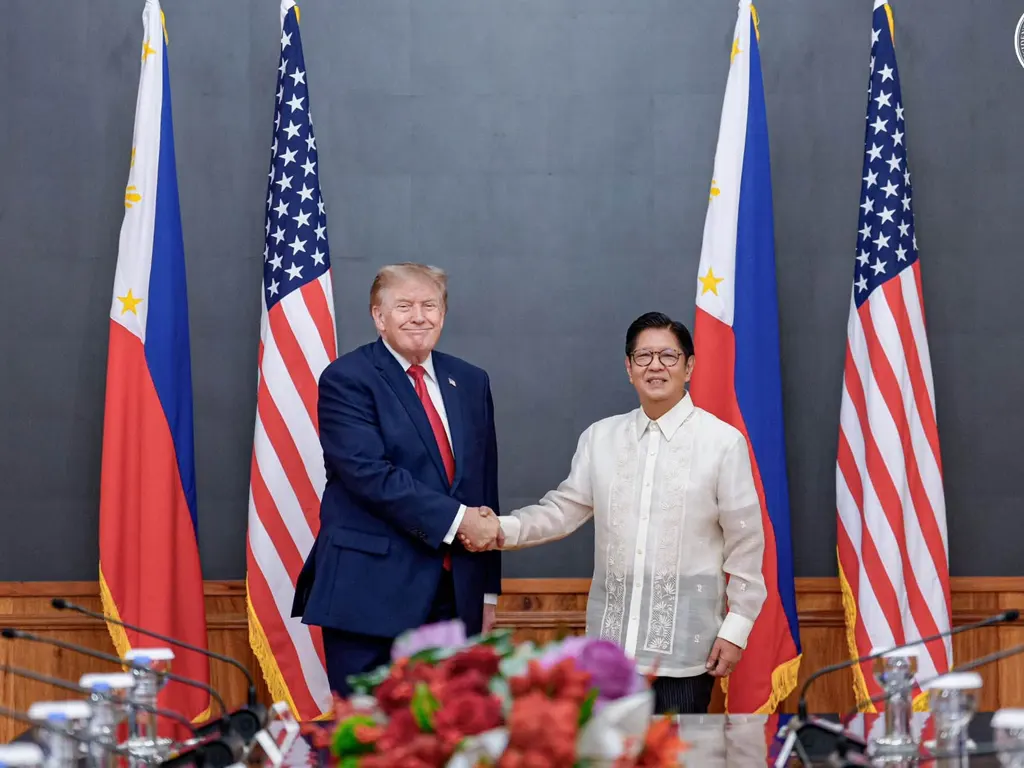
UNITED States President Donald Trump announced from the White House that the Philippines would shift to sourcing 100% of its agricultural products and energy requirements from the United States, effective January 1, 2027.
Trump made the statement during a recent press briefing, recalling his discussions with Philippine officials during his state visit to Manila for the ASEAN Summit earlier this month. He noted that currently only about 20% of the country’s agricultural imports come from the US, with the remainder coming from other major suppliers such as Brazil.
According to Trump, the agreement also covers the country’s energy imports, which the US President said would no longer be sourced from the Middle East.
“Where do you buy your energy?” Trump recounted asking President Ferdinand Marcos Jr., who he said replied that the Philippines purchased from the Middle East. “Not anymore,” Trump said he told the Philippine leader, adding that the country would instead source all its energy needs from the United States moving forward.
The announcement comes on the heels of what both sides have described as a “very big trade deal” struck during their bilateral meeting in Manila.
However, President Marcos offered a somewhat different framing of the agreement during a media gathering in Shenzhen, China, where he was attending the APEC Economic Leaders’ Meeting. Marcos explained that the trade arrangement was intended to diversify the country’s sources of key commodities such as food and energy — suggesting the goal was broader supply options rather than an exclusive single-source commitment.
Philippine Ambassador to Washington Jose Manuel Romualdez also clarified that under the deal, Trump had offered greater access to the US market for Philippine goods, with the objective of strengthening the country’s food and energy security.
As of press time, Malacañang, the Department of Agriculture, and the Department of Trade and Industry have yet to issue official confirmation or detailed clarification on the specific terms of the transition plan, pricing structures, supply reliability guarantees, or whether the Philippines would indeed fully phase out imports from other major trading partners. The differing descriptions of the arrangement from both sides have raised questions among industry stakeholders and the public, who await further details before drawing conclusions about the long-term economic implications for Filipino consumers and local producers.
metrosundaily