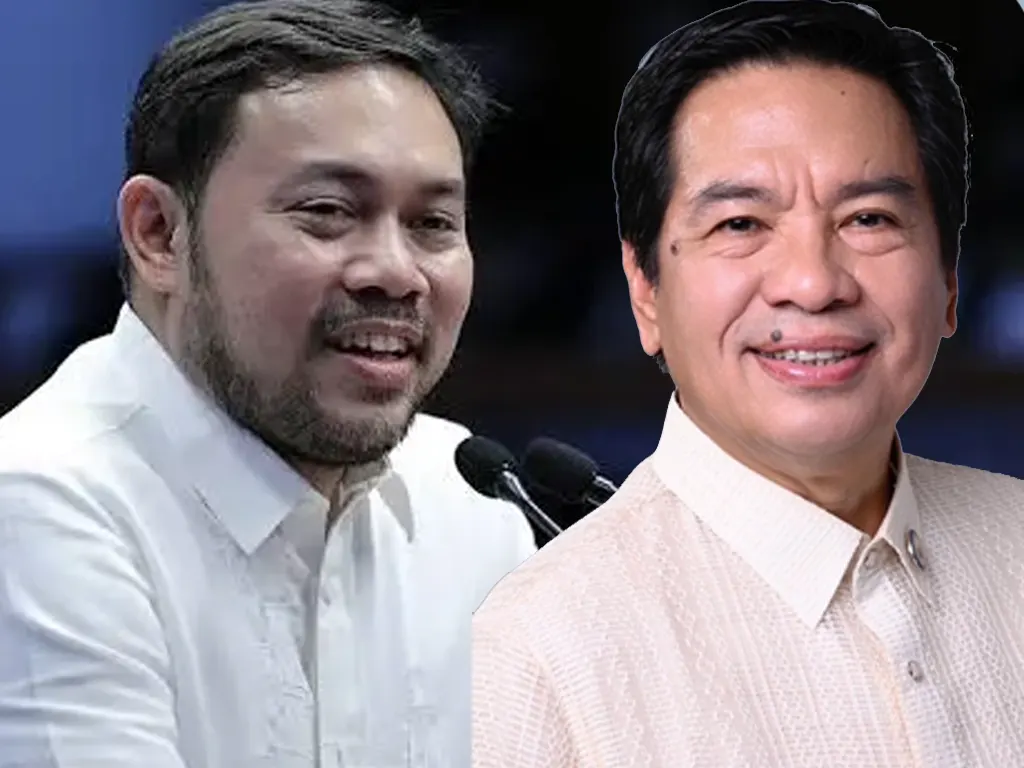
LAS Piñas Rep. Mark Anthony Santos has pressed Senator Mark Villar to explain why the Integrity Pledge, a key anti-corruption safeguard in government bidding, was removed during his tenure as Secretary of the Department of Public Works and Highways (DPWH).
The Integrity Pledge was institutionalized in 2013 by then DPWH Secretary Rogelio Singson through Department Order No. 86, s. 2013. It was not a mere memorandum, but a policy tool against corruption and collusion in public bidding.
Singson is back in public service after being appointed as one of the three members of the newly formed Independent Commission for Infrastructure (ICI). He was the DPWH chief from July 2010 to June 2016 and led the Good Governance and Anti-Corruption Program.
On the other hand, the ICI summoned Villar, who replaced Singson as DPWH chief from 2016 to 2021, to appear and testify in its investigation into the anomalous flood control projects in the country.
Justice Secretary Jesus Crispin Remulla confirmed that Villar is under investigation by the Department of Justice (DOJ) in connection with alleged irregularities in government projects. Remulla assured the public that due process will be observed as the probe moves forward.
Singson’s department order clearly stated that the Integrity Pledge “shall form part of the bidding documents” and was required of all contractors to be listed in the DPWH Registry of Contractors and to participate in bidding for infrastructure projects.
Through the Pledge, contractors committed to:
• Reject corruption and red tape, upholding professionalism and ethical standards;
• Avoid collusion and bid rigging, consistent with RA 9184 (Government Procurement Reform Act) and RA 3019 (Anti-Graft and Corrupt Practices Act);
• Submit reasonable bids that protect taxpayers from losses;
• Maintain a single, transparent set of financial records for auditing;
• Cooperate with transparency measures alongside DPWH and business watchdogs such as Transparency International.
According to Santos, the Integrity Pledge was the “seatbelt and CCTV of the bidding process.” While procurement laws were already in place, the Pledge served as an added moral and reputational safeguard to deter collusion.
“Under Secretary Villar’s leadership, the Integrity Pledge was no longer enforced as a mandatory requirement. To this day, there is no clear public document explaining why it was removed or allowed to lapse. By stripping away this safeguard, the bidding system fell back to the bare minimum protections of the procurement law,” said the Las Pinas lawmaker.
Now, as the country’s largest flood control corruption scandal unfolds, Santos questioned whether the removal of the Integrity Pledge created a wider space for contractor collusion and anomalies.
“Didn’t the absence of this safeguard make it easier for corruption to thrive?” Santos asked.
metrosundaily