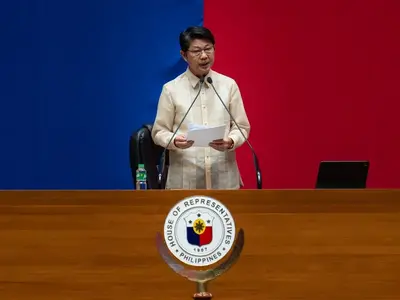
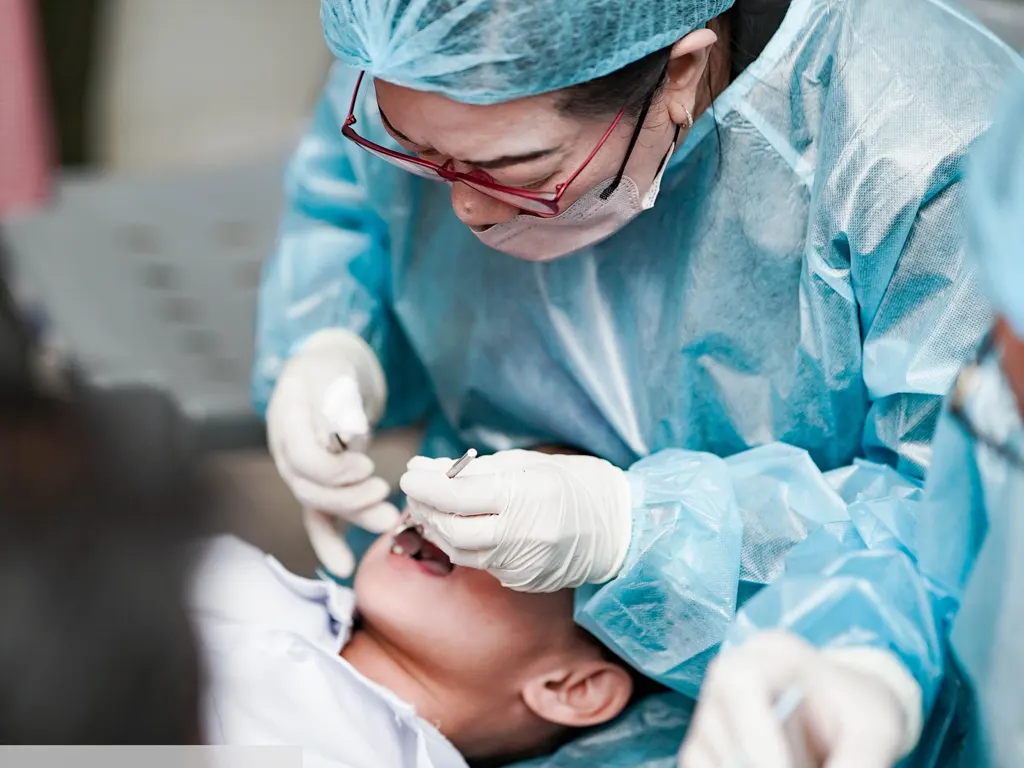
LEYTE Rep. Ferdinand Martin G. Romualdez and three other lawmakers are seeking to institutionalize a National Oral Health Program aimed at integrating dental care into the country’s primary health system and expanding access to essential services, especially for underserved Filipinos.
House Bill (HB) No. 4691, authored by Romualdez and Reps. Yedda Marie K. Romualdez, Andrew Julian K. Romualdez, and Jude A. Acidre of Tingog Party-list, underscored the need to treat oral health as a core component of overall well-being.
“Hindi dapat ituring na hiwalay ang kalusugan ng ngipin—ito ay bahagi ng kabuuang kalusugan ng bawat Pilipino. Sa panukalang ito, sisiguraduhin nating ang serbisyong dental ay abot-kaya, accessible, at hindi pribilehiyo kundi karapatan, lalo na para sa mga bata, buntis, at senior citizens,” Martin Romualdez, a lawyer from the University of the Philippines (UP), said.
“Kapag pinabayaan ang oral health, lumalaki ang gastos at problema ng pamilya. Layunin ng panukalang ito na gawing bahagi ng pangunahing serbisyong pangkalusugan ang dental care upang mapagaan ang gastusin at mapabuti ang kalidad ng buhay ng bawat Pilipino,” he added.
The proposed “Oral Healthcare Act” recognizes that “oral diseases are major public health problems and oral health is integral to general health and essential for the well-being of all people,” mandating the State to adopt “an integrated and comprehensive approach to health development.”
“Ang simpleng problema sa ngipin kapag napabayaan, nagiging malaking pasanin sa pamilya. Sa panukalang ito, tinitiyak nating mas maraming Pilipino ang magkakaroon ng access sa maayos na serbisyong dental,”
Acidre for his part said.
The bill further emphasizes the need for stronger public investment and preventive care, stating that the government must “adopt responsive and efficient policies in oral disease prevention and promotion by scaling up essential programs and increasing investments to make oral health treatment and care more equitable and affordable for all, especially for the underprivileged, poor, and marginalized Filipinos.”
Under the measure, a National Oral Health Program will be established to improve oral health outcomes, expand access to basic dental services, and reduce the prevalence of dental caries and periodontal diseases.
The program will integrate oral health promotion into existing public health initiatives, including the implementation of Republic Act No. 11223 or the Universal Health Care (UHC) Act, and Republic Act No. 11148 or the “Kalusugan at Nutrisyon ng Mag-Nanay Act,” alongside programs on nutrition, maternal and child health, and other priority sectors.
The proposed measure mandates the Philippine Health Insurance Corporation (PhilHealth) to expand its benefit packages to cover a wider range of oral health services for both adults and children. It also provides that the development and expansion of these benefits shall undergo a proper, transparent, and standardized prioritization process in accordance with the relevant provisions of the UHC Act.
It also seeks to “provide timely access to quality basic oral health care and treatment,” “control risks to oral health, especially of the younger population,” and “make oral health treatment and care more affordable and accessible.”
The bill defines basic oral healthcare as services that include “oral examination, toothbrushing drills, scaling or oral prophylaxis, filling of restorable cavities and extraction of unsavable teeth, including referral and check-up of dental clinical cases.”
To strengthen implementation, the proposal creates an Oral Health Service (OHS) under the Department of Health (DOH), which will oversee “policy development, standard setting, coordination, and integration of all oral health activities.”
The OHS will be headed by a Director and supported by units on policy and planning, research and surveillance, logistics, and administration to ensure effective delivery of services nationwide.
Among its key functions are to “formulate and recommend policies, standards, guidelines and techniques on oral health services,” and to “coordinate and oversee the provision of oral health services in all hospitals of the national government and local government units.”
The measure also addresses workforce gaps by mandating the creation of additional plantilla positions for oral health professionals, with priority deployment in Geographically Isolated and Disadvantaged Areas (GIDAs).
“Human resource development for oral health shall be geared towards the development of adequate, appropriate, competent and highly motivated health professionals and trained auxiliaries to manage and provide quality oral health services,” the bill stated.
To boost public awareness, the DOH is directed to intensify nationwide campaigns and leverage digital platforms to disseminate information on oral disease prevention and treatment. February will also be designated as “National Oral Health Month” to promote awareness and preventive practices.
Local government units will be required to implement their own oral health programs and establish oral health units in rural health facilities, staffed by a public health dentist and a trained Barangay Health Worker acting as a dental aide.
The bill also integrates oral health into regulatory standards for health facilities and mandates the Professional Regulatory Commission to adopt measures to curb illegal dental practices.
To ease the financial burden on patients, PhilHealth is tasked to expand its coverage for oral health services for both adults and children, subject to “proper, transparent and standardized prioritization process.”
Funding for the program will be sourced from existing DOH appropriations, with continued funding to be included in the annual national budget.
The DOH is also directed to issue implementing rules and regulations within 180 days upon the law’s effectivity.
The measure provides that it will take effect 15 days after publication in the Official Gazette or a newspaper of general circulation.
metrosundaily