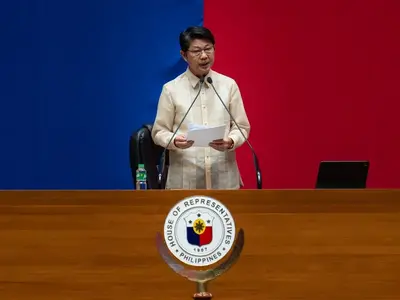

PRESIDENT Ferdinand R. Marcos Jr. has directed all government agencies to intensify and expand measures to protect food, water, and energy security as the El Niño phenomenon brings prolonged dry conditions across the country, Malacañang confirmed Wednesday.
The President convened key officials at the Palace on Tuesday to review preparedness plans and adopt a proactive, whole‑of‑government approach to mitigating the crisis, particularly in communities most vulnerable to drought. “President Marcos has ordered all agencies focused on mitigating drought to strengthen and scale up every government effort against El Niño,” Palace Press Officer Claire Castro stated during a briefing.
Food security is the administration’s top priority, with Castro reassuring the public that national supply reserves remain sufficient — covering 75 days for rice, 170 days for pork, and 125 days for chicken. The government stands ready to import additional stocks if needed to keep markets stable and prices manageable. Affected farmers will receive targeted financial assistance, temporary employment opportunities, and skills training to help sustain their livelihoods amid crop losses and reduced harvests. Agencies are also coordinating to identify at‑risk agricultural areas and distribute drought‑resistant seeds and water‑saving technologies.
For water security, the administration is promoting rainwater harvesting, wastewater treatment and reuse, and community‑level storage projects to supplement dwindling reservoir and groundwater levels.
As highlighted by the Department of Science and Technology in Central Visayas (DOST‑7), innovative systems such as containerized membrane bioreactors can treat up to 50,000 liters of wastewater daily for non‑potable uses, while local initiatives like “Sawra ang Ulan” enable households and barangays to set up their own affordable collection systems. Desalination and mobile emergency water treatment units are also being deployed in water‑scarce regions.
Energy security and public information form the remaining pillars of the response. The government is monitoring power supply reliability, especially as reduced hydroelectric generation and higher cooling demand may strain the grid. A stronger public awareness campaign will advise Filipinos on water and energy conservation practices and guide them toward assistance programs. The President emphasized that all these measures must be implemented promptly and collaboratively to minimize hardship and ensure no community is left behind as dry conditions intensify through early 2027.
metrosundaily