
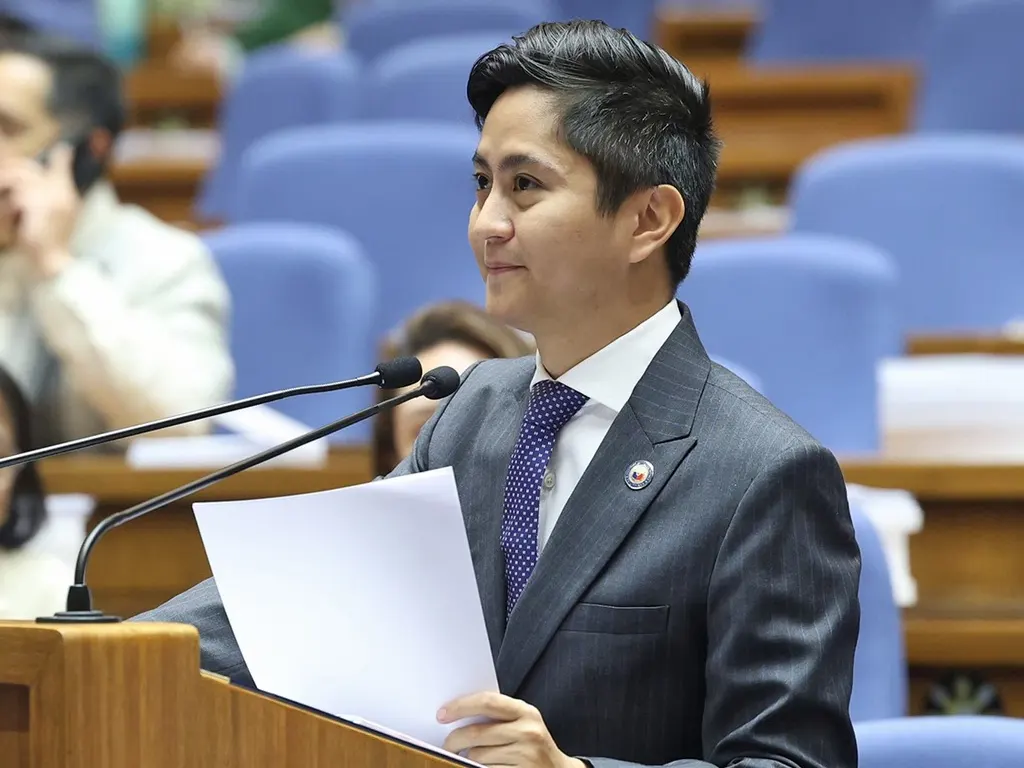
THE House of Representatives is aiming to bring 17 out of 52 priority measures under the Legislative-Executive Development Advisory Council Common Legislative Agenda closer to passage by the end of this week, with four bills lined up for approval as the chamber adjourns in time for the Holy Week break.
House Majority Leader Ferdinand Alexander “Sandro” A. Marcos of Ilocos Norte said the target shows how the House is working to turn the administration’s priority list into actual measures that can move from the committees to the plenary floor and, ultimately, into law.
“We are right on track to approving LEDAC measures on time. The public does not live on promises alone, they need results. And that is precisely what we are trying to deliver by moving these measures with urgency and discipline,” Marcos stressed.
Marcos credited Speaker Faustino “Bojie” Dy III for keeping the House focused on measures that carry direct impact on public life, from energy and education to governance and social protection, saying the chamber has stayed on pace because the leadership understands that legislative work must be felt beyond the walls of Congress.
“The House of Representatives is working hard to pass the LEDAC measures because every member knows that these bills, if they become law, will help every Filipino family,” Marcos said.
“Lalo na ngayon, when the prices of goods are spiking because of the Middle East conflict. Mas kailangan nating sipagan para maramdaman ng bawat Pilipino na nandiyan ang Kongreso at pamahalaan,” he added.
The LEDAC Common Legislative Agenda is the list of priority bills agreed upon by the Executive and Congress, and in the House’s current count, 52 measures are being tracked as of March 12, 2026.
From that list, the chamber is aiming to push 17 measures by this week, with four bills now positioned for approval on third reading: Travel Tax Abolition Digital Payments Act Amendments to the Universal Access to Quality Tertiary Education Act Presidential Merit Scholarship Program.
Marcos stated that these four bills, which are nearing final House approval, offer a combination of relief and reform. They aim to eliminate outdated burdens on travelers, modernize digital payments in government, expand access to higher education, and provide merit-based scholarship support for deserving students.
Beyond those four, two LEDAC measures are already under bicameral conference committee, which means the House and Senate are now reconciling disagreeing provisions before the bills can be sent onward. These are the National Center for Geriatric Health bill and the measure Resetting the First Regular Elections in the Bangsamoro Autonomous Region in Muslim Mindanao or BARMM.
Eleven LEDAC priority measures have already been approved by the House on third reading, placing them ahead in the legislative queue and showing where the chamber has already banked substantial progress. EPIRA Amendments: ERC Strengthening
Waste-to-Energy or Waste Treatment Technology
Amendments to the Government Assistance to Students and Teachers in Private Education Act
Assistance to Individuals in Crisis Situations or AICS Act
Amendments to the National Building Code
Blue Economy Act
National Reintegration Bill
Amendments to the Teachers Professionalization Act
Extension of Estate Tax Amnesty Period
Department of Water Resources Bill
Amendments to the Bank Deposits Secrecy Law.
If the House approves the four measures mentioned above, it will bring to 17 the number of LEDAC bills that already hurled the chamber’s approval out of the 52 listed.
Furthermore, three more measures are in the pipeline en route to final approval, with the House listing them for action on second reading.
Anti-Political Dynasty
National Land Use Act Amendments to the Biofuels Act.
Seven other LEDAC bills have already been approved by the relevant committees and are now awaiting comments from Appropriations and or Ways and Means, a stage that often determines how quickly a measure can be cleared for plenary action once funding, fiscal effect, or revenue implications are settled. Modernizing the Bureau of Immigration
Creating the Independent People’s Commission
Amendments to the Magna Carta for MSMEs
Disaster Risk Financing Insurance
Classroom-Building Acceleration Program
Amendments to the Pantawid Pamilyang Pilipino Program or 4Ps Act
Reprogramming of Seal of Good Local Governance.
The remaining 25 LEDAC priority measures are currently undergoing technical working group discussions or committee deliberations, composed of:
Amendments to the Universal Health Care Act
Excise Tax on Single-Use Plastics
Amendments to the Rice Tariffication Law
Amendments to the Masustansyang Pagkain Para sa Batang Pilipino Act
Philippine Civil Registration and Vital Statistics Act
Strengthening the Bases Conversion and Development Authority
Amendments to the Fisheries Code
Right to Information
Amendments to the Local Government Code on the Special Education Fund.
Law on Online Gambling
Cybersecurity Act
Magna Carta for Barangays
Amendments to the Coconut Farmers and Industry Trust Fund Act
General Tax Amnesty
Masterplan for Infrastructure and National Development
Progressive Budgeting for Better and Modernized Governance Act
Disqualifying Relatives of Official up to the Fourth Degree in Government Contracts.
Fair Use of Social Media, AI, and Internet Technology in Elections
Amendments to the Downstream Oil Industry Deregulation Law
Requiring Civil Servants to Waive Bank Secrecy
Amendments to the Anti-Money Laundering Act
Citizen Access and Disclosure of Expenditures for National Accountability or CADENA Act
Party-list System Reform Act
Anti-Fake News and Disinformation Act
Amendments to the Anti-Online Sexual Abuse or Exploitation of Children and Anti-Child Sexual Abuse or Exploitation Materials Act.