Courtesy: Crown Asia
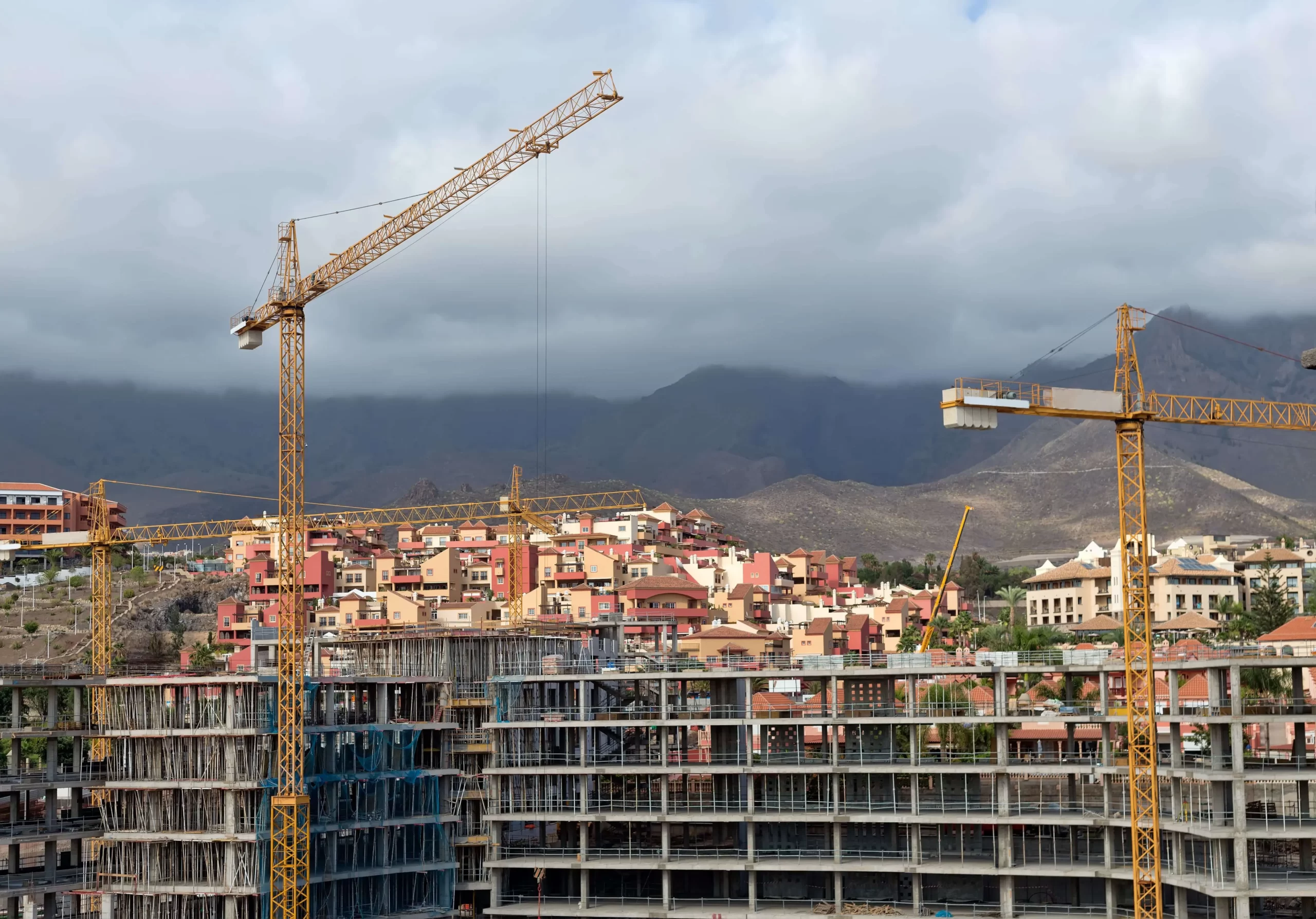
THE House of Representatives on Wednesday approved on third and final reading House Bill (HB) No. 8500, which contains the country’s proposed new National Building Code or law.
Speaker Ferdinand Martin G. Romualdez said if and when enacted, the draft legislation would “protect the public against multiple hazards like fire, weather disturbances, and earthquake better than our
existing building law and regulations.”
He said the present building code, embodied in Presidential Decree (PD) No. 1096, was enacted on Feb. 19, 1977, or more than 46 years ago, by President Ferdinand Marcos Sr.
“Many developments in building standards and technologies, climate change, and disaster risk reduction and management have since taken place. It’s time that we update our law under the second Marcos
administration,” he said on the measure which was approved with an overwhelming 266 votes.
He added that “a single life or structure we can save is more than worth the time, money, and effort we have put in keeping our building law abreast with best practices and regulations.”
HB No. 8500 is titled, “An Act regulating the planning, design, construction, occupancy, maintenance, and demolition of buildings, promoting building resilience against earthquake, fire, flood,
landslide, storm, volcanic eruption, and multiple hazards within an all-hazards approach to resilience building, enacting a new Philippine Building Act, repealing for the purpose Republic Act No. 6541, “An Act to ordain and institute a National Building Code of the Philippines”, and Presidential Decree No. 1096, otherwise known as the “National Building Code of the Philippines.”
Its short title is, “New Philippine Building Act.”
The bill is a consolidation of 10 related measures, two of which were authored by Rep. Romeo Momo Sr. of Surigao del Sur and Rep. Salvador Pleyto Sr. of Bulacan, who are both former undersecretary of the
Department of Public Works and Highways.
“We have to make our buildings withstand a magnitude 8 earthquake,” Pleyto said, adding that buildings should be “resilient against earthquakes, fire, flood, landslide, storm, volcano, and multiple
hazards.”
“This law (PD 1096) has to be repealed. We have been using this obsolete law,” Pleyto said on the measure called the “New Philippine Building Act,” which would make edifices more durable, especially in the country which is hit by numerous disasters every year.
Momo chairs the House committee on public works and highways, which endorsed the proposed new building law.
The authors of the eight other related measures are Reps. Mikee Romero, Faustino Dy V, Mike Tan, Marie Bernadette Escudero, LRay Villafuerte, Miguel Luis Villafuete and Tsuyoshi Anthony Horibata,
Teodoro Haresco Jr., and Rufus Rodriguez.
Romero, who filed the first bill to revise the National Building Code, said the law “needed to be updated to conform with the present challenges and permit processes have to be streamlined to enhance ease
of doing business while promoting the safety and security of life and property.”
Momo said the proposed new law sets the “minimum standards for the regulation of location, planning, design, construction, occupancy, maintenance, and demolition of buildings.”
The consolidated bill provides that all doubts in the interpretation and implementation of its provisions shall be construed in a manner that is considered with and promotes its policies and objectives.
It allows local government units to pass their own building ordinances, provided these are consistent with the proposed new building law.
It mandates that the construction of structures that straddle LGUs shall be harmonized.
The measure provides for the classification of buildings, including residential, business, commercial/mercantile, educational, agricultural, institutional, factory/industrial, storage, utilities,
and high-hazard.
It prescribes the construction standards and requirements for each category.
The secretary of public works and highways shall serve as the proposed new law’s chief implementer. He shall be designated as National Building Official (NBO).
He will be assisted by LGU-level implementers to be called local building officials.
The proposed new building code also provides penalties for violations, including administrative sanctions, fines, and imprisonment of up to six years.
metrosundaily