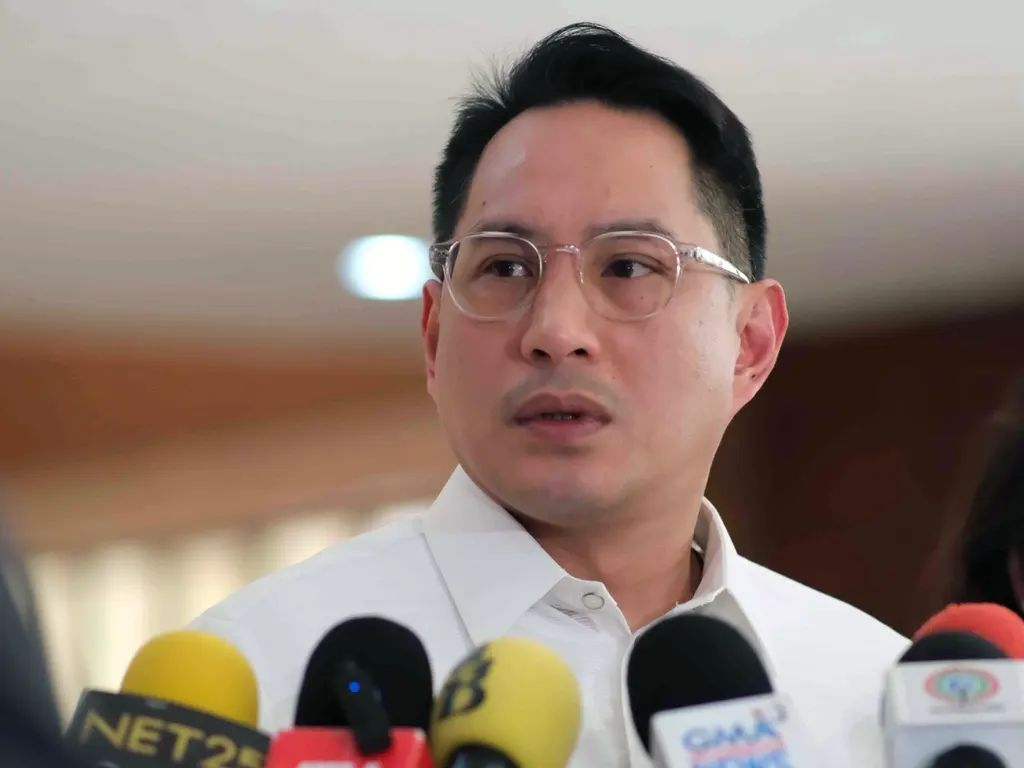
HOUSE Assistant Majority Leader Zia Alonto Adiong of Lanao del Sur on Monday said that while Atty. Manases R. Carpio has the right to challenge the House Committee on Justice’s subpoena in court, the more prudent course for him and his wife, Vice President Sara Z. Duterte, is to directly address the impeachment allegations and present counter-evidence.
“I think this is a perfect opportunity for the respondents to really, you know, belie the allegations by answering directly the allegations kasi ‘yun ang pinakamas madali na remedy for that,” Adiong, chair of the House Committee on Suffrage and Electoral Reforms, told reporters in an ambush interview.
“Una, kung mayroon talagang sagot, madali namang sagutin kung may sagot ‘no,” Adiong added.
Adiong further explained that the impeachment hearings are necessary to determine whether the evidence cited in the complaints against the vice president holds up.
This is why the House Committee on Justice subpoenaed certified true copies of financial documents, tax records, audit reports, and other pieces of evidence from relevant agencies, as well as invited witnesses and resource persons to testify.
“We are merely trying to seek out ‘yung mga material allegations, whether these allegations under the complaints have a certified true copy from each agency,” Adiong said.
“So what we are actually doing tomorrow (Tuesday) is to verify whether the allegations have corresponding material evidence from those who are alleging under the complaints, and at the same time also requiring the respondents to provide also counter evidence,” Adiong added.
He also rejected Carpio’s characterization of the subpoena as “exceedingly overstretched,” arguing that the financial records are all the more crucial given that the impeachment complaints accuse Duterte of amassing unexplained wealth.
The documents are all the more essential to determining whether discrepancies truly exist in her Statements of Assets, Liabilities, and Net Worth as alleged in the complaints.
For Adiong, if a person knew they were innocent of an alleged crime, they should have no reason to go through the trouble of filing a petition and seeking a temporary restraining order.
“I would not burden myself with filing, you know, TROs if I know in myself that I’m innocent ‘di ba? Ganu’n lang naman ‘yun eh,” Adiong said, stressing that innocent individuals would normally appreciate the opportunity to disprove serious allegations made against them.
“In fact, kung ikaw inosente… mas wine-welcome niya ‘yung ganitong opportunity, kasi this will be the chance to belie all the allegations,” Adiong added.
The lawmaker also downplayed claims that Ramil L. Madriaga, the subpoenaed witness, is the “weakest link” in the impeachment complaints.
Adiong pointed out that it is precisely because Madriaga’s testimony and claims were cited in the third and fourth impeachment complaints — both deemed sufficient in form and substance — that the Committee on Justice must scrutinize them thoroughly.
He then stressed that the committee’s duty is to determine probable cause for each charge listed in the complaints against Duterte, and not exactly establish Madriaga as a “viable witness.”
“Pero as to whether or not Madriaga is a viable witness or his testimony is true or not, that is already the job of the Senate acting as an impeachment court,” he said.
Regardless of whether Duterte and her counsel attend the hearings, Adiong said the Committee on Justice will proceed. It is the House’s constitutional duty, particularly as it will be acting as prosecutor should the case be transmitted to the Senate for trial, he added.
Adiong also reminded that the hearings serve another purpose: affording Duterte the due process she claimed was denied to her during the first impeachment bid, which the Supreme Court (SC) struck down as unconstitutional and ordered the House to remedy by ensuring the respondent was given due process.
“So ngayon, ang sinasabi doon sa ruling ng Supreme Court is to provide due process to the respondent, and that’s exactly what the Committee on Justice is doing — to provide ample opportunity for the respondent to join and attend the hearing so that they can actually provide also their counter evidences ‘no [and] to belie the allegations under the complaint,” Adiong said.
metrosundaily