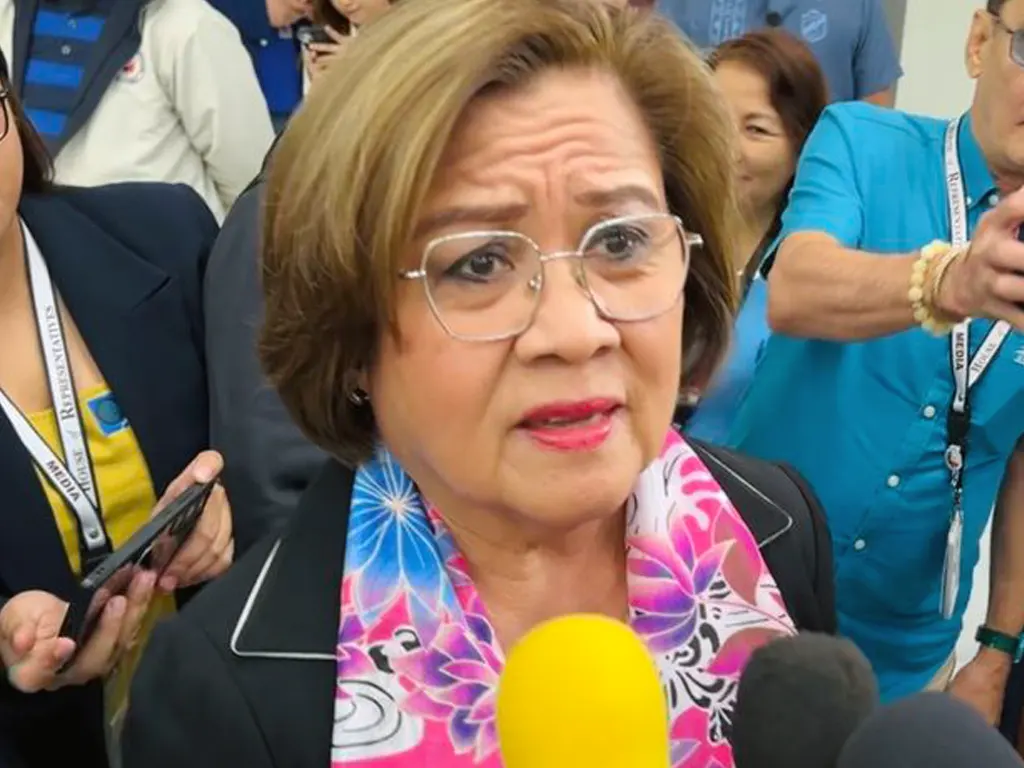
HOUSE Deputy Minority Leader and Mamamayang Liberal (ML) Partylist Rep. Leila M. de Lima has filed a measure to look into the proliferation of reclamation projects in the country and their impacts on communities and the environment.
In her House Resolution (HR) No. 574, De Lima wants to probe existing reclamation projects, starting with those in Manila Bay, and determine the accuracy of government data, evaluate compliance with environmental laws, and assess their socioeconomic impact on affected communities.
“In view of the permits secured by the various reclamation projects in Manila Bay despite documented community-based concerns and science-based assessments pointing to their negative impacts on the environment and neighboring communities, there is a need to assess all reclamation projects in the country to determine the validity of their process of securing the necessary permits and to ensure that their negative impacts have been assessed and considered thoroughly,” the Resolution read.
De Lima further pointed out that the governance structure for reclamation involves multiple agencies with overlapping mandates, including the Philippine Reclamation Authority (PRA), the Department of Environment and Natural Resources (DENR), Local Government Units (LGUs), and the Office of the President, “resulting in confusion, gaps in accountability, and inconsistent enforcement.”
“There exists a concerning lack of clarity regarding the actual scope of reclamation activities, with recent data showing conflicting figures. These discrepancies suggest a fragmentation in data monitoring and regulatory oversight.”
“Dapat nababantayan at namomonitor ito nang maigi. Hindi dapat basta-basta pinapayagan o nakakalusot ang ganitong mga aktibidad na nakita na natin ang dalang panganib sa mga apektadong komunidad,” she added.
Reports claim that each reclamation project in the Manila Bay was assessed on their environmental impact as stand-alone obstructions on the Bay, when the proper course of action should have been to assess and examine the combined impact of all 20 to 30 reclamation projects on the environment.
It can be recalled that the United States previously expressed concerns about the environmental impacts of reclamation projects in Manila Bay, which borders the United States embassy, and the involvement of a Chinese construction firm blacklisted by Washington.
In 2023, President Ferdinand “Bongbong” Marcos Jr. ordered the suspension of all reclamation projects in Manila Bay, except one which remains unnamed and unidentified, pending a review of their compliance with environmental regulations.
“Sa kabila ng mga sinasabing modernisasyon o pag-unlad na hatid ng mga reclamation, hindi dapat ma-etsapuwera dito ang kalikasan, kabuhayan at kaligtasan ng mga Pilipino. Kailangang nasa iisang direksyon at nakatutok nang maigi dito ang mga ahensya ng ating pamahalaan,” De Lima said.
“Hindi makatarungan na sa mga reclamation, kasamang tatabunan ang kabuhayan ng ating mga kababayan, at mailalagay lang lalo sa peligro ang mga komunidad dahil sa pagkasira ng mga yamang dagat at paglubha ng mga pagbaha,” she added.
As then Senator, De Lima also called for a Senate inquiry to probe large-scale land reclamation projects for the threats they pose to coastal and marine ecosystems around the country.
She emphasized that there must be strict implementation of the country’s environmental laws, stating that the widespread approval of reclamation projects is alarming for the current and future generations of Filipinos. The solon added that the government should consider imposing a moratorium on the continuing approval of such projects detrimental to the environment and to the livelihoods of our countrymen.
metrosundaily