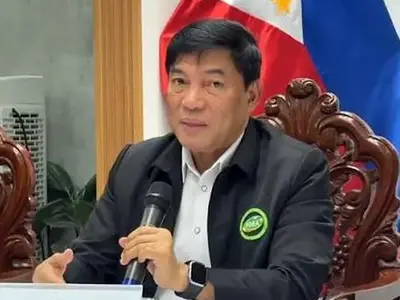

Camiguin Gov. XJ Romualdo explaining the outcome of the PBBM (AKAP rice) pilot program in his province.
A FLAGSHIP initiative under the Bagong Pilipinas agenda of President Ferdinand R. Marcos Jr. is showing early signs of transformative success, with the pilot implementation of Para sa Bayan Bigas na Mura (PBBM) in Camiguin cutting the retail price of rice by half for thousands of low-income families.
The program, previously called AKAP Rice, was rolled out in Camiguin from December 14, 2024 to March 23, 2025, in partnership with the Department of Social Welfare and Development (DSWD) and the provincial government led by Governor Xavier Jesus “XJ” Romualdo.
Governor Romualdo presented the implementation report last Thursday during a coordination meeting held at the Camiguin Provincial Capitol, attended by representatives from the Office of Leyte 1st District Rep. Ferdinand Martin G. Romualdez, 52 other Members of the 20th Congress, and DSWD officials.
Also present were Representatives Maria Carmen Zamora (1st District, Davao de Oro), De Carlo “Oyo” Uy (1st District, Davao del Norte), Nelson “JR” Dayanghirang Jr. (1st District, Davao Oriental), and Monkayo Mayor Manuel JayR Zamora.
Romualdo thanked Romualdez, 19th Congress House Speaker, for his crucial role in initiating the pilot but emphasized that the program reflects President Marcos’ broader vision for food security and inclusive growth.
“This initiative is rooted in the President’s call for a Bagong Pilipinas—one that delivers for the people,” Gov. Romualdo said. “Speaker Martin Romualdez deserves our thanks for championing this cause and convincing us to use Camiguin as the pilot area. His support helped bring the President’s vision to life on the ground.”
Key Outcomes from the Pilot Implementation in Camiguin:
• Price Reduction: Rice was sold at an average subsidized price of ₱27.80 per kilo—down from market prices above ₱60.
• High Coverage: 25,615 of 25,655 registered citizens were endorsed as beneficiaries, or 99.7% coverage.
• Strong Usage: A total of 33,762 redemptions were recorded, with an average of 2 transactions per beneficiary.
• Efficient Budget Use: ₱18.58 million out of ₱20 million (93%) was efficiently utilized.
• Retail Footprint: 7 accredited rice retailers participated across 16 store locations.
• Subsidy Per Household: Each beneficiary received ₱750 in subsidy, equivalent to 50% off for up to 25 kilos of rice.
The PBBM program allows beneficiaries to purchase rice from accredited retailers at half the cost, with the DSWD covering the other 50% through digital wallets. Beneficiaries select their preferred rice variety and amount, while LGUs and agencies monitor real-time transactions and ensure timely reimbursement to vendors.
Future Expansion and Farmer Integration
In the next phase of PBBM’s rollout, the program will prioritize locally produced rice to support Filipino farmers and eliminate abusive middle traders. Plans are being developed to accredit Irrigators’ Associations and farmer cooperatives as official rice retailers, allowing them to directly supply rice under the program.
This move aims to ensure that the PBBM program benefits not just consumers but also the backbone of Philippine agriculture.
Romualdez affirmed the importance of this direction in earlier consultations:
“This is not just about lowering prices. It’s about empowering local farmers, removing abusive intermediaries, and building a food system that works for everyone. That’s what Bagong Pilipinas means.”
The PBBM initiative is part of President Marcos’ commitment to fighting hunger, stabilizing food prices, and investing in long-term agricultural reform.
With the success of the Camiguin pilot, the DSWD, Department of Trade and Industry (DTI), and Department of Agriculture (DA) are now working with Congress to prepare for a national rollout, which will be supported in the 2026 General Appropriations Act.
metrosundaily