LAS Piñas Lone District Rep. Mark Anthony Santos today urged local government units (LGUs) across Metro Manila to adopt a uniform anti-littering ordinance to strengthen efforts to keep the metropolis clean, orderly and free from improperly disposed garbage.
Santos said Metro Manila needs a common set of rules and penalties against littering to ensure consistent enforcement and prevent confusion among residents, commuters and motorists who move from one city to another.
“Metro Manila is one interconnected community. Our policies against littering should also be consistent. There should be no safe haven for people who recklessly throw their garbage on streets, sidewalks, waterways and other public spaces,” Santos said.
Under Republic Act No. 9003, or the Ecological Solid Waste Management Act, littering and the improper disposal or scattering of garbage in public places—including roads, sidewalks, canals, waterways and parks—are prohibited.
In Metro Manila, existing MMDA regulations provide for a ₱500 administrative fine or one day of community service for certain anti-littering violations. Higher penalties or other sanctions may apply depending on the violation and the applicable local ordinance.
Santos proposed that Metro Manila LGUs work together in crafting a uniform anti-littering ordinance that would clearly define prohibited acts and establish standardized penalties, including fines and community service, for violators.
He said the proposal comes as the government confronts what Department of Public Works and Highways (DPWH) Secretary Vince Dizon has described as a growing “garbage crisis” that requires a comprehensive, long-term solution.
Dizon has warned that while government agencies can quickly mobilize for clean-up operations, stopgap measures and periodic clean-up drives are not enough to address the root causes of the problem.
He has called for greater discipline among LGUs and the public in waste disposal, as well as the development of an overall master plan to address the garbage crisis.
Santos said Dizon’s call for a comprehensive master plan should be supported by stronger and more coordinated policies among Metro Manila LGUs.
“Garbage does not recognize city boundaries. What is thrown in one area can end up in another city’s drainage system, creek or waterway. That is why our response must also be coordinated across Metro Manila,” Santos said.
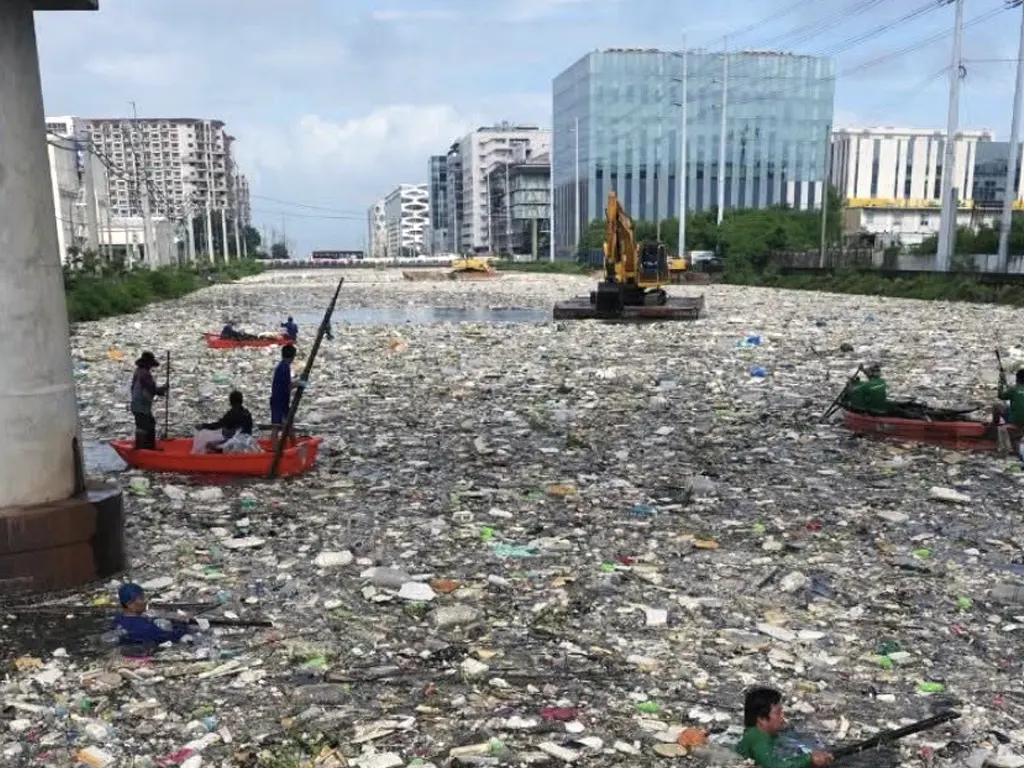
The Las Piñas lawmaker stressed that improper garbage disposal is not merely an issue of cleanliness. It can clog drainage systems, worsen flooding, pollute waterways and pose risks to public health and safety.
“Garbage thrown on streets and sidewalks eventually finds its way into canals, creeks and waterways. When these become clogged, the risk of flooding increases. A simple act of littering can therefore create serious consequences for an entire community,” he said.
Santos also called on LGUs to complement stricter enforcement with sustained public information campaigns, adequate garbage bins, accessible waste collection points and regular monitoring of littering hotspots.
“Penalties alone will not solve the problem. We need discipline, consistent enforcement, proper waste management facilities and public education. Our goal is a cleaner, safer and more responsible Metro Manila,” Santos said.
He said a uniform anti-littering policy, combined with a comprehensive waste management master plan, would help shift the government’s approach from temporary clean-up operations to long-term solutions that promote discipline, accountability and responsible waste disposal.
metrosundaily