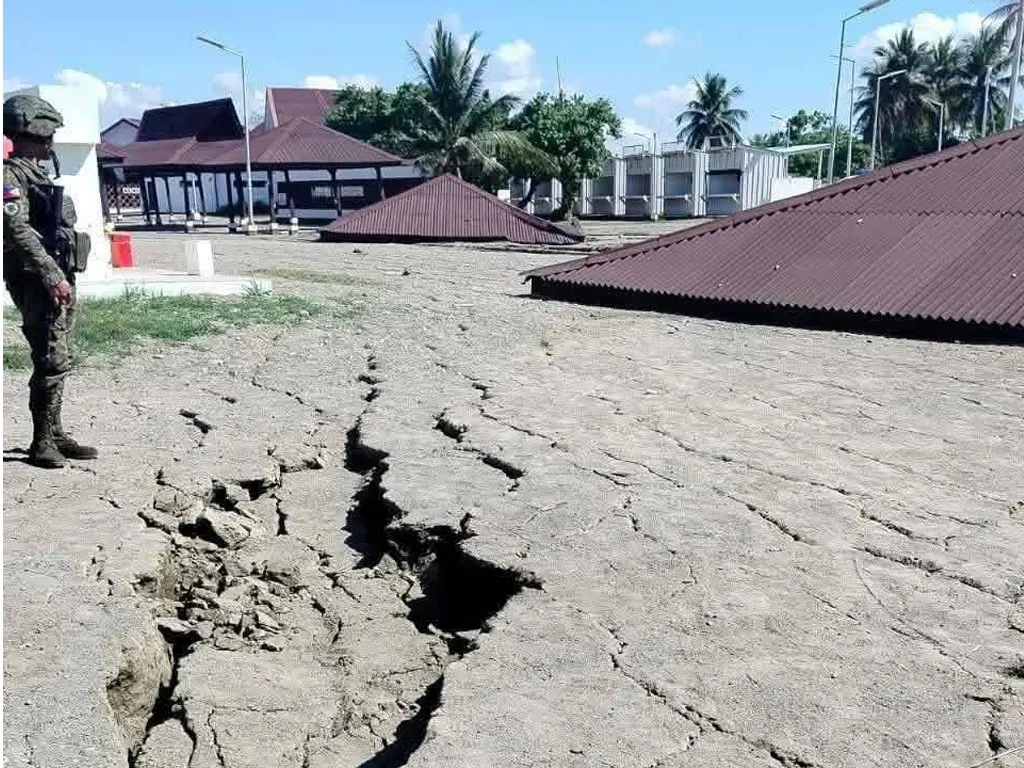
Cracked ground and collapsed beach cottages were among the damage left by the powerful earthquake that struck Mindanao on Monday morning, June 8, 2026. Photos from a beach resort in Barangay Ladol, Alabel, Sarangani show significant ground fissures and structural damage caused by the strong tremor, highlighting the earthquake’s impact on coastal communities in the area. Local authorities continue to conduct damage assessments and monitor affected sites as recovery efforts remain underway. 📷 : MDRRMC/RDANA via Alabel Information Office
THE Philippine Institute of Volcanology and Seismology (Phivolcs) has recorded a total of 3,860 aftershocks as of 9:00 a.m. this Friday, following the powerful magnitude 7.8 earthquake that struck Mindanao on June 8.
Of these recorded tremors, 966 have been plotted or located, while 64 were strong enough to be felt by residents across the affected provinces and cities. The magnitudes of the aftershocks ranged from as low as 1.2 up to a significant 6.4, according to data gathered from the General Santos Seismic Station and the Don Marcelino Seismic Station in Davao Occidental.
Meanwhile, the Office of Civil Defense (OCD) has updated the human cost of the disaster, reporting that the death toll has now climbed to 55. OCD Deputy Spokesperson Diego Mariano confirmed that at least 1,120 people have sustained injuries of varying degrees and are currently receiving medical care or assistance. Search and rescue operations continue in the hardest‑hit areas, with 31 individuals still listed as missing as of the latest count.
Authorities continue to monitor seismic activity closely, reminding communities to remain vigilant and prepared for possible additional aftershocks in the coming days or weeks. The high number of recorded tremors underscores the significant adjustment of the earth’s crust following the major quake, and Phivolcs advised residents to be cautious when entering damaged structures or landslide‑prone zones. Government agencies are also coordinating closely to deliver relief goods, restore essential services, and support families who have been displaced or lost their homes.
metrosundaily