
THE House of Representatives on Tuesday moved one step closer to passing House Bill No. 9397, or the proposed Right to Information (RTI) Act, after approving the measure on second reading, reflecting the chamber’s continuing push for reforms that promote transparency, accountability, and integrity in government.
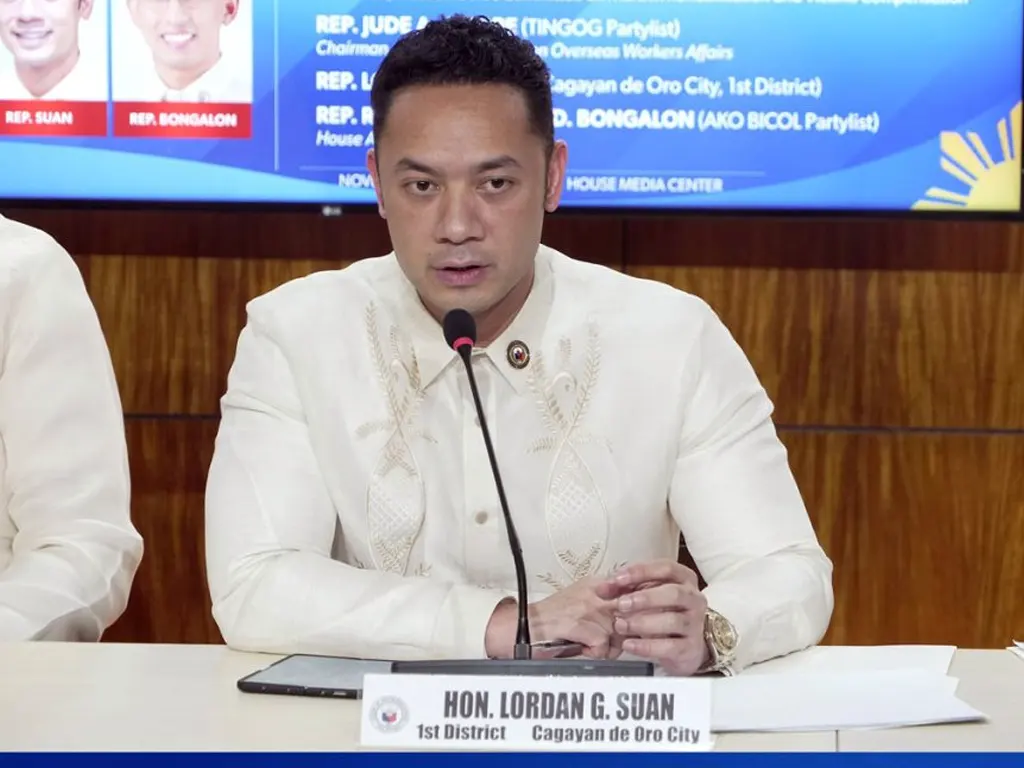
House Committee on Public Information Chairperson and Cagayan de Oro 1st District Rep. Lordan G. Suan, who sponsored the measure during plenary deliberations, said the proposed RTI law would strengthen transparency, improve governance, and help restore public trust in institutions.
“The more transparent government is, the less room there is for corruption. And a more transparent government is a more effective government, one better able to serve its people and shield them from economic uncertainty through sound, responsible governance,” Suan said during his sponsorship speech.
The proposed RTI Act seeks to institutionalize the constitutional right of Filipinos to access information on matters of public concern by establishing clear procedures for information requests, mandating proactive disclosure mechanisms, and creating a centralized RTI portal across all branches and levels of government.
In his speech, Suan stressed that the measure represents a major shift from the traditional Freedom of Information framework toward a stronger rights-based approach.
“Access to information is not a mere privilege granted by government but a constitutional right guaranteed to every Filipino,” he said.
Suan noted that the measure is anchored on the principle that “in a democracy, government information belongs to the people,” emphasizing that taxpayers have the right to know how public funds are spent and how government decisions are made.
“This bill does not merely recognize a right; it makes that right real, enforceable, and accessible.”
The bill covers all branches of government, local government units, state universities and colleges, government-owned and controlled corporations, and even private entities that perform public functions or utilize public funds.
One of the key provisions of the measure is the creation of an RTI Commission tasked with monitoring compliance, enforcing disclosure obligations, resolving disputes, and leading public education campaigns on transparency and accountability. The said body will be attached to the Office of the President.
Addressing concerns over creating another government body amid rightsizing efforts, Suan defended the proposal by arguing that transparency mechanisms help reduce abuse and inefficiency.
“A commission dedicated to transparency and accountability does not add to bureaucratic excess; it curbs it,” he said.
According to Suan, the measure would help strengthen participatory governance while serving as a safeguard against corruption and wasteful public spending.
“We cannot undo the scandals of the past that put our democratic institutions under siege, but we can prevent them from happening again.”
metrosundaily