Courtesy: Commuters of Metro Manila
(Feature)
UNDER the heat of the midday sun, banners bearing slogans of conservation and calls for ecological justice lined Quirino Avenue in Manila on Tuesday, May 26, 2026.
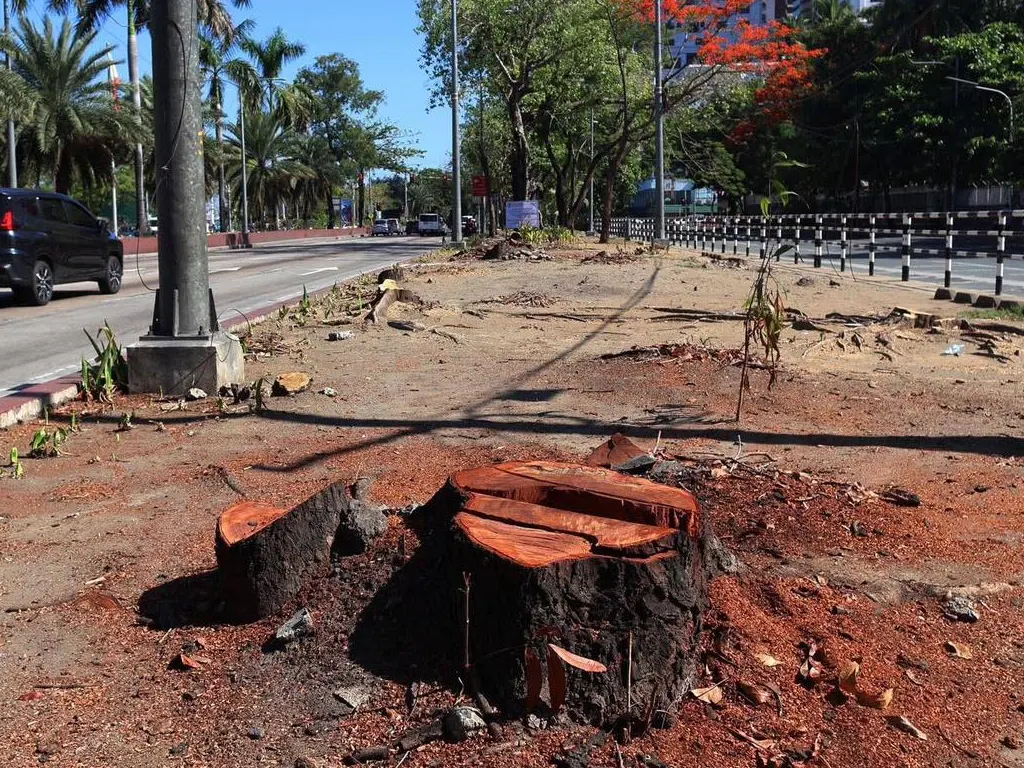
Environmental advocates from the Kalikasan People’s Network for the Environment, joined by various civil society groups, gathered in a peaceful yet determined protest to voice their strong opposition to the ongoing cutting of decades-old trees. These trees, which have long stood as silent sentinels along the busy thoroughfare, are being cleared to give way to the construction of the proposed 40.62‑kilometer Southern Access Link Expressway (SALEX), a project designed to ease traffic flow and connect key areas of the metropolis.
For the protesters, however, the price of progress seems too high. They emphasize that these mature trees are vital to the city’s dwindling green cover, serving as natural air filters, temperature regulators, and sanctuaries for urban wildlife. Removing them, they argue, will not only result in the permanent loss of Manila’s historical and natural heritage but will also worsen the effects of climate change, leading to higher temperatures and poorer air quality for residents. The groups are urging authorities to reconsider the project’s alignment, explore alternative routes, or adopt designs that allow these ecological assets to remain standing while still achieving infrastructure goals.
In response to the growing public concern, the Department of Environment and Natural Resources (DENR) issued a statement on Monday, clarifying its position on the matter.
The agency assured the public that strict environmental safeguards and comprehensive rehabilitation measures are already in place to govern all tree‑cutting activities associated with the expressway project. According to the DENR, every step follows established environmental laws, including proper inventory, marking, and documentation of affected trees, while requiring the project proponent to implement a robust tree‑planting program and habitat restoration efforts to offset the loss of vegetation.
Still, the environmental groups remain skeptical and unsatisfied with the assurance. They maintain that no amount of replanting can truly replace the ecological value and maturity of trees that have taken decades to grow. As the debate between development and conservation continues, the protest serves as a powerful reminder that infrastructure expansion and environmental protection should not be opposing forces. The advocates call for a more inclusive dialogue between the government, developers, and communities, ensuring that progress does not come at the expense of the environment and the well‑being of the people.
metrosundaily