Courtesy: UCA News
VOTING 266-0, with one abstention, the House of Representatives on Wednesday night approved on third and final reading the Philippine Indigenous and Traditional Writing Systems Act, a measure principally authored by House Majority Leader Ferdinand Alexander “Sandro” A. Marcos of Ilocos Norte and Speaker Faustino “Bojie” G. Dy III that seeks to protect, preserve, and promote the country’s indigenous and traditional scripts as an important part of Filipino cultural heritage.
Marcos said the measure reflects the commitment of President Ferdinand “Bongbong” R. Marcos Jr. and Speaker Faustino “Bojie” G. Dy III to protect the roots of Filipino identity by bringing indigenous and traditional writing systems into classrooms, communities and digital spaces where they can be studied, used and appreciated by younger generations.
“Our indigenous and traditional writing systems are not museum pieces. They are living marks of who we are as Filipinos, and under the leadership of President Ferdinand ‘Bongbong’ Marcos Jr. and Speaker Bojie Dy, we want our young people to see them not as relics of the past, but as part of the story they inherit and carry forward,” Marcos stated.
House Bill (HB) No. 8699, seeks to be known as the “Philippine Indigenous and Traditional Writing Systems Act” and is aimed at promoting the protection, preservation, conservation and wider appreciation of indigenous and traditional scripts in the country.
It is also principally co-authored by Reps. Ma. Victoria Co-Pilar, Mauricio Domogan, Caroline Agyao, Edwin Cruzado, Dibu Tuan, Maximo Dalog Jr., Dadah Kiram Ismula, Marlo Bancoro, Leila de Lima, Nelson Legacion, Laarni Lavin Roque, Lordan Suan, Kenneth Paolo Tereng, John Tracy Cagas, Eleanor Bulut-Begtang, Claudine Diana Bautista-Lim, and Adrian Salceda
The bill declares as state policy the preservation, enrichment and dynamic evolution of a Filipino national culture founded on unity in diversity, free artistic and intellectual expression and the promotion of indigenous and traditional writing systems as a means to instill patriotism and social consciousness.
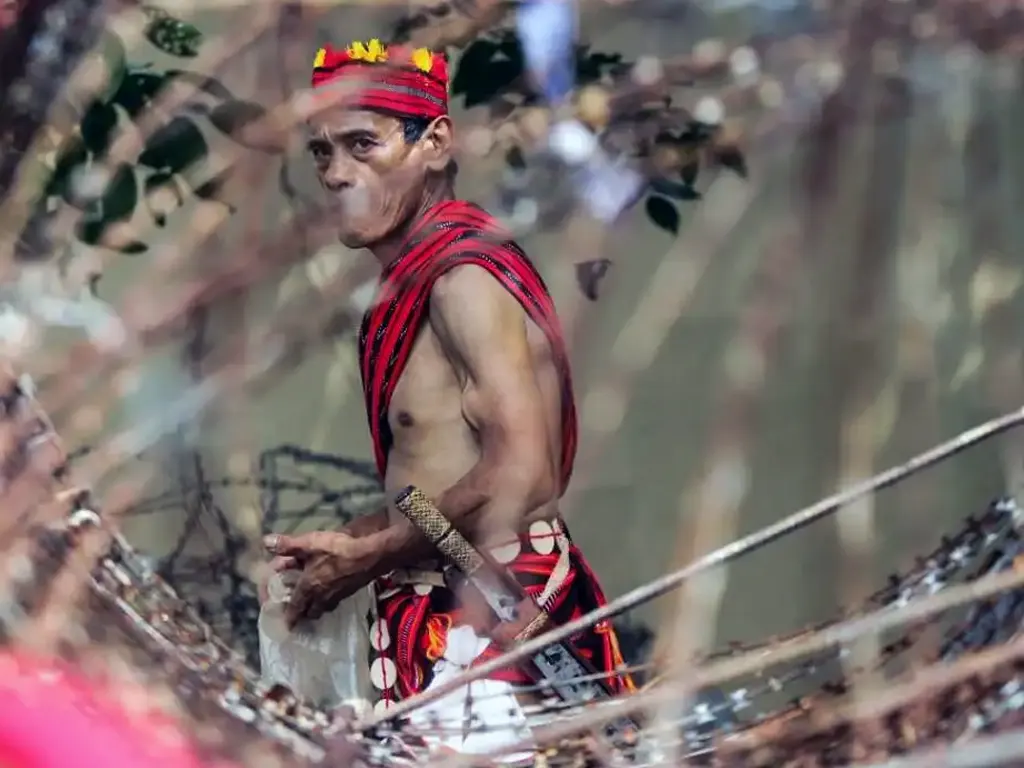
The measure recognizes Philippine indigenous and traditional scripts as part of the country’s cultural treasures and as expressions of national identity, requiring their promotion through education, research, cultural programming and documentation.
Under the bill, these writing systems shall be included in relevant subjects in basic and higher education, including elective or specialized courses in colleges and universities.
It also mandates the development and publication of reference materials such as dictionaries, grammar guides, textbooks and scholarly works on Philippine indigenous and traditional writing systems.
To make the scripts more accessible to ordinary Filipinos and the global community, the measure calls for digital learning resources, online courses, mobile applications, digital archives and databases that will support wider access, documentation and long-term preservation.
Marcos said the bill carries practical value for students, teachers, local communities, cultural workers and indigenous peoples because it turns heritage protection into a public education program rather than leaving it to a small circle of experts.
“This is heritage made accessible to the people. Under this measure, we are saying that every Filipino child should have the chance to know the scripts, symbols and traditions that shaped our islands long before us,” Marcos said.
The bill directs the Department of Education, Commission on Higher Education and local governments to conduct activities promoting awareness of writing systems, especially during Buwan ng Wika and similar occasions.
It also encourages seminars, conferences, conventions, symposia and other relevant activities that take into account the writing systems indigenous to specific regions.
The National Commission for Culture and the Arts is designated as the lead agency in crafting policy guidelines for the promotion, protection, preservation and conservation of these writing systems as national cultural treasures.
The NCCA is mandated to coordinate with the Komisyon sa Wikang Filipino for technical assistance on Philippine languages and writing and with DepEd, CHED, the National Commission on Indigenous Peoples and other relevant government agencies for implementation.
metrosundaily