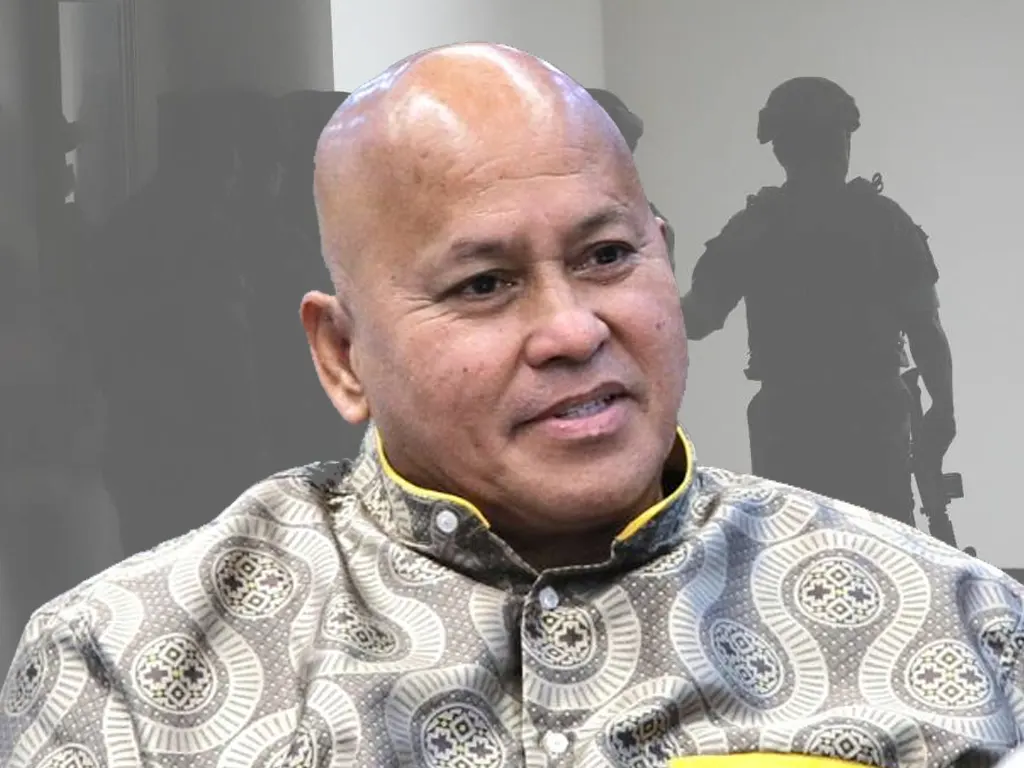
(Editorial)
THE dramatic events at the Senate on the night of May 13 will go down as one of the most bizarre and shameful episodes in Philippine political history.
What started as a tense standoff over an International Criminal Court (ICC) arrest warrant against Senator Ronald “Bato” dela Rosa quickly descended into chaos: gunshots rang out, power was cut, lawmakers claimed the building was “under attack,” and by dawn, the man at the center of it all had quietly slipped away at 2:30 a.m. Now, with police openly investigating whether the shooting was staged and an NBI driver arrested for firing his weapon, the picture that emerges is not one of a security crisis — but of a carefully choreographed drama designed to facilitate an escape, shield a former official from accountability, and mock the very idea of the rule of law.
From the very beginning, the sequence of events smelled of theater. Senate President Alan Peter Cayetano went on camera in a darkened room claiming the institution was “under attack,” while senators were allegedly warned to leave because “something would happen.” Then came the gunfire — shots that investigators now say followed unusually high trajectories, inconsistent with a real armed confrontation or an attempt to breach the building.
Add to that the revelation that the suspect was an NBI employee — from an agency that claimed it had no personnel deployed there — and that Senate security reported only “returning fire,” and the narrative becomes clear: the noise, the panic, and the blackout were not random. They were a smokescreen. Whether coordinated or improvised, the chaos created the perfect cover for Dela Rosa to walk out unnoticed, protected by allies who turned the Senate into a sanctuary and then into a stage.
Equally disturbing is how easily the institution allowed itself to be used. For days, the Senate defied both domestic and international legal obligations by granting Dela Rosa “protective custody,” despite clear provisions in Republic Act 9851 stating that Philippine authorities may and should surrender suspects wanted by international tribunals.
When minority lawmakers called for respect for due process and cited historical precedents of senators submitting to the law, the majority brushed them aside. Worse, they manufactured a crisis to end the standoff on their own terms. That Dela Rosa could simply vanish in the dead of night — after days of claiming he would never surrender to “foreigners” — proves his defiance was never about sovereignty or principle. It was about evasion, enabled by colleagues who put political loyalty above their oath to uphold the Constitution.
In the end, what happened at the Senate is far more than a political scandal; it is a blow to the heart of our democracy. If public officials can turn legislative halls into fortresses, stage security incidents, and slip away from valid arrest warrants with impunity, then no law truly matters.
The message sent to the public is simple: there is one set of rules for the powerful and another for everyone else. Now that the drama has faded and Dela Rosa is gone, the real work begins — not just for police to determine exactly who pulled the trigger and who gave the order, but for the nation to demand that institutions stop serving as shields for the accused and start serving what is right. Accountability cannot be staged, and justice should never have to slip away in the dark.