SENATE of the Philippines has approved on third reading Senate Bill No. 1981, or the proposed Basic Education Voucher Program Act, a landmark measure institutionalizing a targeted voucher system to expand access to quality basic education while helping address persistent classroom congestion in public schools.
The bill, principally authored by EDCOM 2 Co-chairpersons Senator Bam Aquino and Senator Loren Legarda, along with EDCOM 2 Commissioners Senators Sherwin Gatchalian, Senator Alan Peter Cayetano, and Senator Joel Villanueva, seeks to update and modernize Republic Act No. 6728 into a more data-driven voucher framework.
The bill establishes a Basic Education Voucher Program covering learners from Kindergarten to Grade 12, allowing eligible students to enroll in private institutions to help decongest overcrowded public schools. It prioritizes students from congested public schools, low-income households, and disadvantaged sectors, including learners in geographically isolated and disadvantaged areas (GIDAs), Indigenous Peoples, and 4Ps beneficiaries.
Students from low-income households or those classified as disadvantaged may receive higher voucher amounts, while completers of the Alternative Learning System (ALS) and disadvantaged learners in GIDAs without access to public schools are considered automatic voucher recipients.
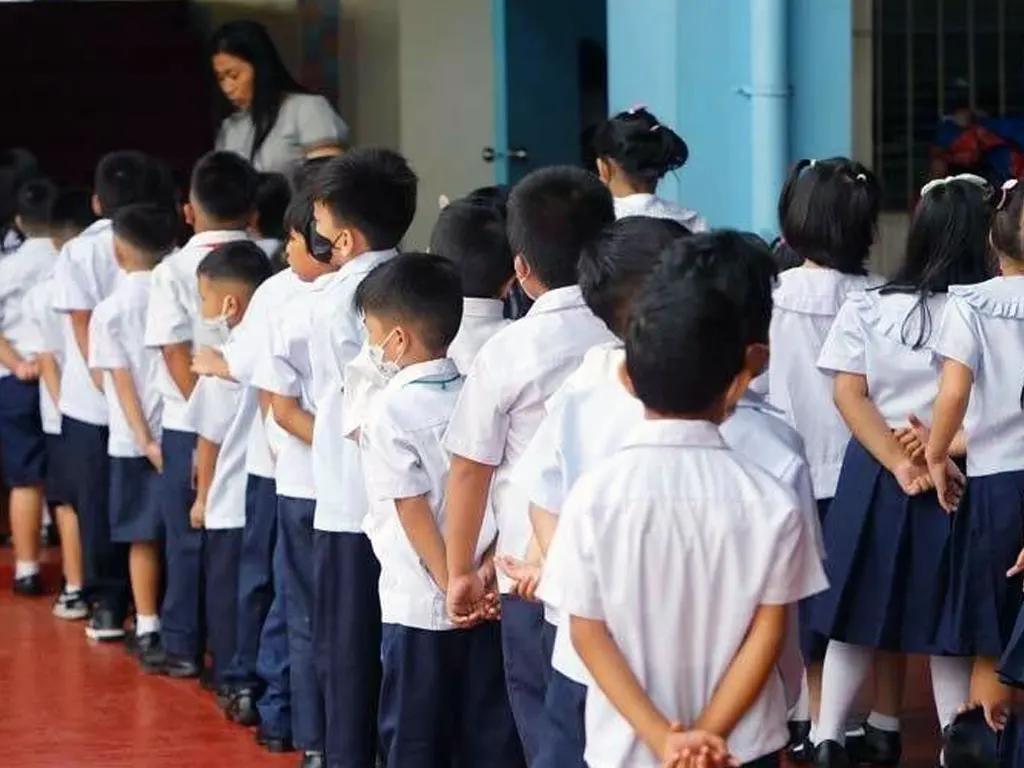
This reform comes amid persistent system-wide challenges flagged by EDCOM 2. In its final report, the Commission estimates that the country faces a backlog of at least 165,443 classrooms, which could reach over 219,000 by 2028 when accounting for replacement and repair needs. These shortages have resulted in some schools having double and triple shifts, overcrowded classrooms, and reduced instructional time; all of which directly impact learning outcomes.
In response, the proposed voucher program is designed not only as a financing mechanism, but as a targeted tool to ease pressure on overcrowded public schools while improving access to better-resourced private institutions and strategically allocating vouchers to areas with the greatest need.
The measure also mandates the establishment of a publicly accessible online system where beneficiaries can choose from accredited private schools, with transparent information on fees, capacity, and performance.
In addition, the bill introduces a nationwide school congestion mapping system to guide targeted interventions, ensuring that voucher allocations are aligned with areas with congested schools.
The Department of Education, at the same time, has said that they are targeting to subsidize more than 2.4 million learners through the Expanded Government Assistance to Students and Teachers in Private Education (E-Gastpe). With the updated voucher program, the government aims to sustain and strengthen this effort by providing a more targeted, and transparent framework for delivering assistance to learners who need it most.
The House counterpart measure, House Bill No. 4744, authored by EDCOM 2 Co-Chairpersons Rep. Roman Romulo and Rep. Jude Acidre, along with EDCOM 2 Commissioners Rep. Zia Alonto Adiong and Rep. Anna Veloso-Tuazon, was approved on third reading on October 13, 2025.
With both chambers of Congress approving the measure, it will next be subject to bicameral conference committee deliberations before being transmitted to the Office of the President for signing into law.
metrosundaily