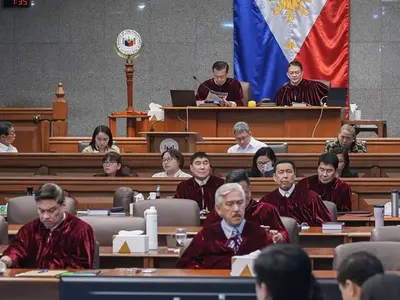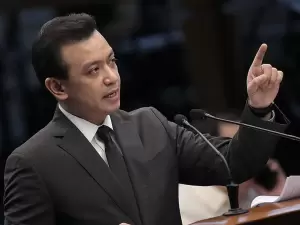

EVEN during recess, the House of Representatives drew an unusually large turnout Wednesday for its mega-hearing on the energy crisis, underscoring the chamber’s decision to treat the oil shock as a top-tier national problem demanding a full legislative response.
By midday, 170 lawmakers had joined the proceedings, including 51 physically present and 119 participating online, despite the congressional break running from March 21 to May 3.
The hearing was held under the Legislative Energy Action Development Council, or LEAD, the umbrella body bringing together 13 House committees to synchronize policy options, oversight work and sectoral interventions.
Speaker Faustino “Bojie” Dy III himself opened the proceedings and called for a coordinated answer to the economic strain now spreading from fuel prices into household expenses and industry costs.
Marikina Rep. Miro Quimbo, chair of the Committee on Ways and Means, presided and divided the session into two broad tracks.
The first half focused on immediate operating pressures such as fuel supply, maritime disruptions and overseas Filipino exposure, with agencies from the energy, foreign affairs and migrant workers sectors presenting updates.
The second half was set aside for the fiscal and macroeconomic side, with the Development Budget Coordination Committee expected to discuss the wider economic consequences and the state’s capacity to respond.
Quimbo explained that the LEAD hearing folds together several committee briefings already held in March into one consolidated platform for action.
Energy Secretary Sharon Garin told the panel that the country’s supply remains stable at 50.42 days of replenishment lead time.
She said the government has already acquired one million barrels out of a planned two-million-barrel buffer stock, though national storage remains capped at around 60 days.
Garin also outlined measures against hoarding and profiteering, along with fuel discounts for public utility vehicles and renewable energy acceleration and intervention to blunt electricity cost increases.
At the same hearing, DFA Undersecretary Maria Andrelita Austria described the worsening impact of the conflict near the Strait of Hormuz, a major artery for global energy shipments.
She said around 2,000 ships carrying over 20,000 seafarers are now stranded in the area, including 5,600 Filipinos aboard 477 vessels.
Austria added that maritime traffic in the corridor had plunged from about 3,000 ships a month before the conflict to fewer than 200 before the announced truce.
She said the DFA has been coordinating to secure alternative energy and fertilizer sources while also seeking safe passage for Philippine vessels, fuel cargoes and Filipino seafarers.
Migrant Workers Secretary Hans Leo Cacdac, meanwhile, told lawmakers that the government has already extended 21,354 services to affected OFWs.
He said 3,736 Filipinos have already returned through government-backed commercial or chartered flights, while another 4,611 received help through commercial travel arrangements.
Cacdac added that assistance has included food packs, financial aid, transport and temporary shelter, while 5,434 Filipino seafarers remain aboard ships in the Persian Gulf under close monitoring and support.
With nearly 4,000 returnees already home, he said the next phase is reintegration through health care, psychosocial support, livelihood preparation and employment assistance.
metrosundaily