
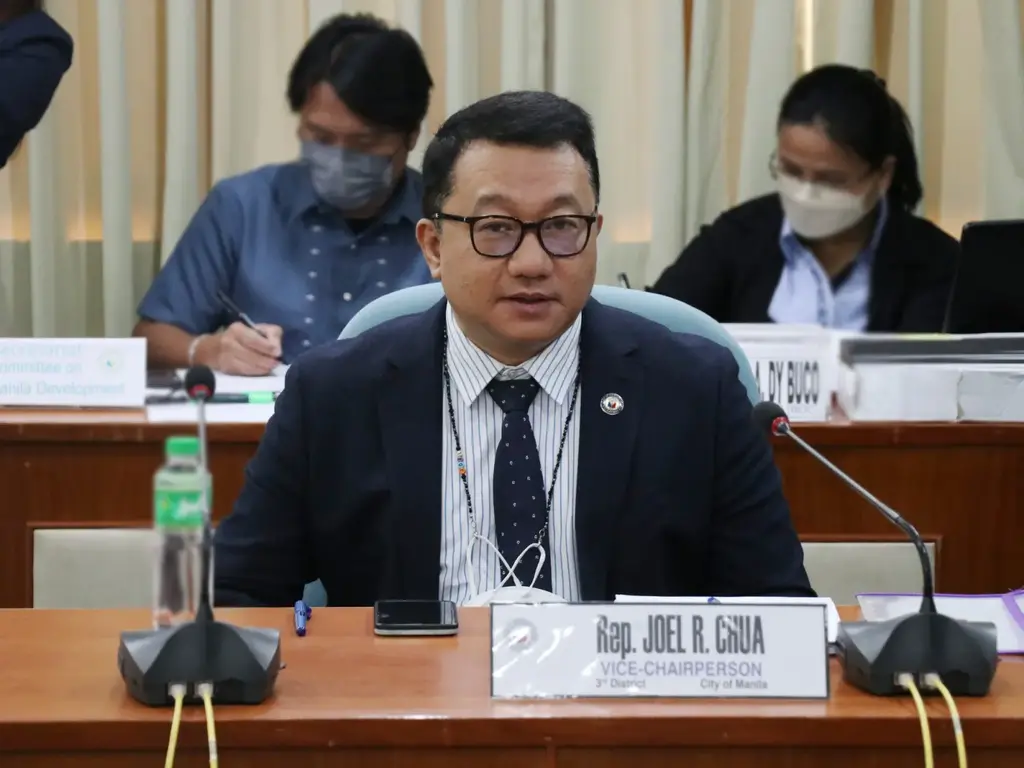
HOUSE Committee on Good Government and Public Accountability chair Joel Chua of Manila on Saturday said the petition filed before the Supreme Court (SC) seeking to halt the impeachment proceedings against Vice President Sara Z. Duterte only reinforces doubts about her willingness to face a full trial in the Senate.
Chua, a member of the House Committee on Justice, said the move runs counter to earlier statements from the Vice President signaling readiness for a showdown.
“This petition only confirms our suspicion from the very beginning that the Vice President is afraid of a full-blown trial in the Senate contrary to her claim that she wants a bloodbath! ”Chua said.
He said the filing of the petition appears to be an attempt to stop the process before it reaches the stage where evidence will be fully presented and tested.
Chua stressed that the House proceedings are merely preliminary and are meant to determine whether there is sufficient basis to elevate the case to the Senate, which serves as the impeachment court.
He noted that a Senate trial would provide the vice president the opportunity to confront the allegations directly, present her defense, and clear her name if she chooses to do so.
Instead, Chua said, efforts to halt the process at this stage raise serious questions about the intent behind the legal move.
He maintained that the House remains focused on its constitutional mandate to determine probable cause, adding that the process is anchored on evidence and due process.
Chua also emphasized that procedural maneuvers should not derail the accountability mechanisms outlined in the Constitution.
The lawmaker said the public deserves clarity and answers, especially given the seriousness of the allegations raised in the impeachment complaints.
Chua believes that the way forward is straightforward: permit the constitutional process to unfold and subject the evidence to examination in the appropriate forum.
“The Senate is the proper venue for a full-blown trial,” he said, noting that any attempt to block the proceedings only delays the resolution of issues that demand public scrutiny.
metrosundaily