
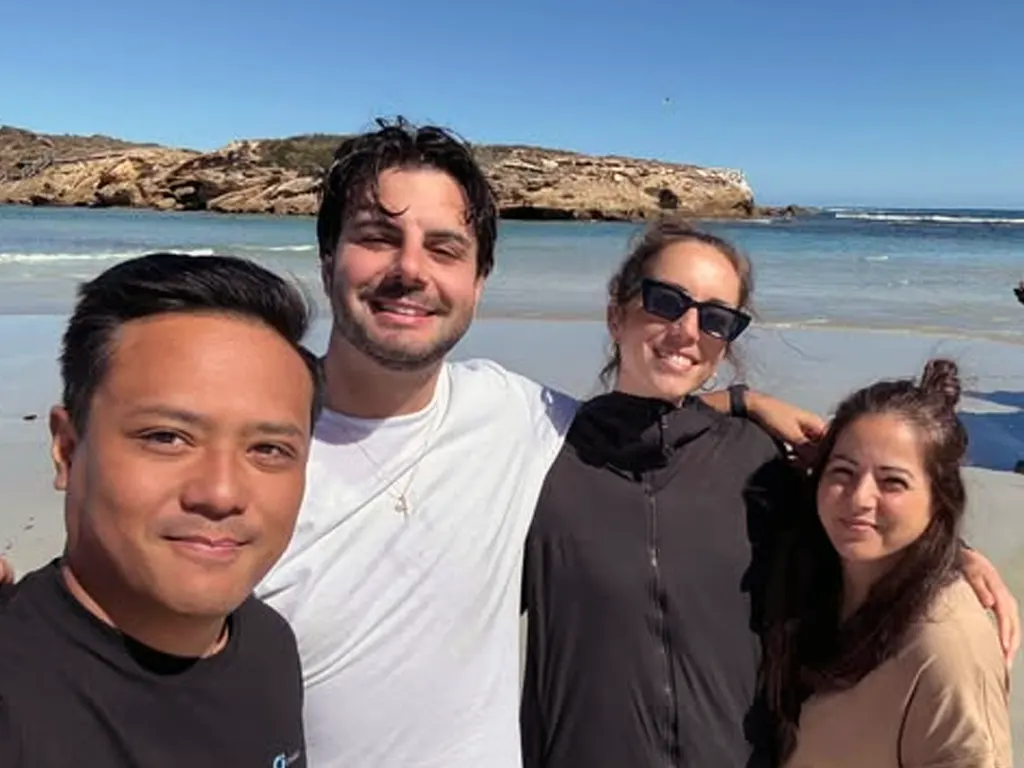
The Oceanark Group Pty Ltd (OCNARK) team, led by CEO Edward Capapas, COO Andrew Fiorenza, and Head of Talent Strategy Christina Baciero Fernandez, is arriving in the Philippines this week to collaborate on sustainable aquaculture initiatives.
AN Australian consortium of aquaculture management specialists, Oceanark Group Pty Ltd (OCNARK), is arriving in the Philippines this week to forge partnerships and promote sustainable growth within the country’s aquaculture sector.
The team, led by CEO Edward Capapas, an Australian Filipino, includes Co-founder and COO Andrew Fiorenza and Head of Talent Strategy and Business Development Europe Christina Baciero Fernandez.
Capapas emphasized the team’s commitment to a collaborative approach, stating, “We want our first trip to focus on the positive aspects of Philippine aquaculture, and we are here to help improve it by meeting with every stakeholder, listening and learning from each other’s experiences.”
This collaborative spirit underscores OCNARK’s strategy of fostering strong relationships with local peers and entrepreneurs to advance the blue economy and mitigate the decline of global fisheries.
The Philippines’ aquaculture sector is experiencing significant growth, outpacing its capture fisheries. Key species driving this expansion include milkfish, tilapia, jumbo tiger shrimp, seaweed, and mudcrab, cultivated across diverse aquatic environments using varied techniques and technologies.
However, while the industry shows promise—with the Philippines ranking among the top ten global producers of aquaculture goods—production figures from the Philippine Statistics Authority (PSA) reveal a slight dip in 2024 to 2.22 million metric tons from 2.38 million metric tons the previous year.
This contrasts sharply with the global trend. According to the United Nations’ Food and Agriculture Organization (FAO), global aquaculture production surpassed wild-caught fish for the first time in 2022, reaching 94.4 million tons.
In contrast, the Philippine capture fisheries sector faces challenges such as overfishing, destructive fishing practices, and inadequate management.
OCNARK’s expertise will be crucial in addressing these issues. Capapas highlighted the consortium’s advocacy for sustainable fishing practices, improved fisheries management, and innovative approaches to responsible aquaculture.
He added, “Our team of specialists are pursuing wide-ranging collaborations with businesses, communities, regional organizations, and governments to create efficient aquaculture methods.”
Capapas further advocates for global cooperation among aquaculture stakeholders committed to environmental conservation, sustainable seafood production, and responsible consumption.
He believes this collaborative approach is essential to mitigating dwindling fish stocks and ensuring global food security for future generations. The arrival of the OCNARK team marks a significant step towards achieving these goals in the Philippines.
metrosundaily