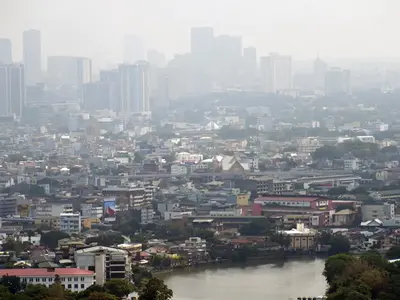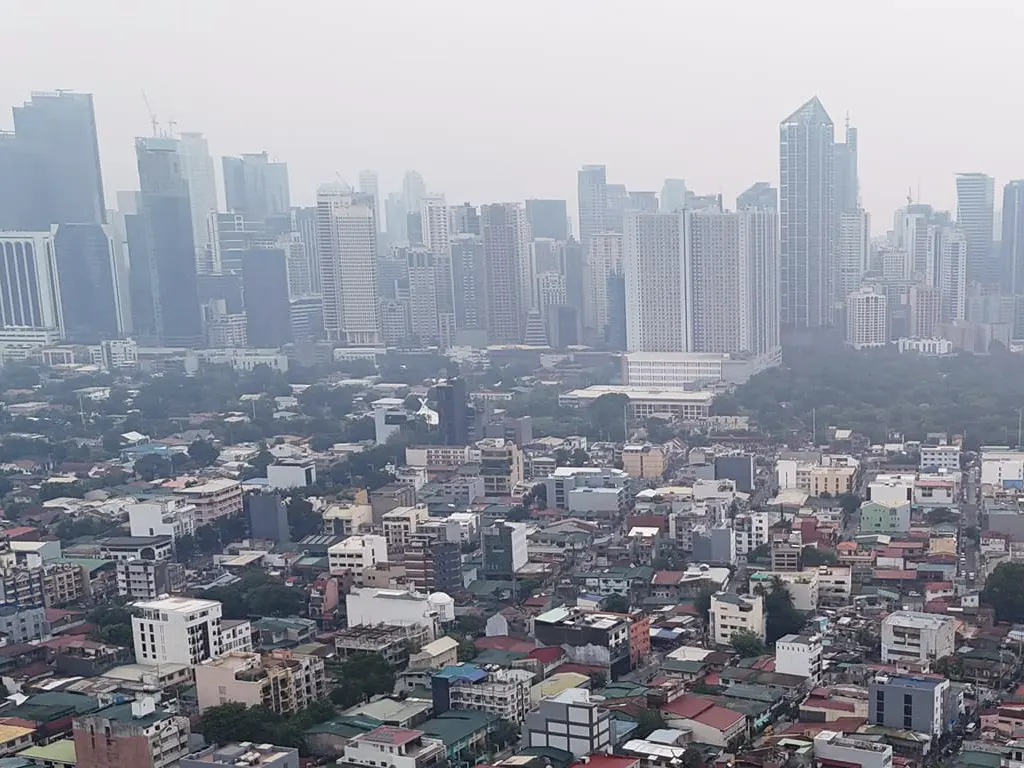
Courtesy: Pinoy Joyride
THE Department of Environment and Natural Resources – Environmental Management Bureau (DENR – EMB) said Tuesday the air quality in some areas in the National Capital Region (NCR) remained up to “very unhealthy” levels.
As of 8 a.m., the DENR – EMB’s Real-Time Ambient Air Quality Monitoring said the air quality in the following areas reached “very unhealthy” and “unhealthy for sensitive groups” levels:
Pateros – very unhealthy with 167 air quality index index (AQI)
Makati – unhealthy for sensitive groups with 139 AQI
Caloocan – unhealthy for sensitive groups with 128 AQI
Most of the stations for air quality monitoring remained offline.
“Very unhealthy” level ranges from 151 to 200 AQI, which means people with heart or respiratory diseases such as asthma should stay indoors and rest as much as possible. Unnecessary trips should be postponed.
“Unhealthy for sensitive groups” level ranges from 101 to 150 AQI, which means people with respiratory diseases such as asthma shall limit outdoor exertion.
The AQI represents air pollution concentrations, providing an indication of the quality of the air and its health effects on the public.
In this case, DENR – EMB monitored air pollutants under Particulate Matter 2.5 (PM2.5) category which have diameters less than 2.5 micrometers.
PM2.5 can penetrate deep into the lungs and could lead to difficulty in breathing and lung tissue damage as well as aggravate existing cardiovascular diseases and lung problems.
“Good” level of air quality meanwhile ranges from 0 to 50 AQI, which means air quality is satisfactory and air pollution poses little or no risk.
The haze observed in Metro Manila on Monday was most likely due to local pollutants rather than vog, the Philippine Institute of Volcanology and Seismology (PHIVOLCS) said Tuesday.
PHIVOLCS Director Teresito Bacolcol said the local pollutants in Metro Manila stayed at the lower levels of the air because of the weak winds in the past three days.
“The haze that we observed yesterday is most likely due to local pollutants rather than vog. Katulad po ng nangyari sa Batangas, hindi rin po makaangat ‘yung pollutants dahil mabagal po ‘yung hangin causing these pollutants to remain at the lower levels and created the haze we saw yesterday,” he said.
metrosundaily