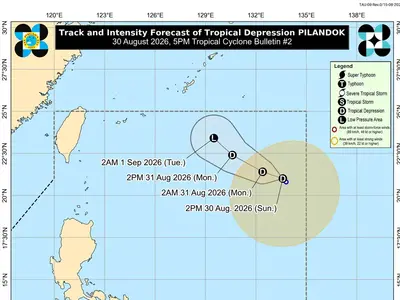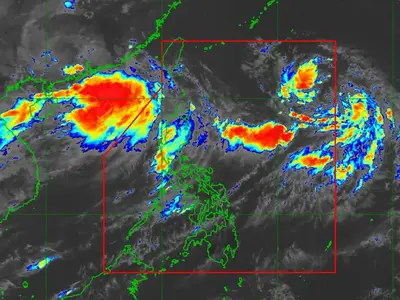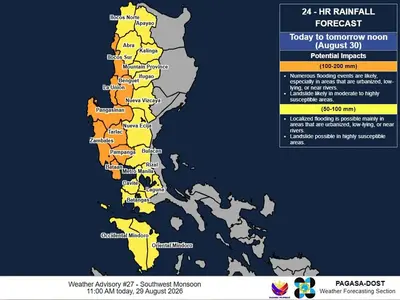

THE state weather bureau Pagasa forecasts that two to four tropical cyclones may form inside or enter the Philippine Area of Responsibility (PAR) this August. Based on its Climate Outlook covering August 2026 to January 2027, the agency projects an average of one to three cyclones monthly through the rest of the year, dropping to zero to one by January.
The full monthly outlook is: August (2–4), September (2–3), October (1–2), November (1–2), December (1–2), and January (0–1).
Pagasa also warned that a very strong El Niño is likely to develop between October 2026 and January 2027. This climate pattern typically suppresses storm formation, meaning fewer cyclones may enter the country—but those that do develop could still intensify into typhoons or even super typhoons.
Rainfall patterns will shift significantly: near‑normal rains are expected nationwide in August, though western Luzon may see above‑normal showers while parts of Southern Luzon, the Visayas, and Mindanao get less rain than usual. Below‑normal rainfall will spread across most of Luzon by September and October, with widespread below‑normal to way‑below‑normal conditions projected for November and January.
By the end of August, several areas are already at risk of prolonged dryness. Dry spell conditions are forecast for Eastern Samar, Leyte, Southern Leyte, Agusan del Norte, Basilan, Dinagat Islands, Misamis Occidental, Surigao del Norte, Surigao del Sur, Zamboanga del Norte, Zamboanga del Sur, and Zamboanga Sibugay. Meanwhile, drought may hit Camarines Norte, Catanduanes, Biliran, Cebu, Negros Oriental, Northern Samar, Samar (Western Samar), and Siquijor. PAGASA clarifies that a dry spell occurs when rainfall falls below average for two to three months, while drought sets in after three to five consecutive months of below‑average rains.
The Department of Agriculture (DA) has echoed concerns, noting that El Niño could severely hurt crop yields and livelihoods, especially in the Ilocos Region, Cagayan Valley, Central Luzon, Occidental Mindoro, and Central Mindanao. Both agencies urged local governments, farmers, and communities to prepare early—securing water supplies, adjusting planting schedules, and strengthening disaster readiness—to minimize the impact of shifting weather patterns and prolonged dry spells.
metrosundaily