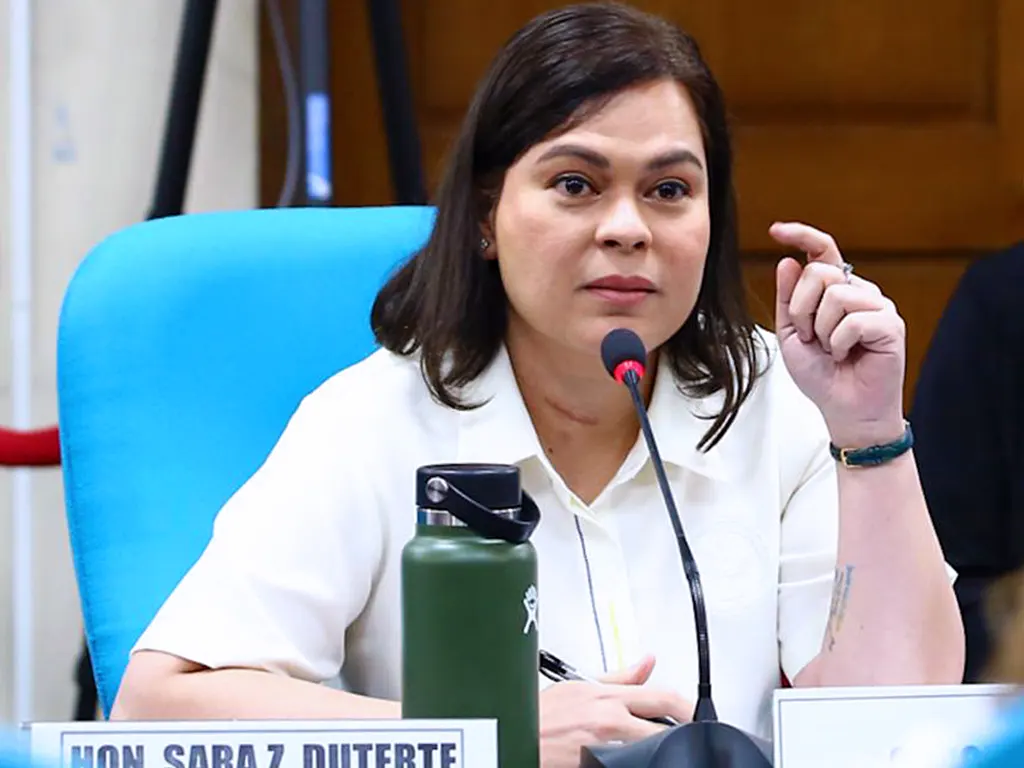
EVEN as it formally opened impeachment proceedings against Vice President Sara Z. Duterte, the House of Representatives underscored on Wednesday that governance continues uninterrupted—directly countering claims that the process detracts from addressing the urgent needs of Filipinos.
House Committee on Justice chairperson Gerville “Jinky Bitrics” Luistro made this point unequivocally at the outset of the hearing, stressing that the institution remains fully engaged in its legislative mandate despite the demands of impeachment.
“Kahit may impeachment, tuloy pa rin tayo sa iba nating obligasyon,” Luistro said.
She added: “Ang ating serbisyo publiko ay hindi napuputol, hindi tumitigil—kahit sa gitna ng pinakamabigat na tungkulin.”
The statement comes amid criticism from Duterte, who suggested that the House should prioritize economic concerns, including rising prices and global instability, over impeachment proceedings.
Far from being sidelined, Luistro outlined a series of concrete actions taken by the House in recent weeks—demonstrating that legislative work has continued at full pace even as impeachment proceedings began.
Among the key measures advanced:
Fuel Price Relief Measures
• Passage of a bill authorizing the suspension or reduction of excise taxes on fuel to cushion the impact of rising oil prices.
“We have… acted to ease the burden of rising fuel cost,” Luistro said.
- Inflation and Cost-of-Living Interventions
• Ongoing legislative work targeting inflation, food security, and social services, directly addressing the pressures faced by ordinary Filipino families.
“We also continue to work on measures that address inflation, food security, and social services,” she said.
- Abolition of the Travel Tax
• Approval of a measure removing the travel tax, aimed at reducing costs and improving mobility. - Digital Governance Reforms
• Advancement of legislation to institutionalize digital payments in government transactions, improving efficiency and accessibility of public services. - Public Service Efficiency Reforms
• Continued push for reforms to make government services more accessible and responsive. - Education Sector Reforms
• Amendments to:
• the Universal Access to Quality Tertiary Education Act
• the Presidential Merit Scholarship Program
These measures aim to strengthen support for students and invest in the country’s future workforce.
- Anti-Political Dynasty Bill
• Completion of plenary deliberations on the long-awaited Anti-Political Dynasty measure following nationwide consultations.
“After nationwide consultations… the House has pushed forward the long-awaited Anti-Political Dynasty bill,” she said.
Luistro emphasized that the House is constitutionally bound to perform both functions—legislation and accountability—at the same time.
“Governance is a constant balancing act—attending to urgent needs, while fulfilling constitutional obligations,” Luistro said.
She stressed that impeachment is not a distraction, but a duty owed to the Filipino people.
“While we scrutinize those in power, we do not lose sight of the hardships faced by the powerless,” she said.
The hearing proceeded without the Vice President, who declined to participate in day 1 of the proceedings despite being invited.
Luistro made clear that the process will not be delayed.
“Regardless of the participation of the Vice President… this Committee will proceed,” she said.
The House leadership’s position, as reflected in Luistro’s remarks, directly challenges the framing that impeachment detracts from governance.
“Hindi pag-iwas—kundi pagharap. Hindi katahimikan—kundi pananagutan,” she said.
Luistro closed by framing the moment not as a political contest, but as an institutional test.
“This is a test—of judgment, of conscience, and of courage,” Luistro said.
With impeachment proceedings underway and legislative work continuing in parallel, the House appears intent on proving that accountability and governance are not competing priorities—but inseparable duties.
metrosundaily