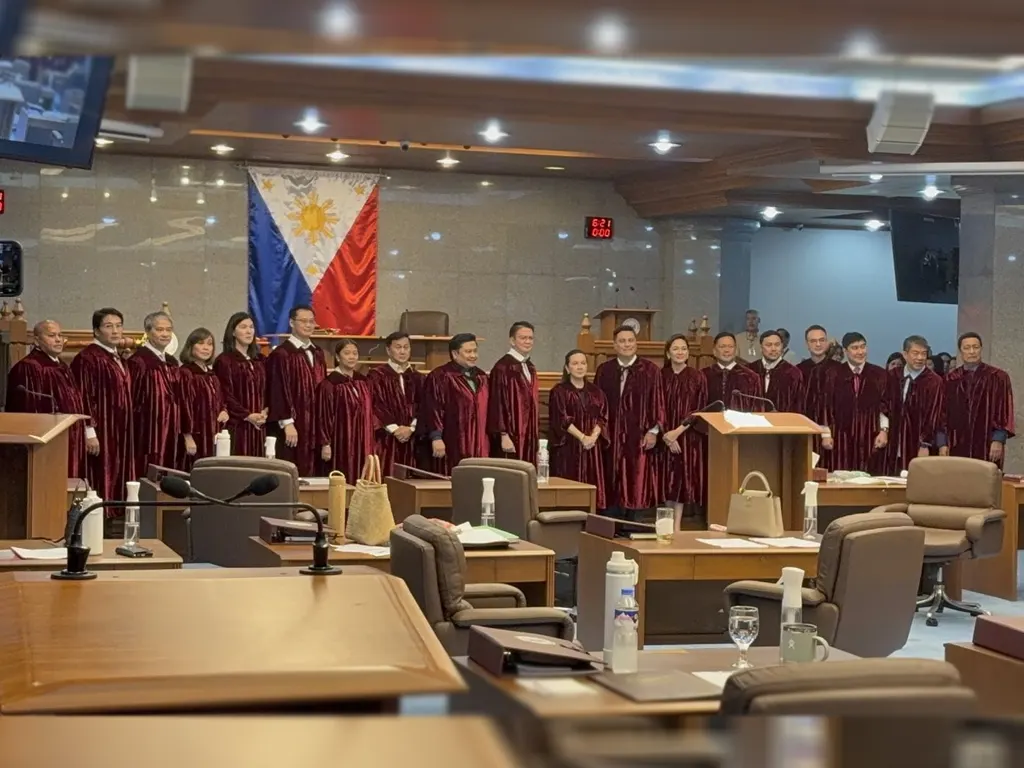
THE Philippine Senate convened as the impeachment court Monday evening to begin the trial of Vice President Sara Duterte, following a procedural motion to dismiss the charges.
The senators, clad in their judicial robes (with the exception of Senators Padilla, Marcos, and Villar, who took their oaths without them), were sworn in shortly after 6 p.m. Senator Miguel Zubiri presided over the proceedings.
The session was marked by an immediate challenge to the impeachment process itself. Earlier in the day, Senator Ronald “Bato” dela Rosa, in a privilege speech, moved to dismiss the verified impeachment complaint against the Vice President, citing “Constitutional infirmities and questions on the jurisdiction and authority of the 20th Congress.”
Senate President Juan Miguel Zubiri, presiding over the impeachment court, ruled that the motion to dismiss would be addressed after the formal convening of the court. The session was briefly suspended to allow senators to don their judicial robes before resuming deliberations.
The move to dismiss the complaint is expected to be a key point of contention throughout the trial. Legal experts are divided on the merits of Dela Rosa’s arguments, with some suggesting the issues raised could significantly delay or even derail the proceedings. The Vice President’s legal team has yet to issue a formal statement on the motion.
The impeachment trial promises to be a significant political event, potentially shaping the political landscape in the coming months. The outcome will not only determine the fate of the Vice President but also set precedents for future impeachment proceedings in the Philippines.
The Senate’s handling of the motion to dismiss will be closely scrutinized, both domestically and internationally, for its implications on the rule of law and the balance of power within the Philippine government. Further updates will follow as the trial progresses.
metrosundaily