
Courtesy: Jolo Revilla FB page
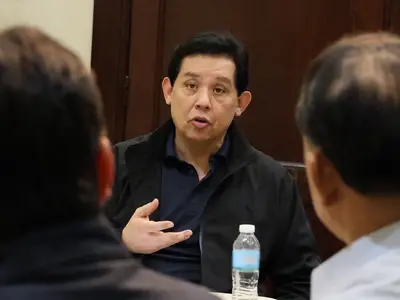
CAVITE 1st District Congressman and House Committee on Labor Chairman Jolo Revilla has called on the Department of Labor and Employment (DOLE) and private employers to adopt and expand work-from-home (WFH) and flexible work arrangements to help conserve fuel and protect Filipino workers amid the ongoing global energy crisis triggered by the prolonged conflict in Iran.
Revilla stressed that DOLE plays a critical role in leading the transition by issuing clear and updated guidelines, ensuring the protection of workers’ rights, and working closely with employers to institutionalize flexible work arrangements across industries.
Revilla warned that the continuing war in the Middle East is already disrupting global oil supply, pushing fuel prices higher and posing risks to the country’s energy security, especially for an oil-importing nation like the Philippines.
“The situation in Iran is not just a distant conflict—it directly affects our fuel supply and prices. Kapag tumagal pa ito, may posibilidad na maapektuhan ang ating fuel reserves at lalong bumigat ang gastos ng ating mga manggagawa,” Revilla said.
Global oil markets have been severely disrupted as the conflict threatens key supply routes such as the Strait of Hormuz, which carries about 20% of the world’s oil, leading to price surges and supply uncertainty.
Revilla noted that while the Philippines currently maintains fuel reserves estimated to last around 60 days, prolonged disruption could strain supply and force the government to adopt stricter conservation measures.
“Hindi natin dapat hintayin na maubos o magkulang ang suplay bago kumilos. Ngayon pa lang, dapat magpatupad na tayo ng mga hakbang para makatipid sa konsumo ng gasolina,” he stressed.
The lawmaker said promoting WFH and hybrid work setups is a practical and immediate solution that can significantly reduce daily fuel consumption, especially in urban areas where millions of workers rely on commuting.
“Kung mas kaunti ang bumibiyahe araw-araw, mas kaunti ang konsumo ng gasolina. Malaking tulong ito hindi lamang sa mga empleyado kundi sa buong bansa sa panahon ng krisis,” Revilla explained.
He emphasized that DOLE must take the lead in translating this policy direction into action by issuing advisories or department orders encouraging remote work, setting clear standards for telecommuting arrangements, and ensuring that workers continue to receive proper wages, benefits, and protection even under flexible setups.
Revilla also called on DOLE to actively engage employers and business groups to promote best practices in WFH implementation, while strengthening monitoring and compliance mechanisms to prevent abuse and safeguard labor standards.
He added that several countries in Asia have already begun implementing fuel-saving measures, including remote work policies and reduced workdays, in response to the energy crisis.
“Panahon na para gawing bahagi ng long-term labor policy ang flexible work arrangements—hindi lang bilang benepisyo kundi bilang strategic response sa mga krisis tulad nito,” he said.
The Labor Committee chair emphasized that beyond easing costs for workers, WFH arrangements can also help businesses reduce operational expenses while maintaining efficiency.
“Sa harap ng tumataas na presyo ng langis at hindi tiyak na global situation, ang pagtitipid sa fuel ay responsibilidad nating lahat. Ang work-from-home ay isang konkretong hakbang para dito,” Revilla said.
Revilla also stressed the need for collective action to ensure energy resilience and economic stability amid global uncertainties, with DOLE, employers, and workers working together to implement sustainable labor solutions.
“Kung kikilos tayo ngayon—gobyerno, pribadong sektor, at manggagawa—mas handa tayo sa anumang epekto ng krisis sa enerhiya. Ang pagtitipid sa gasolina ngayon ay proteksyon sa ating kinabukasan,” he said.
metrosundaily