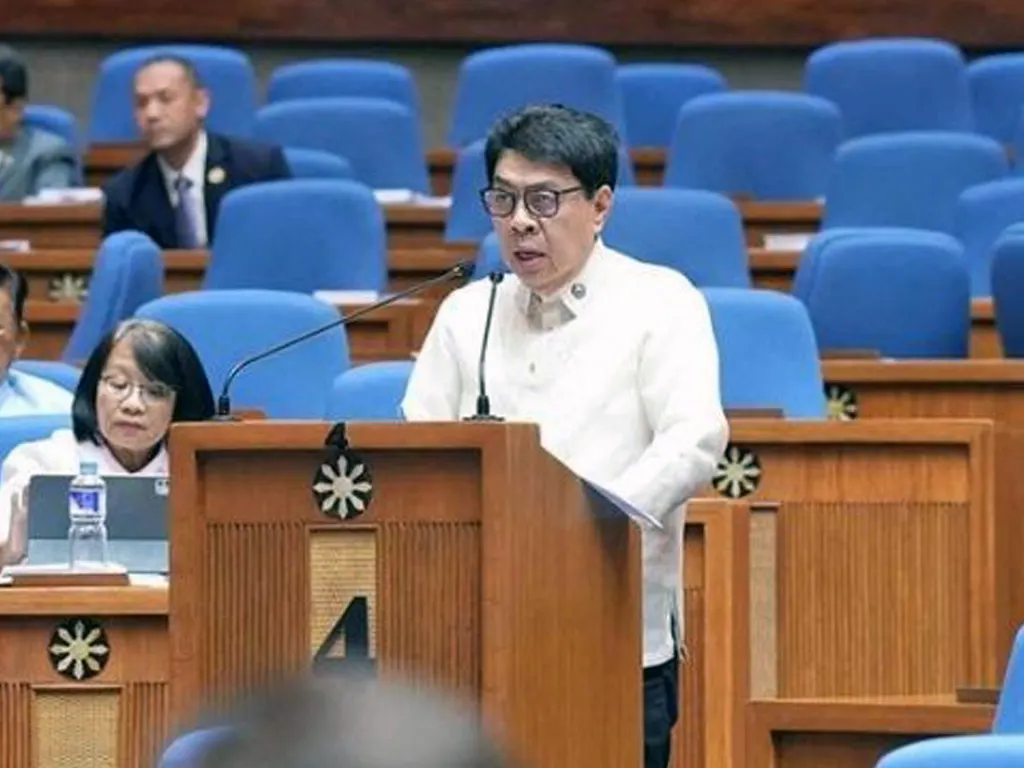
ASSISTANT Minority Leader and Camarines Sur Representative Gabriel Bordado Jr. today called for massive reforms in the country’s educational system, stating that it has been in a grave crisis for the past decade.
In his manifestation during the plenary budget deliberations for the Department of Education (DepEd), Bordado urged his colleagues to unite in ending the crisis, while expressing his support for the department’s budget request.
“So much needs to be done. The results of surveys conducted by PISA (Program for International Student Assessment) and other international organizations confirm this sad reality,” he said.
While acknowledging the scale of the challenges, Bordado said he is confident in the leadership of newly-appointed DepEd Secretary Juan Edgardo “Sonny” Angara.
“In terms of the PISA assessment in 2018 and 2022, Grade 10 Filipinos scored lowest among all ASEAN countries in Math, Reading, and Science, besting only Cambodia, with more than 75 percent of our learners scoring lower than Level 2, or the minimum level of proficiency,” Bordado said. “This was the same survey that showed our best learners barely catching up with Singapore’s laggards.”
He stressed that these deficiencies cut across all sectors of society, affecting students regardless of “social class, rural and urban residence, gender, language at home, or type of school attended.”
Bordado added, “This means our educational shortcomings cannot be solely attributed to a lack of funding.”
To emphasize the global dimension of the education crisis, Bordado cited the World Bank and UNESCO’s concept of “learning poverty”—the inability of a 10-year-old to read and understand simple text. He noted that the Philippines had the highest learning poverty rate among recently surveyed Asian countries, with 91 percent, compared to Singapore’s 3 percent and China’s 18 percent.
Despite these grim statistics, Bordado said he is optimistic about Secretary Angara’s ability to lead the DepEd toward meaningful reform. He highlighted Angara’s legislative achievements, which include the Universal Kindergarten Law, the K-12 Law, the Anti-Bullying Act, and the Universal Access to Quality Tertiary Education Act, all of which have laid the groundwork for education reform in the country. Angara also serves as a key figure in EDCOM 2, a congressional commission tasked with assessing the performance of the Philippine education sector.
Bordado acknowledged that Angara faces a monumental task, particularly in addressing poor learning outcomes highlighted by the PISA results, as well as the challenges that were exacerbated by the pandemic.
He also pointed to the growing dissatisfaction among teachers due to high student-teacher ratios, insufficient professional development, and low salaries compared to their Southeast Asian counterparts.
“Thousands of teachers leave the country annually, seeking better career prospects abroad,” Bordado noted, urging the government to prioritize teacher retention and development.
metrosundaily