
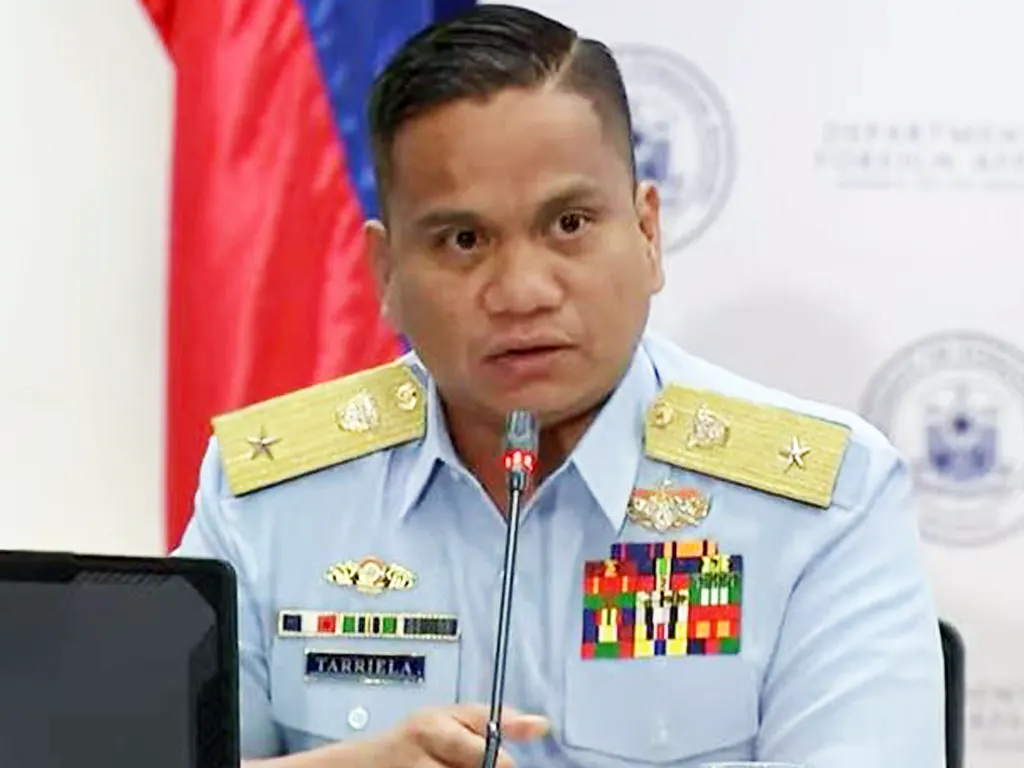
THE Chinese Embassy in Manila and Philippine Coast Guard (PCG) spokesperson for the West Philippine Sea Commodore Jay Tarriela engaged in a pointed exchange on social media Sunday, with Tarriela questioning the consistency of China’s stated principles amid its own actions in the region.
The embassy had issued a statement expressing deep concern over the conflicts in the Middle East, the Gulf, and the Red Sea, and calling on all parties to resolve disputes through dialogue and negotiation toward an early ceasefire. The statement also reaffirmed China’s belief that all nations should respect each other’s sovereignty and territorial integrity, refrain from interfering in one another’s internal affairs, and take seriously the legitimate security concerns of every country.
Tarriela directly challenged the embassy’s post, asking whether it truly stood behind those words. “Wowow! Does the Chinese embassy really believe everything that they wrote there?” he commented, quoting the passage on mutual respect and non‑interference. His remarks highlight the growing friction between the two sides, as Philippine officials have repeatedly called out China over its maritime activities in the West Philippine Sea — including alleged territorial incursions, interference in Philippine fishing operations, and the use of water cannons and dangerous maneuvers against PCG vessels. Critics argue that the very values Beijing advocates globally are the same ones it is accused of violating in Philippine waters.
The exchange underscores how broader geopolitical positions are increasingly intersecting with local tensions between Manila and Beijing. While the Chinese Embassy framed its Middle East statement as a neutral call for peace and respect for international norms, Tarriela’s rebuttal points to a perceived double standard — urging consistency between China’s public diplomacy and its behavior closer to home. As of this writing, the embassy has not issued a further response to Tarriela’s post.
metrosundaily