
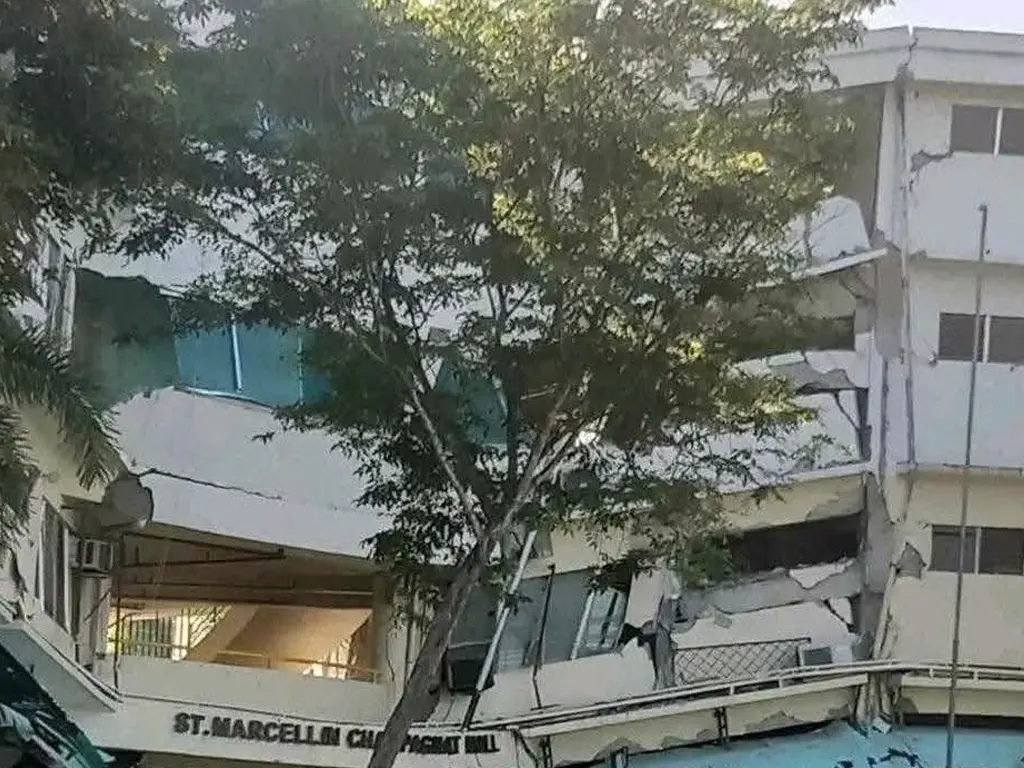
THE death toll from the powerful magnitude 7.8 earthquake that struck off Maasim, Sarangani in Mindanao has climbed to 37, with 479 people injured and four others still unaccounted for, the National Disaster Risk Reduction and Management Council (NDRRMC) confirmed on Tuesday.
The latest official figures show that the Soccsksargen region bore the brunt of the tragedy, recording 33 fatalities, 456 injuries, and all four persons currently listed as missing. Meanwhile, the Davao region reported four deaths and 23 injured residents as a result of the disaster.
One of the strongest seismic events to hit the southern Philippines in recent years, the earthquake occurred at 7:37 a.m. on Monday, June 8. Its impact was felt over a vast area, covering Regions IX, X, XI, XII, the Bangsamoro Autonomous Region in Muslim Mindanao (BARMM), Caraga, and Eastern Visayas. Intensities ranged from weak Intensity I in far‑flung areas to severe Intensity VIII near the epicenter, causing widespread alarm, panic, and damage to structures across multiple provinces and cities.
Immediately after the tremor, authorities issued a tsunami warning due to the quake’s offshore location and magnitude, triggering urgent evacuations among coastal communities in Sarangani and neighboring provinces. Residents living near shorelines were ordered to move to higher ground as a precaution against possible large waves. The alert remained in effect for several hours until monitoring stations confirmed that sea‑level changes had stabilized and no destructive tsunami was generated, allowing families to return to their homes.
Response operations are now in full swing, with government agencies, the Philippine Red Cross, and local disaster teams conducting search, rescue, and retrieval missions while assessing the extent of destruction. Roads, bridges, schools, hospitals, and residential buildings are being inspected for safety, especially since numerous aftershocks continue to rock the area. Authorities continue to urge the public to remain vigilant, follow safety guidelines, and cooperate with ongoing relief efforts as they work to account for the missing and deliver aid to affected families.
metrosundaily