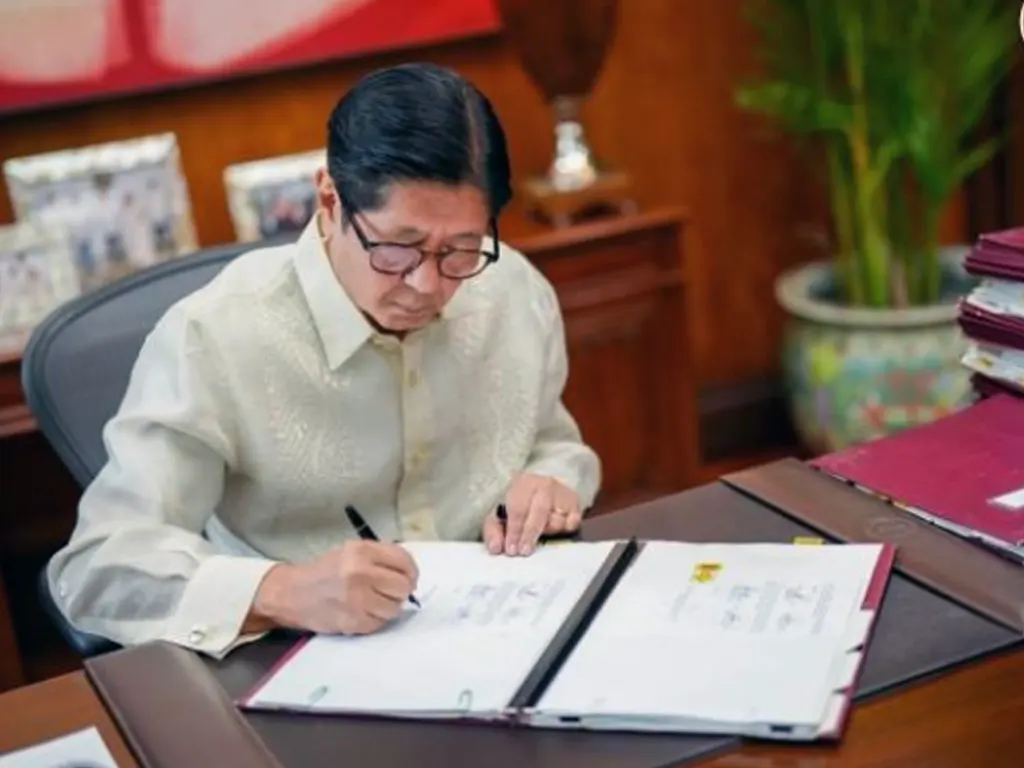
IN a decisive move to cushion the impact of soaring fuel prices on Filipinos, President Ferdinand R. Marcos Jr. has signed into law a measure granting him emergency powers to suspend the excise tax on petroleum products.
This landmark legislation, enacted amid escalating global oil costs driven by Middle East tensions, provides the President with the authority to temporarily halt the imposition of excise taxes on fuel should the price of oil in the international market reach a certain threshold.
The newly signed law empowers the President to suspend the excise tax, as mandated by the Tax Reform for Acceleration and Inclusion (TRAIN) Law, if the price of imported oil reaches or exceeds $80 per barrel for three consecutive months.
This provision aims to provide immediate relief to consumers and various sectors heavily reliant on fuel, such as transportation and agriculture, which have been significantly burdened by the continuous price hikes. The suspension is intended as a temporary measure to stabilize prices and mitigate the economic shockwaves felt across the nation.
This executive action signifies the government’s commitment to addressing the economic challenges posed by external factors. By granting the President emergency powers, the law allows for swift and decisive action without the need for lengthy legislative processes during critical periods. This agility is deemed crucial in responding to the volatile nature of global oil markets, ensuring that the government can act promptly to protect vulnerable sectors and maintain economic stability. The activation of these powers will be a key indicator of the administration’s proactive approach to managing crises.
The implementation of this law is expected to have a palpable effect on the pump prices of gasoline and diesel, potentially offering much-needed respite to Filipino consumers and businesses.
While the suspension is temporary, its activation signals a critical intervention point where the government steps in to alleviate economic pressures. The move underscores the administration’s focus on safeguarding the welfare of its citizens by employing fiscal tools to navigate complex international economic challenges and ensure a more stable domestic market.
metrosundaily