THE Department of Social Welfare and Development (DSWD) is making adjustments to the food stamp program initiated by President Ferdinand R. Marcos Jr.’s administration, aiming to empower beneficiaries and encourage their active participation in nation-building.
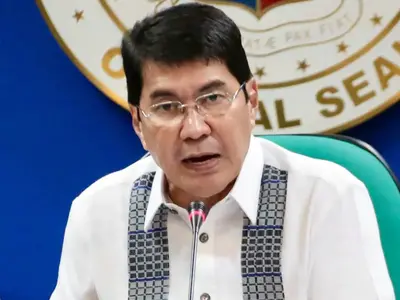
DSWD Undersecretary Edu Punay said they are now working on the design of the food program to lessen the dependence of the beneficiaries on government assistance.
“Isang very novel aspect that we’re introducing, or component, is iyong conditionality. Ang gusto natin (mabawasan) iyong dependency ng ating mga beneficiary sa government assistance na nakikita natin, for example sa 4Ps (Pantawid Pamilyang Pilipino Program), (dahil) talagang masyadong dependent na,” Punay told a news forum in Quezon City on Saturday.
“Admittedly, ang ating mga ilang beneficiaries diyan, ayaw nang umalis sa 4Ps kahit na due for graduation na sila. Ito iyong gusto nating iwasan sa mga bagong programs nating gagawin. That’s why we have the conditionalities now for the food stamp program,” Punay added.
Punay said they are drafting a design for the food stamp program that will require the beneficiary families to be involved in labor-capacity building.
“We want them to enroll in training programs of DOLE (Department of Labor and Employment) and TESDA (Technical Education and Skills Development Authority) so that we can capacitate them to stand on their own,” he said.
“While we’re helping them with their food requirements, siguro iyong maitutulong natin na pagkain sa kanila, pambili ng pagkain – gamitin na lang po nilang pamasahe papunta sa TESDA, papunta sa DOLE, paghahanap ng trabaho – iyon po ang target nitong programa na ito so that when they graduate after three or four years mayroon na silang trabaho. They can sustain their livelihood. They can sustain their food requirements. So, iyon po ang ilan sa mga conditionalities po natin sa programang ito,” Punay added.
He said that another key feature of the food stamp program is the exit mechanism for the beneficiaries.
“Of course, walang forever po ‘di ba kasi ayaw nating nale-left sa forever sa ayuda. Limited resources po ang gobyerno kaya kailangan, we maximize, we make use of our resources to help our poor get out of that poverty line. Kaya po ang target nating exit program dito is they graduate after three to four years once they get out of the poverty line,” Punay said.
“The most important, we believe, of these features ng food stamp program is the digital aspect or the component. Sa ibang bansa po, na-implement na po itong food stamp program, mayroon na sa United States iyan – ang kanilang SNAP Program. Mayroon din po sa mga kapitbahay natin sa Indonesia, may ginawa na rin sa Mongolia, sa Brazil,” he added.
Earlier, DSWD Secretary Rex Gatchalian announced they are set to pilot-test its food stamp program in the second half of the year.
Gatchalian said they are now in the design stage of the program to properly fill in the gaps that may be overlooked during its implementation.
“Mayroon na tayong first draft ng design and we will spend the remaining months of May and June in the design stage. We all know that the devil will be in the details and we have hired multiple consultants in the department to take a second look at what’s being designed para may check and balance,” the DSWD chief said.
“We are working with PSA’s [Philippine Statistics Authority] in-house poverty expert who is their Usec – Usec. Dennis Mapa. He is helping us craft the concept there. So, the remaining days of May and June, we will work on designing it. Now, July to December will be the pilot run to vet the (program) properly,” Gatchalian added.
Throughout the program, the DSWD will continuously monitor and measure the beneficiaries in the regions that it has identified.
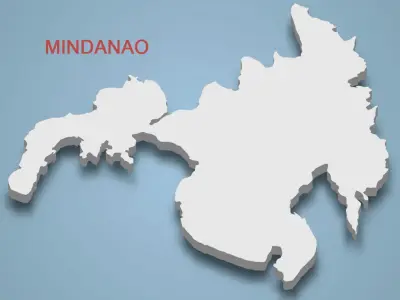
The DSWD has identified five pilot sites coming from different geopolitical characteristics – one in the Bangsamoro Autonomous Region in Muslim Mindanao (BARMM), what used to be a former conflict area; one in geographically isolated regions or provinces; one in urban poor settings; one will be calamity-stricken areas; and one will be a rural poor area.
“We have to make sure that iyong konteksto ng programa will be designed na naaangkop sa bawat lugar,” Gatchalian said.
metrosundaily