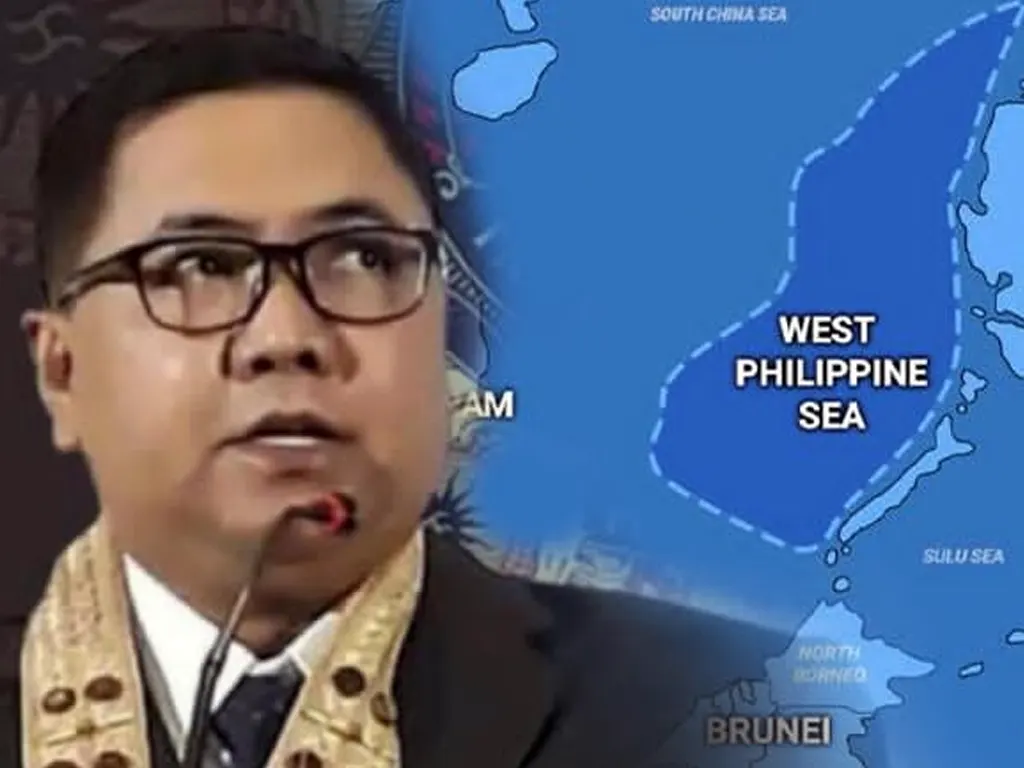
CITING that the West Philippine Sea (WPS) is more than just geography, civic leader Dr. Jose Antonio Goitia reacted to intensified debates over the recent incident near the Scarborough Shoal that a Chinese Navy vessel allegedly aided a Filipino fisherman due to humanitarian reasons.
According to Goitia, chairman emeritus of the Alyansa ng Bantay sa Kapayapaan at Demokrasya (ABKD), People’s Alliance for Democracy and Reforms (PADER), Liga Independencia Pilipinas (LIPI) and Filipinos Do Not Yield Movement (FDNY),
China’s tirades indicate that our officials are the ones causing problems of harassment in parts of the West Philippine Sea (WPS) claimed by Beijing as part of its territory.
In the current escalation of debates, Philippine Coast Guard (PCG) spokesperson for the West Philippine Sea (WPS), Commodore Jay Tarriela, condemned ‘Filipino trolls’ who appeared to be echoing China’s corrosive narrative against the Philippine government.
Tarriela lamented that there are Filipino trolls, some well-known social media influencers and those under the pay of identified pro-China politicians, who are currently being used as puppets in amplifying China’s side of the story instead of the truth.
A well-known columnist recently echoed China’s position, arguing that the term ‘West Philippine Sea’ lacks legal weight because in actuality, the country’s exclusive economic zone (EEZ) is open even as China’s actions are justified by duty, the arbitral ruling is not binding and that the previous Aquino III administration erred in seeking arbitration.
“Each of these claims demands prompt clarification under international law so let us address these points directly. The name is administrative and the right Is legal. West Philippine Sea became an official term through Administrative Order No. 29 issued in 2012,” Goitia pointed out.
“Philippine rights, however, do not arise from this order (because) it come from law. Those rights flow from the United Nations Convention on the Law of the Sea (UNCLOS), a binding treaty to which both the Philippines and China are parties,” the civic leader further stated while emphasizing that administrative order standardizes terminology and only treaties create rights.
He likewise stressed that the country’s EEZ have clear legal boundaries and under UNCLOS, this is defined as extending 200 nautical miles from our coastal base lines and the 2016 arbitral award confirmed that Recto Bank and nearby maritime features fall within our EEZ.
“The boundaries are not ambiguous. Foreign vessels operating in these waters face legal consequences and cannot credibly claim uncertainty. Under UNCLOS, the Philippines alone may fish, extract resources and manage activities within its EEZ. Other states may not conduct law enforcement, engage in military intimidation or exploit resources there,” the civic leader noted as he cited that “freedom of navigation is not a license for coercion.”
Furthermore, he emphasized that though assistance at sea is a legal obligation, it does not justify foreign military presence, especially in an area marked by persistent militarization and harassment.
In ending, Goitia focused on the need to use diplomacy in addressing the territorial claims in the WPS but he still mentioned that in order for diplomacy to be just, it must be anchored in law.
“Diplomacy is vital, but it cannot replace law. Abandoning UNCLOS and the arbitral award would surrender the Philippines’ strongest legal position and allow power, rather than principle, to dictate outcomes.
“Moreover, the West Philippine Sea is not an emotional invention. It is a clearly defined part of the Philippine EEZ, grounded in UNCLOS and affirmed by the 2016 Arbitral Award. But as misleading claims gain traction, Filipinos must remain vigilant. Not every reasonable-sounding argument is true and not every call for silence serves peace.
“Defending the West Philippine Sea is a collective duty. Patriotism means steadfastly upholding our legal rights, now more than ever,” the chairman emeritus concluded.
metrosundaily