
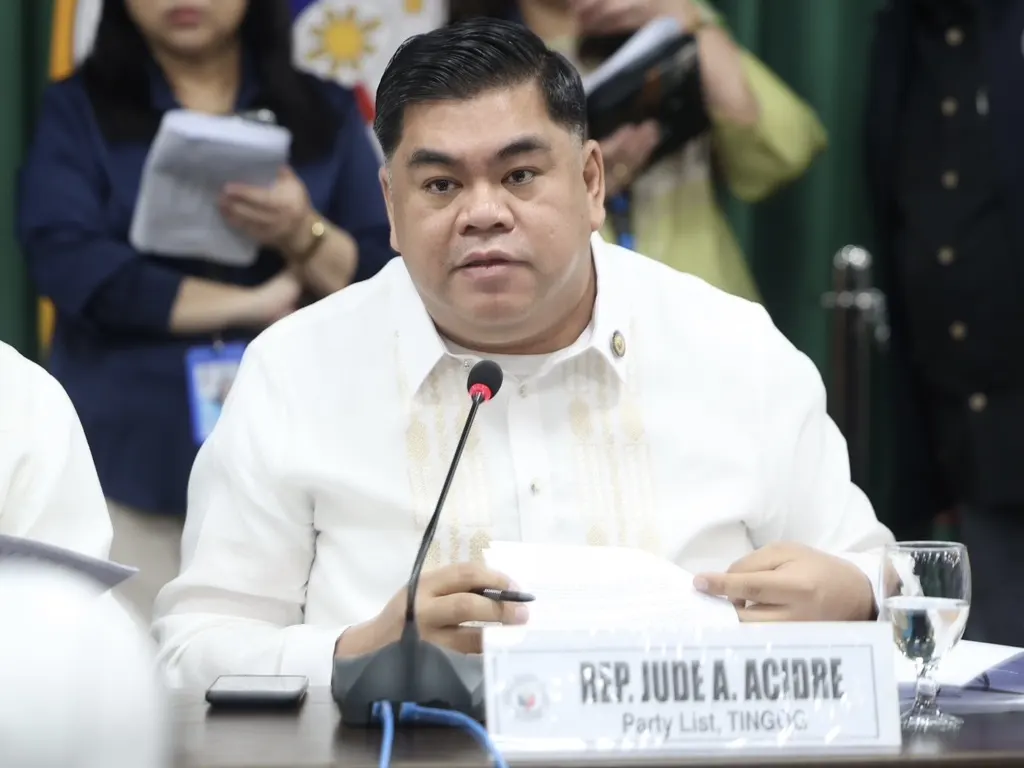
HOUSE Committee on Higher and Technical Education Chair Jude Acidre stated that the assertion that former speaker Leyte Rep. Ferdinand Martin G. Romualdez exercised “functional control” over the national budget process is an overstatement.
He explained that no single official, office, or institution is capable of dominating the budget, given that it goes through multiple stages including deliberations by the Executive branch, the House of Representatives, the Senate, bicameral conferences, presidential approval, and eventual implementation by the executive departments.
“It’s impossible for one person to have control over the entire process. And I think to surmise that one person or one personality or one institution has functional control is very much an overreach,” Acidre said.
Acidre issued the statement as Romualdez’s camp pushed back against claims that he was the supposed “mastermind” of the flood control controversy because of his former position as Speaker, stressing that accountability must rest on evidence and the actual role of each person in the budget chain.
The statement followed an earlier explanation from Atty. Elaine Atienza, spokesperson for Romualdez, that the national budget is not made, approved, released, implemented, inspected or certified by one official because it moves through a long institutional process involving several branches and agencies of government.
“You have to be familiar kasi with the process ng budget making. It begins with the National Expenditure Program in the Executive, goes to the House for the process, goes through three readings, goes through the budget briefings, tapos dadaan din siya sa plenary, pupunta sa Senado, pupunta sa bicameral to reconcile both versions, then it will be reviewed by the president and signed by the president, and implemented by the Executive agencies concerned,” Acidre explained.
Acidre said that if any control can be attributed to the Speaker, it would only relate to the flow of business within the House and not to the entire national budget process that includes the Senate, the President and implementing agencies.
“If you are to talk about ‘functional,’ ako ang masasabi ko lang kung meron man, ang Speaker siguro dapat meron lang control sa proseso ng House kung meron man,” Acidre said.
Even within the House, Acidre noted that the process cannot be reduced to the Speaker alone because budget deliberations involve questions, hearings, minority participation and formal proceedings before any measure moves forward.
“But then again that’s not even intended kasi may magtatanong ‘yan, may minority ‘yan, may hearings ‘yan, di ba?” Acidre pointed out.
Acidre also questioned the logic of tagging the House as the supposed center of the flood control controversy when, based on the figures he cited, Senate-introduced amendments in the Department of Public Works and Highways (DPWH) budget were substantially larger than House-introduced amendments.
“Yes, that also kasi kung makikita mo, I just wanna look at the figures, the Senate insertion introduced amendments in the DPWH budget would be around P142 billion, and you are talking about how many senators? 24,” Acidre said.
He said the House introduced P94 billion in amendments, of which only around P30 billion-plus was actually released, making the “mastermind” claim even harder to square with the numbers being discussed.
“Sa House meron tayo P94 billion na House-introduced amendments of which around only P30 plus billion were released. So maisip ko, paano kaming mastermind eh hindi nga kami nakakuha ng pinakamalaking parte ng national budget, di ba?” Acidre said.
For Acidre, the budget process, the size of the amendments and the release of funds all point to one basic conclusion: accusations should be anchored on evidence and not on sweeping assumptions about the powers of a former Speaker.
metrosundaily