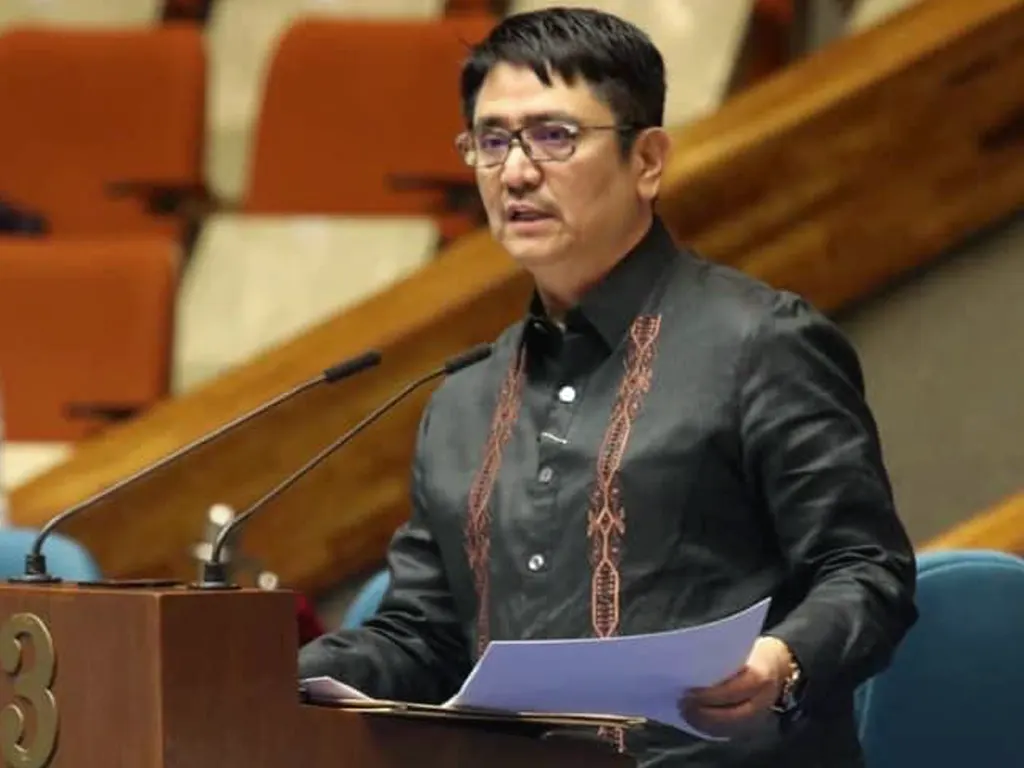
THE ball on proposed amendments to the Constitution’s restrictive economic provisions is now in the Senate’s court, Senior Deputy Speaker and Pampanga 3rd District Rep. Aurelio “Dong” Gonzales Jr. said.
“Ako, I’m very positive kay Senator Migs (Zubiri) and other senators na maipasa na rin nila iyon RBH 6. Hindi po namin sila pini-pressure, nasa kanila ‘yung bola. Kami po ginagawa namin yung role namin dito sa House of Representatives,” he told a news briefing.
Resolution of Both Houses (RBH) No. 6 is the Senate’s version of the economic amendment proposals. The House version is RBH No. 7, which is an almost reproduction of RBH 6.
Gonzales, one of the principal authors of RBH No. 7, reiterated his appeal to the Senate to act expeditiously on the proposed Charter changes.
“Well, sabi ko nga this is the best time to amend the economic provisions. Sa Senado naman, nakikiusap tayo na kung pwede tapusin na rin iyong RBH6…nasa kanila po iyan, pero I’m very positive na ginagawa po nila yung trabaho nila at maipapasa din nila yung RBH6,” he said.
He said there might be no need for the two chambers to convene a conference committee to come up with a final version of the amendment proposals because there is not much difference between the two resolutions.
The House is set to approve RBH7 on second reading this week and on third and final reading next week before Congress goes on its Holy Week recess next weekend.
Gonzales also said the House under Speaker Ferdinand Martin G. Romualdez will give members of the chamber enough time to ask questions about the proposed economic amendments to the constitution.
“Ang nakapila po sa minority, ang alam ko nasa seven, except for the majority. So, some members asked for ample time to study…so marami ang magtatanong. We will give time to the interpellators and alam mo naman maximum one hour iyan, kung seven na ‘yung nakapila mamaya except for the majority, times two hours that is 14, we will consume 14 hours. So, palagay ko it will take time huwag nating madaliin, we will give time to other members,” he said
However, the Pampanga lawmaker said he expected fewer questions to be raised in the plenary deliberations than those asked during the two-week Committee of the Whole House proceedings.
“Alam niyo po kasi wala na sigurong ire-raise. Kasi halos naitanong na po lahat di ba. Kung nag-aaral po sila ng lesson nila, at this point in time, nag-iisip sila kung ano pa yung magandang itanong para magkaroon ng kasagutan ‘yung kanilang mga nasa isip nila,” he said.
Another House member, Deputy Majority Leader and Rep. Margarita Ignacia Nograles of PBA Partylist, said the insertion of the phrase “unless otherwise provided by law” in the Constitutions economic provisions would give future Congresses the flexibility to adjust foreign equity and ownership limitations in the Charter.
“We will leave it up to the wisdom of the next few Congresses to really know kung ano ba talaga ang nararapat sa time na iyon para magpasa ng batas…We cannot put nga certain numbers right now on the (foreign ownership) percentages…kasi we cannot know today what would be good for the people in the next few years, in the next ten years,” she said.
“So itong ‘unless otherwise provided by law’ will leave it to the wisdom of the next few congresses to create a law that would be good for that time and hopefully, the people would elect the future legislators na alam kung paano magpasa ng magandang batas to address concerns and issues in the future,” she said.
Assistant Majority Leader and Lanao del Sur 1st District Rep. Zia Alonto Adiong echoed Nograles’ statement.
“On the issue of flexibility, kasi nakita natin for the past 37 years, the Constitution is not even welcoming to any possible, other than the 60/40 proportion in favor of local companies. But experience dictates, based on the data, nakita natin we compare ourselves to countries who somehow adjusted their foreign equity. So duon natin makikita, so may flexibility iyong mga bansa na karatig bansa natin pagdating sa FDI,” he said.
“If this gets done, and hopefully it will, iyong flexibility na iyon, iyong adaptability na iyon ng magiging next na Congress, mabibigyan na sila ng paraan o kapangyarihan or option para gawin kung anong nararapat na adjustment pagdating sa FDI, duon sa foreign equity para kung sa palagay nila ay mas makakabuti na i-open talaga ang ating ekonomiya sa mga foreign investors,” he said.
For his part, Assistant Majority Leader and Quezon City Rep. Patrick Michael Vargas said the Constitution should be amended to adapt to changes.
“Kung meron man na consistent sa buhay natin, ito yung pagbabago. Kailangan sumabay din tayo sa pagbabago. Basically, iyon naman yung ginagawa namin…Inaral po ito at syempre ang pinaka nasa puso natin dito habang ginagawa para ang kinabukasan ng mga kabataan natin, ng mga anak natin, ay mabigyan ng magandang mapa at pagkakataon para sa kanila,” he said.
“So flexibility hindi kaya ngayon – okay, pag-usapan sa mga susunod na mga Kongreso, sa mga future leaders natin. Pero, sigurado ako kailangan sumabay tayo sa mga dumarating na pagbabago. Kasi may edad na rin talaga ang ating Constitution,” he said.
metrosundaily