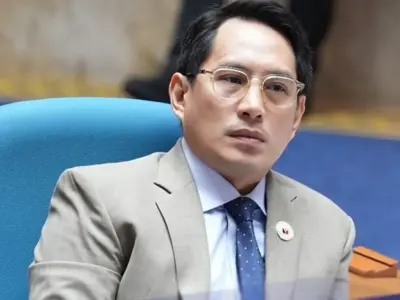
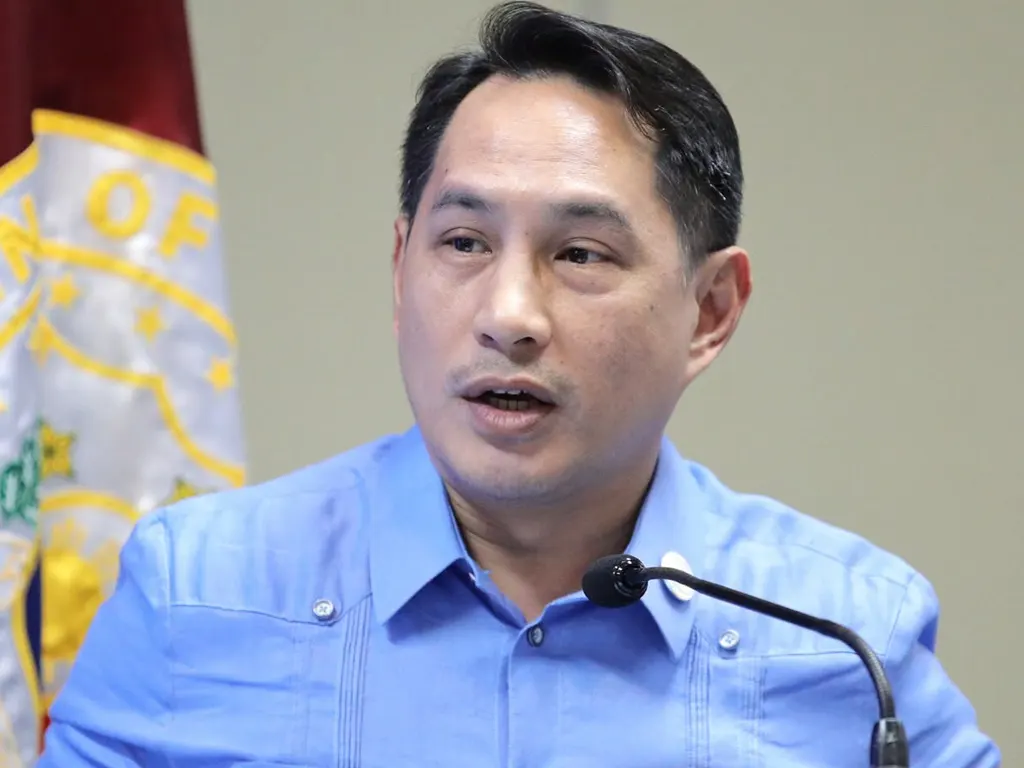
House prosecution spokesperson Rep. Zia Alonto Adiong. Courtesy: Senate of the Philippines
THE Senate Impeachment Court could continue toward a vote on Vice President Sara Z. Duterte even if its conviction threshold is challenged before the Supreme Court (SC), unless the high tribunal issues a Temporary Restraining Order (TRO) stopping the proceedings.
House impeachment trial spokesperson and Lanao del Sur Rep. Zia Alonto Adiong gave that assessment as debate intensified over whether the constitutionally prescribed two-thirds vote should continue to mean 16 of all 24 senators under the unusual circumstances surrounding the trial.
“So my understanding would be, unless and until the Supreme Court issues TRO, then the Senate can— could proceed with the voting,” Alonto Adiong said.
Article XI, Section 3 of the 1987 Constitution provides that no person may be convicted in an impeachment trial without the concurrence of two-thirds of all members of the Senate, a provision traditionally understood to require 16 votes in a 24-member chamber.
The debate has resurfaced because several senator-judges have been unable to participate regularly in the proceedings, prompting Sen. Juan Miguel “Migz” Zubiri to disclose discussions over whether the required number should take account of the Senate’s actual circumstances when judgment is rendered.
Alonto Adiong acknowledged that a challenge involving the constitutional meaning of the voting requirement would ultimately fall within the Supreme Court’s authority to resolve.
“Well, anything that can be— anything can be questioned, you know, before the Supreme Court. If it’s about constitutionality, if it arises the question of constitutionality, I guess, the only institution that can actually define and clarify some confusion as to how do we interpret the constitution is the Supreme Court,” Alonto Adiong said.
He stressed, however, that the interaction between the Senate’s exclusive constitutional power to try impeachment cases and the Supreme Court’s authority to resolve constitutional questions has yet to be tested under the circumstances now confronting the chamber.
“But then again, then again, Victoria, this is an open-ended situation where we really require, for example, if— and should there be a question before the Supreme Court, if controversy arises, then I guess we just have to wait and find out how the Supreme Court would really fill the gap,” Alonto Adiong said.
The prosecution has so far maintained that it will respect the Senate’s determination of the voting rules while concentrating on presenting evidence sufficient to sustain the articles of impeachment.
Alonto Adiong said a definitive Supreme Court ruling could eventually establish guidance extending well beyond Duterte’s case and settle how the constitutional voting provision should operate when similar circumstances arise.
“That would give us even more, what do you call this, even more pleasure, because this is something that I think the Supreme Court can really clarify, to give us a concrete and tangible understanding on how future impeachment proceedings with similar circumstance that we are now experiencing would have to be given answer and addressed quite certainly when it comes to numbers, or getting the right numbers in order to render a decision,” Alonto Adiong said.
metrosundaily