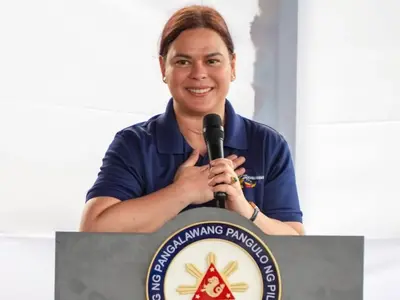

MANILA Rep. Joel Chua on Saturday said that even if Vice President Sara Z. Duterte resigns, she still cannot escape accountability because the Office of the Ombudsman case waiting in the wings may proceed and could still carry the penalty of perpetual disqualification, while the impeachment case itself, once transmitted to the Senate, must still confront that question head-on.
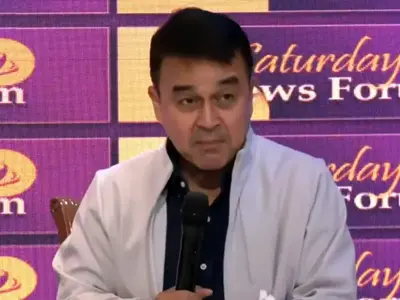
“Unang-una po, iyung kanya pong pagre-resign ay hindi po mag-aabswelto sa kanya sa pananagutan. Dahil meron po ring nakaumang sa kanyang kaso sa ating Office of the Ombudsman,” Chua, who chairs the House Committee on Good Government and Public Accountability, said during the Saturday News Forum at Dapo Restaurant in Quezon City.
Chua, a lawyer, explained that one reason the Ombudsman track has not fully moved against Duterte is that she remains an impeachable official, but that this barrier falls once she steps down, allowing the legal machinery to move in full.
“In fact, dito po sa Office of the Ombudsman, kaya po siguro hindi pa makausad pagdating po sa kanya, dahil siya po ay isang impeachable officer. Opo, inaantay pa po. But in so far as ‘yung other po no, na mga kasama po dito sa kaso, puwede pong umusad. Pero once na siya po ay nag-resign, gugulong na ang batas. Gugulong na po ang Ombudsman,” he said.
Chua stressed that the matter does not stop at criminal exposure because the Ombudsman case also carries an administrative dimension that can end in a lifetime ban from public office, which makes resignation an incomplete and inadequate escape route.
“Ito pong kaso pong ‘yan hindi lamang po sa usaping criminal aspect, dahil ‘yung sa Office of the Ombudsman meron din po tong kaakibat na administratibo. At doon sa administratibo puwede rin pong maglabas ng perpetual disqualification,” he pointed out.
He then drew a distinction that he said the public must understand clearly, which is that impeachment itself does not send anyone to jail, but it does carry two serious constitutional penalties that go to the heart of public office.
“Pero just the same, ang impeachment po kasi ang penalty po niyan dalawa, removal at perpetual disqualification. Wala pong kulong ‘yan, ‘yung impeachment para po sa paglilinaw sa ating mga kababayan,” Chua explained.
For that reason, he argued, a resignation should not be allowed to short-circuit the issue of perpetual disqualification, especially if the House has already endorsed the complaint and one of the express prayers has already been placed before the Senate.
“Kaya kami po, sa parte po namin, ako po naniniwala, kahit po siya mag-resign, dapat po yung issue o ‘yung sa usapin po ng perpetual disqualification, ay dapat din po yan na sagutin o desisyonan. Kasi ang magiging prayer po dito once na ito po ay inendorso na sa Senado, ang isa po sa mga prayer dito ay perpetual disqualification. Dapat po yan ay resulbahin din ng Senado,” he said.
Chua also pushed back against claims from Duterte’s camp that the recent hearings of the House Committee on Justice had turned into a fishing expedition, saying the panel is acting squarely within its rules and in a manner akin to a preliminary investigation where both sides may continue submitting evidence.
“Unang una, under sa aming Rules Section 7, we are allowed to issue a compulsory processes and to gather additional evidence so maliwanag po sa rules namin yun. Ito pong ginagawa po namin this is akin o ibig sabihin itoy parang parehas po sa preliminary investigation, kung saan ang complainant atska yung akusado o dito po sa po kanila respondent ay pinapayagan na magsumite ng mga ebidensya,” Chua said.
He added that the committee remains open even now to evidence from Duterte’s side, which for him only reinforces the point that what the House is doing is not ambush litigation but due process under the Constitution.
“So until now maski nga po sila magsumite po sila ng ebidensya tatanggapin din po namin kahit na hindi naman po nila in-attach dun sa kanilang answer ad cautelum. So dito po lahat po dito bilang parte po ng due process lahat po yan binibigyan,” he added.
For Chua, the charge of a fishing expedition falls apart for a more basic reason, which is that the proceedings are not about idle curiosity or partisan spectacle but about constitutional accountability for the handling of public funds and public power.
“At saka unang-una po, ito pong pinag-uusapan po natin ay accountability. Ito po’y pinakamatas, nakalagay po ito sa ating Saligang Batas, public office is a public trust,” he stressed.
“So pinaguusapan po dito ay pera ng bayan hindi naman po pera ng, hindi po nya pera to hindi po pera namin, pera po ng taong bayan ang pinaguusapan po dito,” Chua said.
metrosundaily