
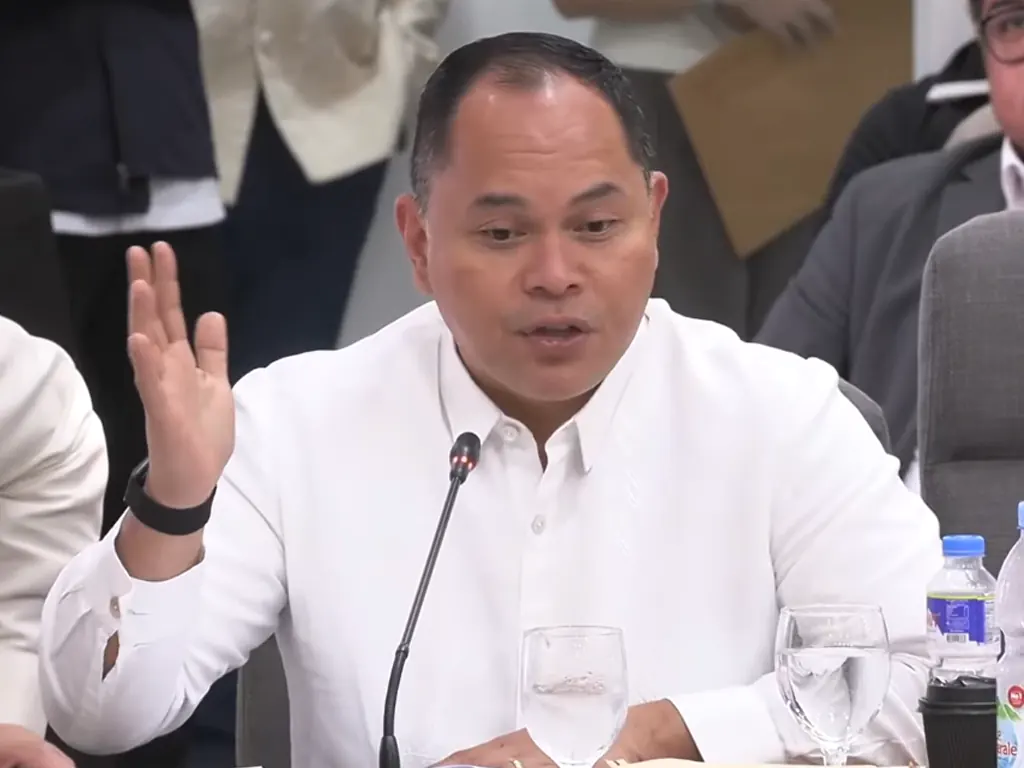
DEPUTY Speaker and Quezon Rep. David “Jayjay” Suarez on Wednesday raised a sharp mismatch between Vice President Sara Z. Duterte’s declared assets in her Statements of Assets, Liabilities and Net Worth and the far larger volume of bank transactions reported to the Anti-Money Laundering Council (AMLC).
“At ang nakakapagtaka po Madam Chair, para yatang hindi nagtutugma yung kwento sa kwenta. Dahil sa SALN kanina na binabanggit po ng ating kasamahan na si Cong. Terry Ridon may mga sinabi na may cash on hand kaso lang base sa labas at pasok ng pera mas malaki po yung nai-report ng mga bangko sa AMLC kesa dun sa lumalabas sa SALN,” Suarez told the House Committee on Justice during Wednesday’s hearing on VP Duterte’s impeachment.
The issue surfaced during the panel’s hearing on the impeachment complaints against Duterte, where lawmakers were testing documentary evidence tied to alleged unexplained wealth and comparing SALN entries against AMLC-reported movements in bank accounts linked to the Vice President and her husband, lawyer Manases Carpio.
Before driving home his point on the numbers, Suarez first drew out from AMLC Executive Director Ronel Buenaventura how the agency actually gets its reports, making clear for the record that the red flags do not originate from a fishing expedition by AMLC into named personalities but from the banks themselves.
“Mam para lang po maunawaan ko po yung proseso ng pagre-report, ito pong mga tinatalakay na covered o suspicious transactions ito po ay nirereport sa inyo ng bangko o AMLC ang nagpa-flag nito? Pano po ba ang sistema?” Suarez asked.
“Bangko po ang nagre-report nito sa AMLC,” Buenaventura replied.
Suarez then tightened the point by asking whether the banks themselves determine which transactions are flagged as covered or suspicious before those are transmitted to the council.
“Therefore the bank determines kung ano yung mga considered flagged and suspicious and nire-report sa inyo,” Suarez said.
“Tama po,” Buenaventura answered.
With that clarification on record, Suarez stressed that the public needed to understand that the transactions before the panel were being reported by the banks themselves and were not simply the product of AMLC choosing to look into specific accounts.
“Mahalaga po kasing malaman yung Madam Chair upang maunawaan natin ang bangko mismo ang nagpapadala ng na-report nito sa AMLC and it is not AMLC looking into specific accounts of this individual. Am I right to state that Madam Chair,” Suarez said.
“Tama po,” Buenaventura affirmed.
Suarez then summarized the point in simpler terms and connected it directly to the discrepancy he said the committee was already seeing between the SALN figures and the bank-reported movements.
“Sa madaling salita para mas maunawaan po ng tao, hindi po iniimbestigahan ng AMLC yung mga specific na bank accounts, yung mismong report ang pinanggagalingan po nito ay yung bangko mismo sila yung nagrereport sa AMLC,” Suarez said.
The SALN record earlier laid before the House Committee on Justice showed a pattern that sharpened Suarez’s point.
Vice President Sara Duterte’s declared net worth rose from P7.2 million in 2007 to P71.058 million in 2022, then climbed further to P88.512 million in 2024, yet from 2019 to 2024 her SALNs reflected no declared cash on hand or cash in bank.
That meant that even as her declared wealth kept increasing year after year, the most liquid asset entries that had appeared in her earlier SALNs disappeared for six straight years.
From there, Suarez pressed a second line that may prove just as consequential, asking whether even the AMLC figures presented to the committee might still be incomplete because banks report only transactions that cross statutory thresholds or trigger suspicion markers under their own screening.
“So pwede ko rin po bang masabi Madam Chair na maaari AMLC na hindi pa kompleto ang report kasi sabi nyo po bangko lang ang nagre-report sa inyo. So there may be other transactions that may have not been reported to you because they may have thought that those were not suspicious, nor were they flagged. Am I right to assume that?” he asked.
Buenaventura answered that only transactions above P500,000 or those considered suspicious are reported to AMLC, leaving open the possibility that lower-value transactions may not have entered the agency’s records at all.
“Tama po because ang nirereport lang po ng bangko sa AMLC halimbawa yung mahigit P500,000 or suspicious, kung hindi po mahigit P500,000 yan hindi po irereport sa AMLC so maaari po or maaari ring wala na merong transaction na mas mababa pa sa P500,000 na hindi na nairereport sa amin,” Buenaventura stated.
That exchange prompted Suarez to suggest that the numbers already before the committee may not yet represent the full scope of the financial activity if further scrutiny were to capture transactions missed by bank reporting thresholds or internal criteria.
“Eh di maaari rin pong sabihin pwede pang lumobo itong numero na ito kung mas lalong bubusisiin at titignan. Dahil maaaring hindi na-flag ng banking institution yung specific na transaction dahil sa pananaw nila hindi ito suspicious o covered ng kanilang criteria,” Suarez said.
Buenaventura declined to assert that this was definitely the case but conceded that such a scenario could exist in theory.
“Hindi ko po masabi pero theoretically posible po,” Buenaventura replied.
metrosundaily