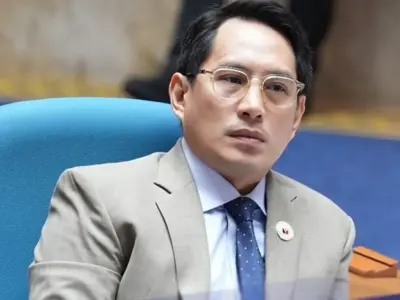
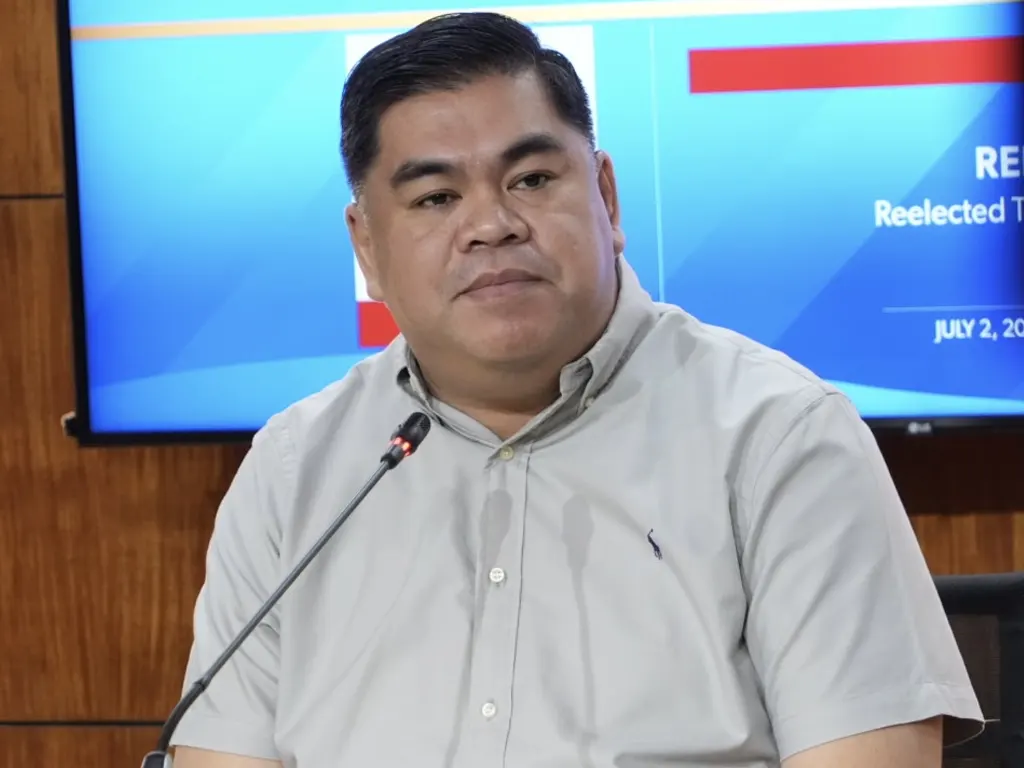
HOUSE Committee on Higher and Technical Education Chair Jude AS Acidre on Saturday said the impeachment trial of Vice President Sara Z. Duterte will ultimately be decided by evidence, not popularity, citing the impeachment of former President Joseph Estrada as proof that even the most popular leaders can be held accountable when the facts are laid before the public.
Speaking at the Saturday News Forum at Dapo Restaurant in Quezon City, Acidre said the country has faced a similar test before during the Estrada impeachment, when a highly popular president and a Senate dominated by his allies were confronted by mounting evidence and public scrutiny.
“In 2001, Erap was a very popular president. The Senate was dominated by his allies. But it changed the perception of the people, ‘yung ebidensya, ‘yung proseso,” Acidre said.
The Estrada impeachment trial ended in a political crisis after several senator-judges voted against opening an envelope believed to contain key evidence, triggering massive public protests that culminated in the EDSA 2 uprising.
Estrada was eventually forced from office in January 2001, and later faced plunder and other related charges before the Sandiganbayan.
According to Acidre, the Estrada impeachment demonstrated that public opinion can evolve when citizens are given the opportunity to examine the facts for themselves.
“Kaya ako may tiwala sa prosesong ito kung makikita lang ng taumbayan ang stake nila, ang papel nila sa nangyayaring ito,” he said.
Acidre said the lesson remains relevant today as Duterte faces an impeachment trial despite retaining a strong political following.
“So hindi ito bago na pangyayari. Hindi ito first time na mag-i-impeach tayo ng napakapopular na leader. Ginawa na natin ito dati,” Acidre pointed out.
For Acidre, the impeachment trial is bigger than the political future of any single public official.
He said the proceedings will test whether Filipinos remain committed to the principle that no one is above accountability and whether evidence can outweigh political popularity.
“This is the defining moment for this generation,” Acidre said.
“Walang isang salinlahi, walang isang generation that receives a perfect nation. Palaging may room for improvement ang pagka-Pilipino. Palaging may room for improvement ang Pilipinas. Ito ang panahon natin to make that improvement.”
He said one challenge for those supporting the impeachment process is ensuring that the evidence is presented in a way that ordinary Filipinos can understand and relate to.
“Ang mahalaga, challenge din sa amin, is to make sure that our language, the way we present the case, would speak to the reality of ordinary Filipinos,” he said.
Acidre said Filipinos may differ in language, attitudes and political preferences, but continue to share common expectations about accountability and good governance.
“Despite the differences in the language or the attitude or the behavior, may mga enduring Filipino values kasi,” he said.
“May mga values na define us, like ano ang in-expect natin sa gobyerno, ano ‘yung klase ng lipunan ‘yung gusto natin maging,” Acidre said.
He also recalled that some politicians who sided with Estrada during the impeachment controversy eventually paid a political price at the polls, underscoring how public judgment can shift when voters are presented with evidence.
metrosundaily