Courtesy: UNRWA/Mohamed Hinnawi
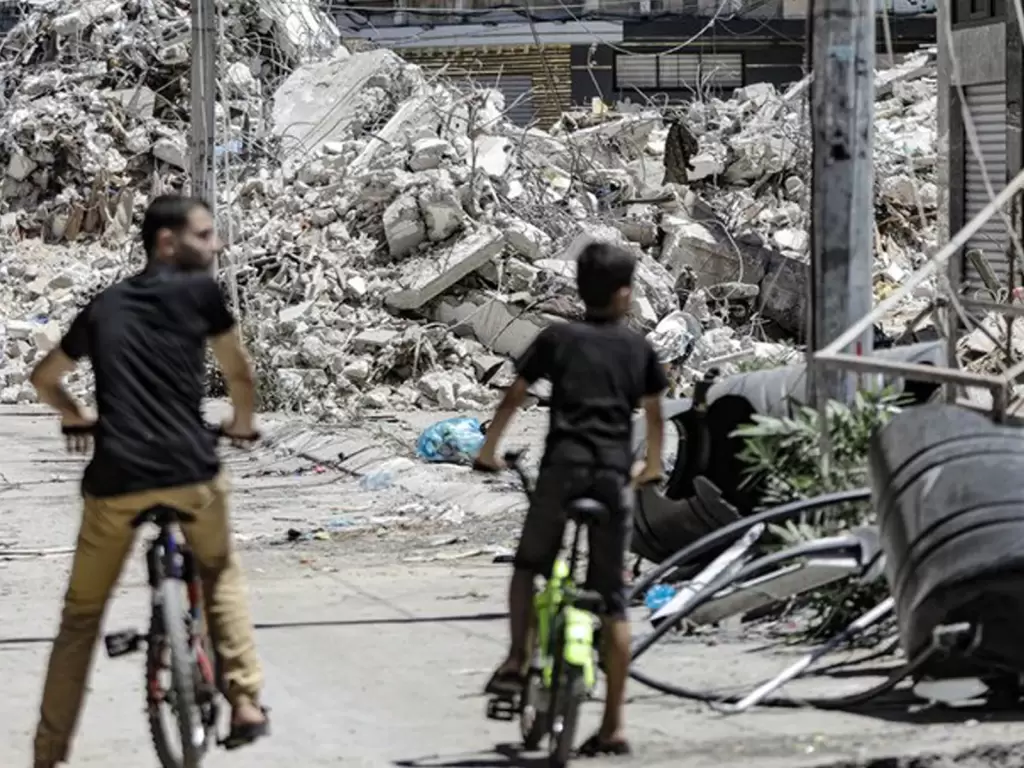
THE United Nations on Saturday ramped up appeals for a humanitarian ceasefire in Gaza after another night of ground incursions and intense bombardment by Israeli forces left healthcare facilities without electricity and civilians across the ravaged enclave virtually “cut off from the outside world”.
Secretary-General Antonio Guterres said: “I reiterate my strong appeal for an immediate humanitarian ceasefire, together with the unconditional release of hostages and the delivery of relief at a level corresponding to the dramatic needs of the people in Gaza, where a humanitarian catastrophe is unfolding in front of our eyes.
The UN chief is on his way to Nepal for an official visit but is closely following the situation in the Middle East.
According to his spokesperson in NY, during a stopover in Doha, Qatar, Mr. Guterres spoke by phone with Egyptian President Abdel Fattah Al Sisi and the two discussed the current situation in that region and the coordination of humanitarian efforts for civilians in Gaza.
This is the moment of truth. Everyone must assume their responsibilities. History will judge us all – UN Secretary-General António Guterres
In Doha, Mr. Guterres met with Qatari Prime Minister Sheikh Mohammed bin Abdulrahman bin Jassim Al-Thani for consultations on the Middle East crisis.
The UN chief expressed deep gratitude, appreciation and support for the mediation initiatives of Qatar, namely for the release of the hostages kept in Gaza.
On the situation in Gaza, the Secretary-General said that he had been encouraged in the last days by what seemed to be a growing consensus in the international community, including the countries supporting Israel, for the need of at least a humanitarian pause in the fighting.
Such a pause would facilitate the release of hostages in Gaza, the evacuation of third country nationals and the necessary massive scale up of the delivery of humanitarian aid to the people in Gaza.
“Regrettably, instead of the pause, I was surprised by an unprecedented escalation of the bombardments and their devastating impacts, undermining the referred humanitarian objectives,” lamented the UN chief.
Moreover, he said that given the breakdown in communications, he was also extremely concerned about the UN staff who are in Gaza to deliver humanitarian assistance.
“This situation must be reversed,” he said adding: “I want to repeat what I said yesterday. This is the moment of truth. Everyone must assume their responsibilities. History will judge us all.”
‘Communications blackout’
Meanwhile, the World Health Organization (WHO) warned that a total communication and electrical blackout follows a night of continuing hostilities and ground incursions in Gaza.
The UN health agency says that it has lost contact with its staff in the enclave but is still trying to gather information on the overall impact on civilians and health care.
“WHO reminds all parties to the conflict to take all precautions to protect civilians and civilian infrastructure. This includes health workers, patients, health facilities and ambulances, and civilians who are sheltering in these facilities,” the agency said in a press release.
Active measures must be taken, the agency continued, to ensure civilians and health workers are not harmed and safe passage provided for the movement of desperately needed medical supplies, fuel, water and food into and across Gaza.
metrosundaily