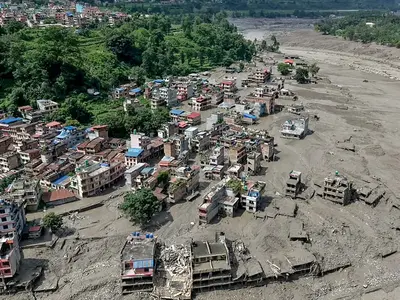

A POWERFUL earthquake, measuring 7.7 on the Richter scale, struck central Myanmar on Friday afternoon, sending shockwaves across the region and causing significant damage and panic.
The United States Geological Survey (USGS) located the epicenter 16 kilometers (10 miles) northwest of Sagaing, at a relatively shallow depth of 10 kilometers. The quake, which hit around 12:50 pm local time (0620 GMT), triggered widespread disruption and fear in Myanmar and neighboring countries.
In Naypyidaw, Myanmar’s capital, the force of the tremors buckled roads and caused damage to buildings, with chunks of ceilings collapsing. AFP journalists on the ground reported scenes of chaos and destruction, highlighting the intensity of the quake.
Similar scenes unfolded in Mandalay, where social media posts—though yet to be independently verified—showed collapsed buildings and debris strewn across the streets. Even in Yangon, Myanmar’s largest city, witnesses described widespread panic as people fled buildings.
The earthquake’s impact extended far beyond Myanmar’s borders. Tremors were felt throughout northern Thailand, reaching as far south as Bangkok, where residents poured into the streets in a desperate attempt to escape the shaking buildings.
In Chiang Mai, a popular tourist destination, one resident recounted running from their home in pajamas upon feeling the tremors. Similar scenes of panic unfolded in Bangkok, with hotel guests evacuating in bathrobes and swimwear.
The earthquake’s reach also extended into China, where tremors were felt in the southwest Yunnan province. China’s earthquake agency reported a magnitude of 7.9, slightly higher than the USGS reading. The widespread impact underscores the earthquake’s power and the significant area affected.
Myanmar’s history with earthquakes is well-documented. The region is seismically active, with the Sagaing Fault—running north to south through the country’s center—responsible for several strong quakes in the past.
The USGS notes six strong quakes of 7.0 magnitude or more struck near the fault between 1930 and 1956. A previous 6.8 magnitude earthquake in Bagan in 2016 resulted in three deaths and significant damage to historical sites.
The latest quake raises serious concerns, particularly given Myanmar’s already strained medical system, especially in rural areas.
The full extent of the damage and casualties remains unclear, but the initial reports paint a grim picture of widespread destruction and the urgent need for aid and assistance in the affected regions. The coming days will be crucial in assessing the full impact of this devastating earthquake and coordinating the necessary relief efforts.
metrosundaily