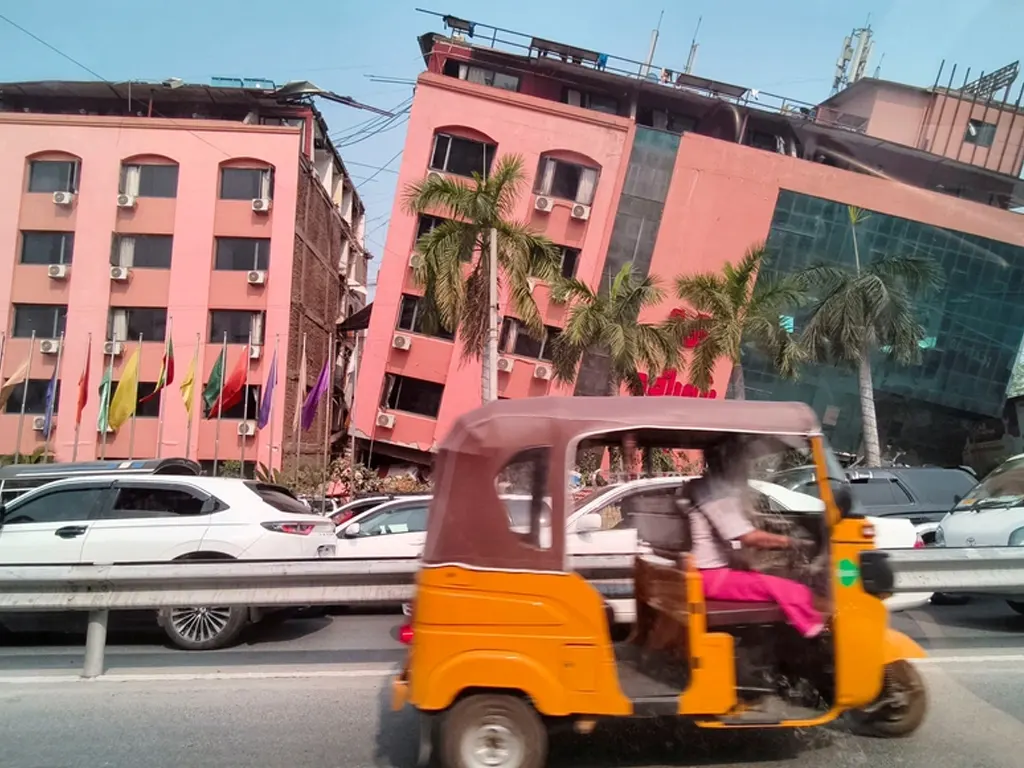
A DEVASTATING 7.7 magnitude earthquake that struck Myanmar on Friday has claimed the lives of over 1,000 people, according to the military government’s latest update. This figure represents a significant increase from the initial reports of 144 fatalities, highlighting the widespread destruction caused by the quake. The disaster struck amidst a pre-existing humanitarian crisis fueled by ongoing civil war and widespread poverty.
The earthquake’s impact extended beyond Myanmar’s borders, with at least nine deaths reported in neighboring Thailand, where the tremors caused significant damage, including the collapse of a skyscraper under construction in Bangkok. The US Geological Survey’s predictive modeling suggests the death toll in Myanmar could tragically rise to over 10,000, with economic losses potentially surpassing the nation’s annual GDP.
The quake inflicted severe damage to Myanmar’s infrastructure, crippling roads, bridges, and buildings. The junta, in a rare appeal for international assistance, has acknowledged the scale of the devastation and the urgent need for aid. Search and rescue operations are underway, but hampered by the limited heavy machinery available in affected areas, such as Mandalay, Myanmar’s second-largest city.
In response to the crisis, several nations have pledged aid and dispatched rescue teams and supplies. China, Russia, India, Malaysia, and Singapore are among those sending personnel and relief materials to assist in search and rescue efforts and provide much-needed humanitarian support.
South Korea has committed an initial $2 million in humanitarian aid to be channeled through international organizations. Even the United States, despite its strained relationship with the Myanmar military junta, has indicated it will provide assistance. These international efforts underscore the global concern surrounding the humanitarian catastrophe unfolding in Myanmar.
The earthquake’s impact extends far beyond the immediate death toll. The damage to critical infrastructure, combined with the ongoing civil war, poses significant long-term challenges to the recovery and rehabilitation efforts in a nation already grappling with immense hardship. The full extent of the devastation and the long-term consequences remain to be seen.
metrosundaily