
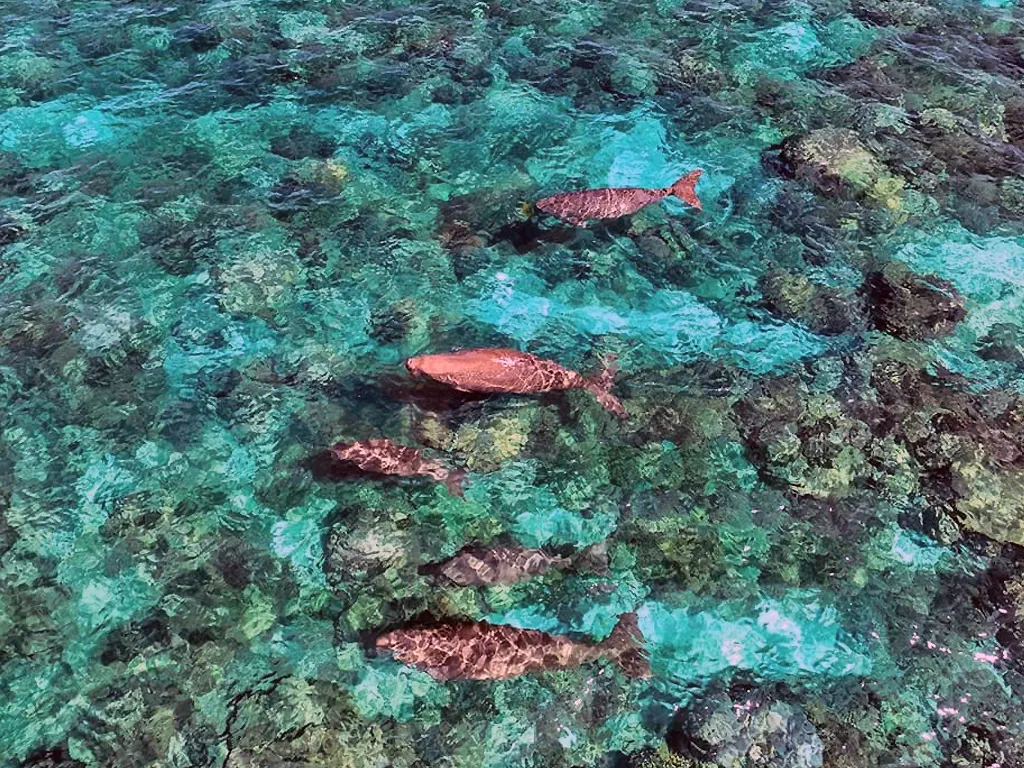
GLAN, SARANGANI PROVINCE – Five Dugongs (Dugong dugon), commonly known as “sea cows”, were spotted by the drone camera of Sarangani Bay Protected Seascape (SBPS) Protected Area Management Office (PAMO) foraging in the coast here on March 11, the last day of SBPS Week celebration.
Atty. Felix S. Alicer, regional executive director of the Department of Environment and Natural Resources (DENR) Region 12 and concurrent chair of the SBPS Protected Area Management Board (PAMB), said that the sighting of dugongs manifests that the SBPS remains as a key marine biodiversity area which needs to be protected, not only by the DENR, but all of its stakeholders.
“We rely too much on the constituents of this area for its protection. DENR alone cannot carry out its functions effectively without the support of the citizenry and the local government units. We must all work together to protect and preserve the biodiversity in the SBPS,” RED Alicer said.
Protected Area Superintendent (PASu) Joy C. Ologuin said that she was overwhelmed on the presence of the dugongs in the area.
“We’re glad that we still have this number of dugong in SBPS. We thought that we’re losing this species because we were considered as hotspot of dugong in the whole Philippines. We are so delighted now,” she said.
Ma. Elvira V. Lumayag, provincial environment and natural resources officer (PENRO) of Sarangani, disclosed that only one (1) or two (2) dugongs were usually sighted during the monthly marine mammal monitoring activity of the DENR.
“This is so timely with our SBPS week celebration. This sighting is a manifestation of how we are taking care of our protected seascape. Our efforts are paying off,” PENRO Lumayag said.
Dugongs, the flagship species of SBPS, are very shy marine mammals which feed on sea grasses.
According to International Union for Conservation of Nature (UICN) and WWF, Dugongs’ population is decreasing due to sea grass habitat loss or degradation which is attributed to various development and industrial activities in the coastal areas that cause water pollution. | With report and photo from PAMO-SBPS