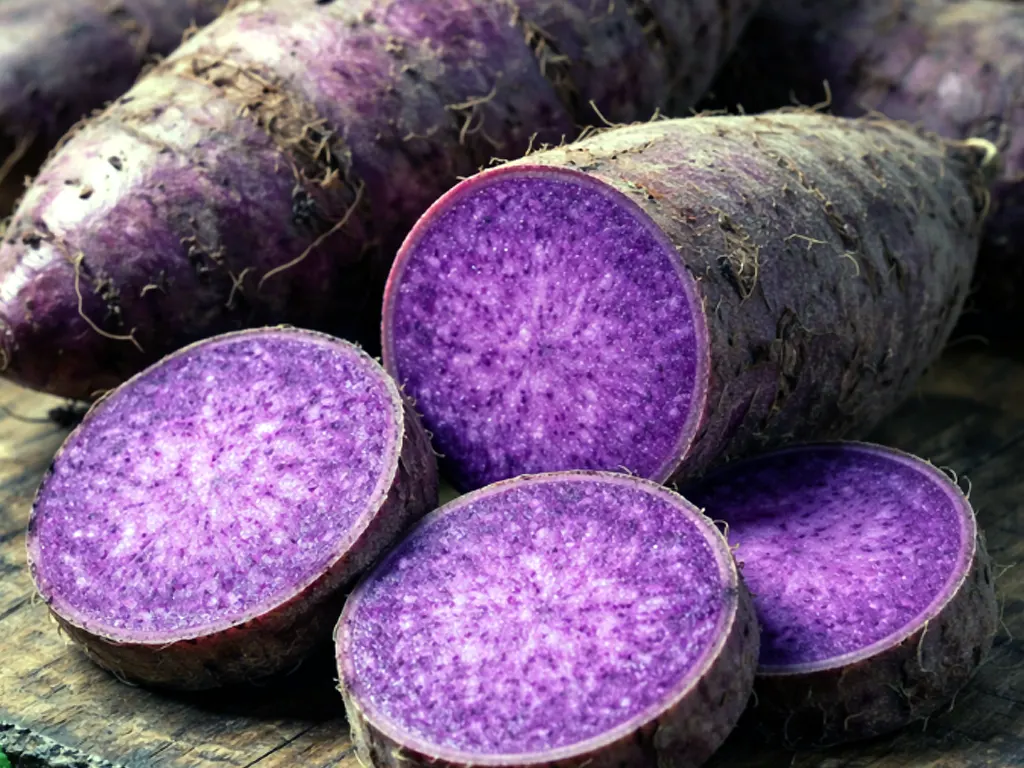
REPRESENTATIVES Migz Villafuerte and Luigi Villafuerte want the 20th Congress to bolster government and private-sector efforts to raise yields and exports of the globally sought-after “ube” or purple yam, with the goal of replicating for the Philippines the kind of worldwide success that matcha powder has achieved for Japan.
House Deputy Majority Leader Luigi Villafuerte said a masterplan covering the production, processing, marketing and export of ube is urgent amid rapidly growing demand in the Philippines and Asia, as well as North America, Europe and the Middle East.
The Villafuertes said ube’s growing international appeal in food, beverage, dessert and specialty-product markets presents an opportunity for the Philippines to become a major global source of ube and ube-derived products, particularly ube powder.
To pursue this goal, HB 8814 proposes the creation of a Philippine Ube Industry Council to set standards, guide investments and coordinate government agencies on ube development. It also seeks to establish an Ube Industry Development Fund to bankroll farmer support programs, processing facility development, research and development, quality infrastructure, brand development, trademark registration, marketing, trade fair participation, and export promotion activities.
The bill would also ensure that smallholder ube farmers and rural communities are primary beneficiaries through improved market access, fair pricing, technical support, stronger links to domestic and international value chains, and preferential credit programs to be offered by the Land Bank of the Philippines and Development Bank of the Philippines.
With HB 8814, Migz and Luigi aim to establish the Philippines as the premier global source of ube and ube-derived products by ensuring quality excellence, geographic indication protection and unified brand promotion.
Supply constraints could limit further growth in the Philippines’ ube industry amid the growing demand for purple yam in overseas markets.
The Villafuertes said that a report by British research firm BMI on challenges to the government’s ube industry expansion plan point to the need for a master plan to address the BMI-identified problems, such as ube supply shortages, limited farmland planted to this cop, and slow farmer adoption.
“Prolonged supply constraints, slower-than-expected expansion of domestic cultivation capacity or the emergence of substitute ingredients that capture consumer attention could limit ube’s ability to sustain its current growth trajectory and transition from a trending flavor into a permanently established global food category,” said BMI, a subsidiary of credit rating agency Fitch Ratings.
According to BMI, the government’s ban on fresh ube exports underscore the production challenges faced by the industry in the face of growing overseas demand.
The Villafuertes said their proposed ube development blueprint should be fast-tracked given Vietnam’s efforts to boost its own ube production, apparently with the goal of turning purple yam into its newest export winner.
The lawmakers noted that President Ferdinand R. Marcos Jr. has also recognized ube’s export potential, mentioning in his fifth State of the Nation Address (SONA) last July his administration’s efforts to maintain the “export competitiveness for our indigenous farm products, such as ube, coconut, bananas and other tropical fruits.”
“Current local production is estimated at a scanty 12,000 MT (metric tons), hence the need for concerted and more aggressive national efforts to dramatically boost domestic output of this traditional crop so we can cash in on the surging global demand for purple yam,” said Migz Villafuerte.
Both former CamSur governors, Migz and Luigi said their national push builds on efforts in their home province, where the Sanggunian Panlalawigan (SP) approved Ordinance No. 040, series of 2026, declaring ube as the province’s priority crop and establishing the CamSur Ube Development Program as a blueprint for developing a comprehensive ube value chain from farm to export.
Governor and former Rep. LRay Villafuerte Jr. said the ordinance aims to “replicate—and even surpass—the success of Japan in transforming matcha into a superb export winner by assigning purple yam with preferential consideration in the agricultural support programs, technical assistance, extension services, enterprise development initiatives and value chain investments of the provincial LGU.”
The ordinance also created the “CamSur Ube” brand as the province’s official collective mark for ube, ube powder and other ube by-products produced in CamSur under certified quality standards. It identified the existing CamSur Fruits and Vegetables Facility in Pili as a potential anchor processing hub for ube powder production, subject to the necessary certifications and equipment upgrades.
Hence, CamSur is doubling down on the cultivation, processing and marketing of ube amid burgeoning global demand for the crop, whose overseas sales hit $3 million last year. CamSur farmers are planting the violet-purple tuber on an additional 1,000 hectares of land in the province.
Beyond the provincial efforts, the Villafuertes said the recent formation of United Ube PH Association Inc. further strengthens the case for a national ube development blueprint. The organization brings together government, growers, processors, traders, exporters and other industry players to work on a masterplan that would give the Philippines a bigger share of the global ube market.
metrosundaily