
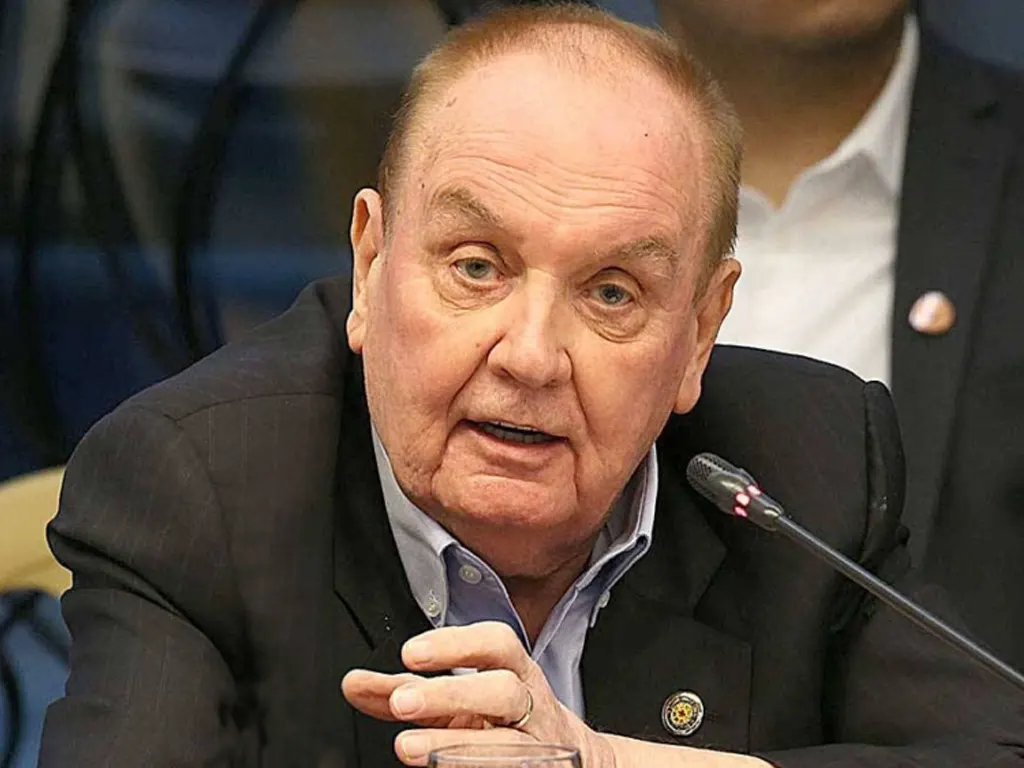
Julian Payne, President of the Canadian Chamber of Commerce
THE Joint Foreign Chamber of Commerce in the Philippines (JFC) has expressed its support for amending the “restrictive” economic provisions in the Constitution, although some of its members are cautious about the contentious debate surrounding Charter change.
During the hearing on Resolution of Both Houses 6 (RBH 6) chaired by Sen. Juan Edgardo “Sonny” Angara, chairman of the Senate Subcommittee on Constitutional Amendments and Revision of Codes, the JFC conveyed its sentiments.
The group, representing a coalition of the American, Australian-New Zealand, Canadian, European, Japanese, and Korean chambers of commerce in the Philippines along with the Philippine Association of Multinational Companies Headquarters Inc., encompasses over 3,000 companies engaged in trade and investment.
Julian Payne, President of the Canadian Chamber of Commerce, representing the JFC, stated, “The Joint Foreign Chamber of Commerce supports the easing of foreign direct investments (FDIs) wherever possible.” He emphasized that removing economic restrictions would encourage increased FDI in sectors currently constrained by such limitations.
Florian Gottein, Executive Director of the European Chamber of Commerce of the Philippines, remarked that amending the Constitution is a matter solely for the Philippines to decide. He indicated that if the Filipino people opt to amend the Constitution, the JFC would support removing economic restrictions.
Responding to Sen. Mary Grace Poe’s query about concerns over Cha-cha issues, Gottein acknowledged some uncertainty among their members due to the ongoing political debate.
Sen. Angara cautioned that the JFC’s perspective reflects diverse interests aimed at profit in the country and should be considered accordingly.
National scientist Raul Fabella advocated for lifting the constitutional restrictions on foreign ownership, citing the country’s historically low investment rate compared to other major ASEAN nations.
Retired justice Antonio Carpio and Dr. Bernardo Villegas opined that constitutional amendments might not be necessary to open the public services sector to foreign investments.
Trade and Industry Undersecretary Rafaelita Aldaba emphasized that calls for constitutional economic reforms aim to align with global economic trends without compromising national interests.
metrosundaily